Stone-Ideas.com


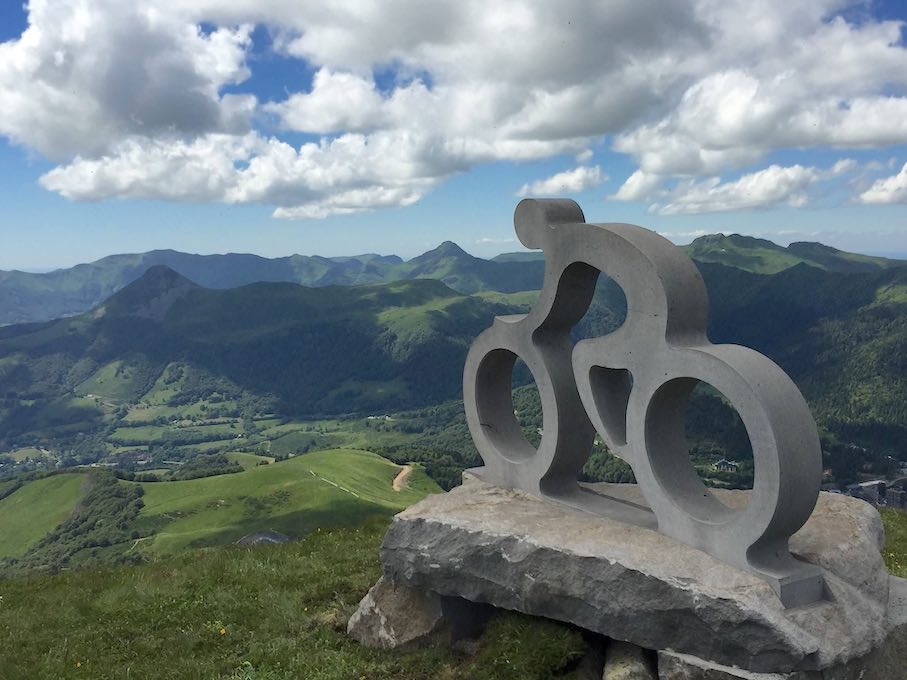
At first glance, natural stone doesn’t seem to have much to do with cycling. However, this changes when you consider the Tour de France and Tour de France Femmes: The French natural stone association Snroc (Syndicat National des Industries de Roches Ornementales et de Construction) has created short descriptions of the stone deposits along each stage of the race. And that’s not all; the association’s storytelling is excellent: It also highlights the attractions associated with each type of stone, both along the routes and elsewhere.
In addition, two companies that extract and distribute these types of stone near the race route are listed for each stage.
For example: Right at the start of that stage in the Nièvre department of Burgundy, there’s not only a reference to the Pierre de Donzy, but also to the village of Apremont-sur-Allier, renowned as one of France’s most beautiful villages. A curious fact about the village: it has only 66 inhabitants.
At the end of that stage, the peloton finally reaches Buxy, the home of the stone of the same name. This stone can be found in abundance in the historic “city centers of Chalon-sur-Saône, Dijon, and Toulon, as well as in architectural projects in London and Tokyo,” writes the federation.
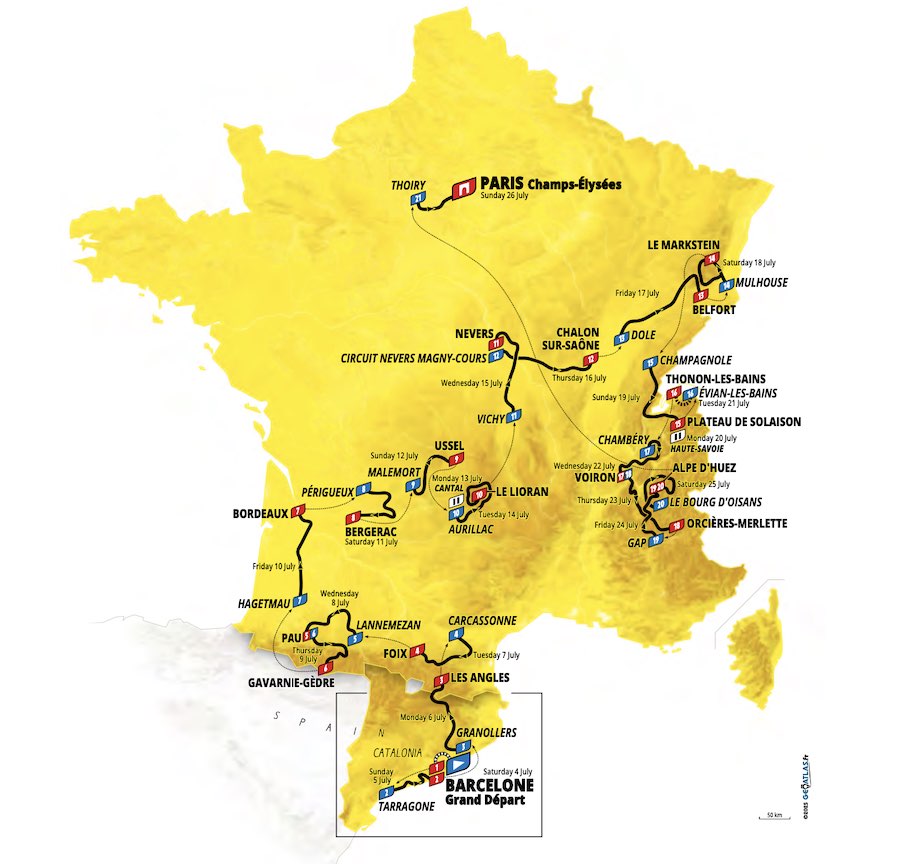
In their marketing, the organizers have simply applied the general concept of the Tour de France to stone: to showcase the country’s beauty along the route and entice potential tourists to visit.
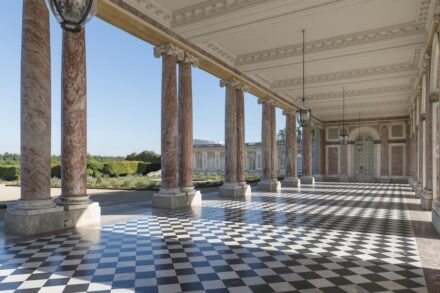
At the end of that stage, the peloton has reached Buxy, the home of the stone of the same name. Another example is the Auvergne region with its extinct volcanoes and the types of stone found there, or the Pyrenees with their Sarrancolin marble, which, due to its exclusive colors, has been used in places like Versailles, the Opéra Garnier in Paris, and the Empire State Building. We’ve linked below to the book “ Marbres français – Voyage en polychromie” by Françoise Naudet, which describes these types of marble in detail.
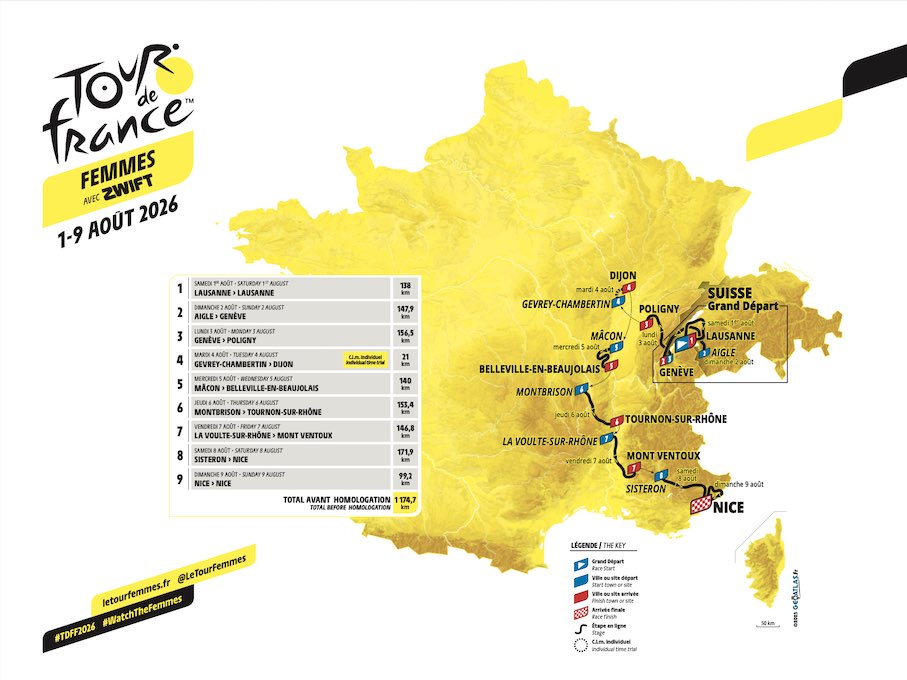
What’s wonderful about the association’s descriptions is how concise they are: there are a maximum of three paragraphs of text for each stage, without lengthy geological or touristic discussions.
It’s like the Tour de France itself: you wait at the side of the road until the people with the heavy motorcycles arrive and push the spectators back from the route. Then the breakaway riders whiz past, and finally the peloton sweeps away like a breath of air.
You get more out of the Tour and France by watching it on TV or on Snroc.
Snroc (French)