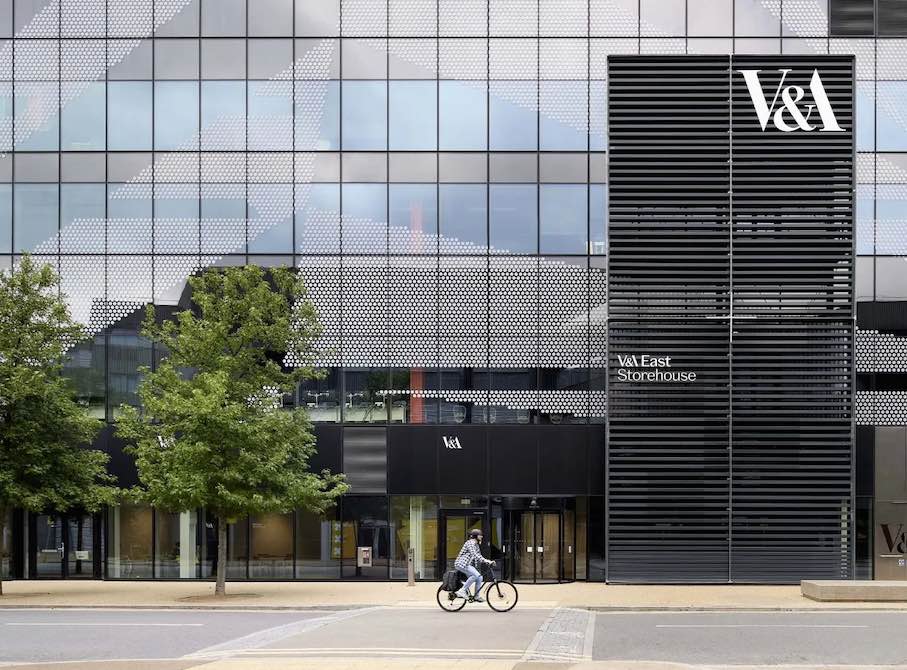
Stone-Ideas.com


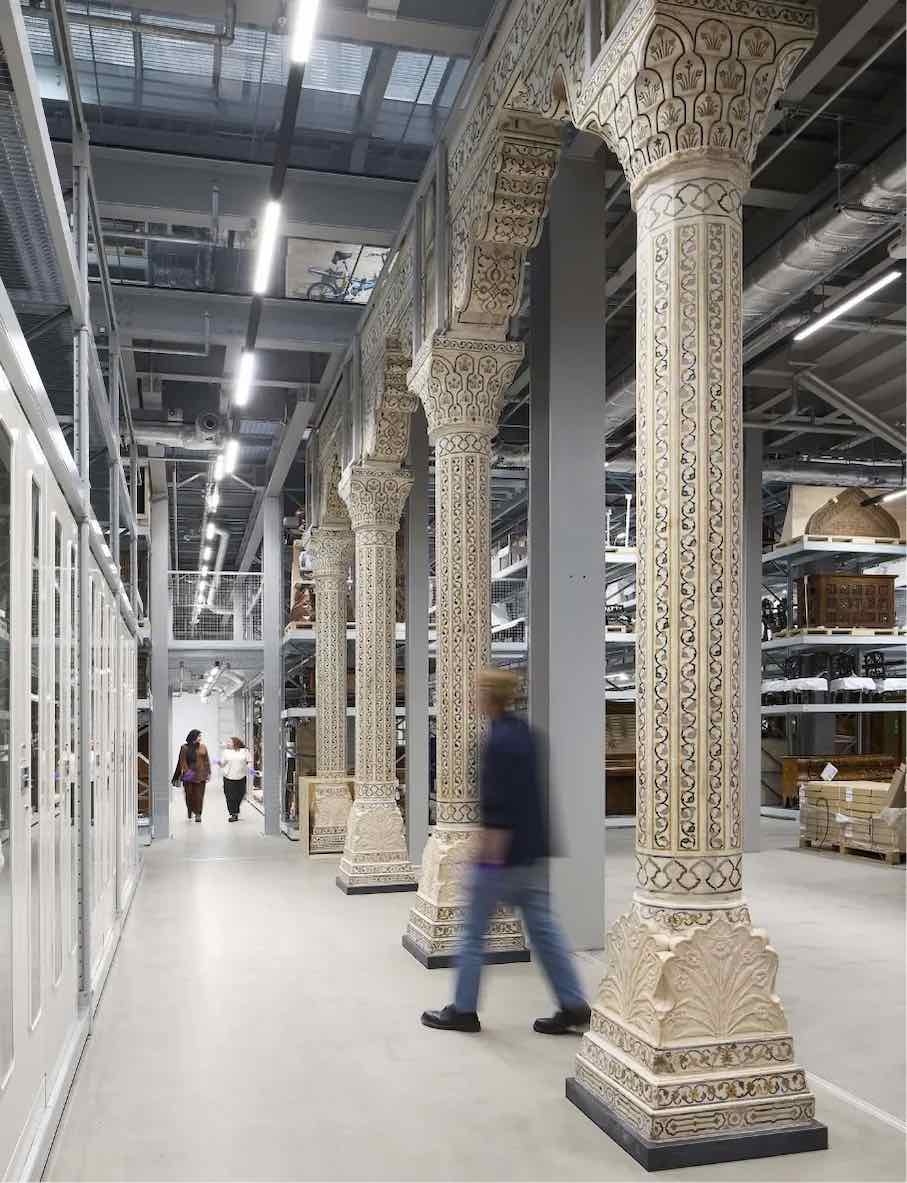
Normally, museums decide for themselves what to display and what to leave invisible. This selection is inevitable: while few works entered the galleries, the bulk of the collections remained stored in storage, accessible only to curators, scholars, and professionals. In East London, the V&A East Storehouse attempts to overturn this logic. Designed by Diller Scofidio + Renfro, the storage area ceases to be the museum‘s backstage and becomes part of the cultural experience.
The concept is radical in its simplicity: opening the doors, revealing what we don’t normally see, and letting the visitor, at least sometimes, decide where to begin.
The project occupies a section of the former London 2012 Olympic Games Media Centre, within the Queen Elizabeth Olympic Park, and extends across four levels of the building. But it is above all the collection’s numbers that speak to its scale: over 250,000 objects, 350,000 books, and 1,000 archives gathered in a place. Shelving, study areas, and conservation spaces remain visible, creating an environment where exhibitions and daily work no longer belong in two separate worlds.
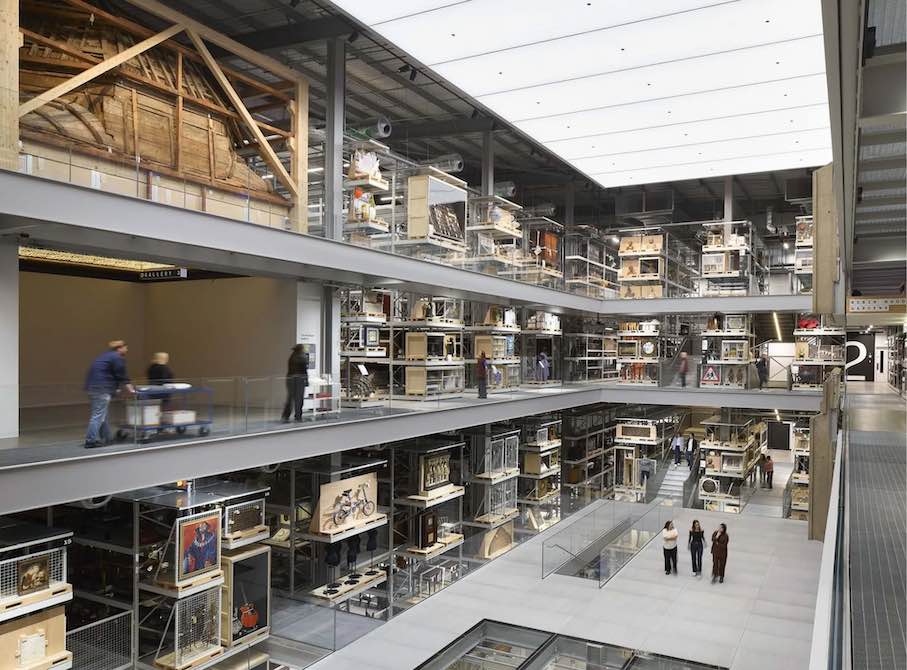
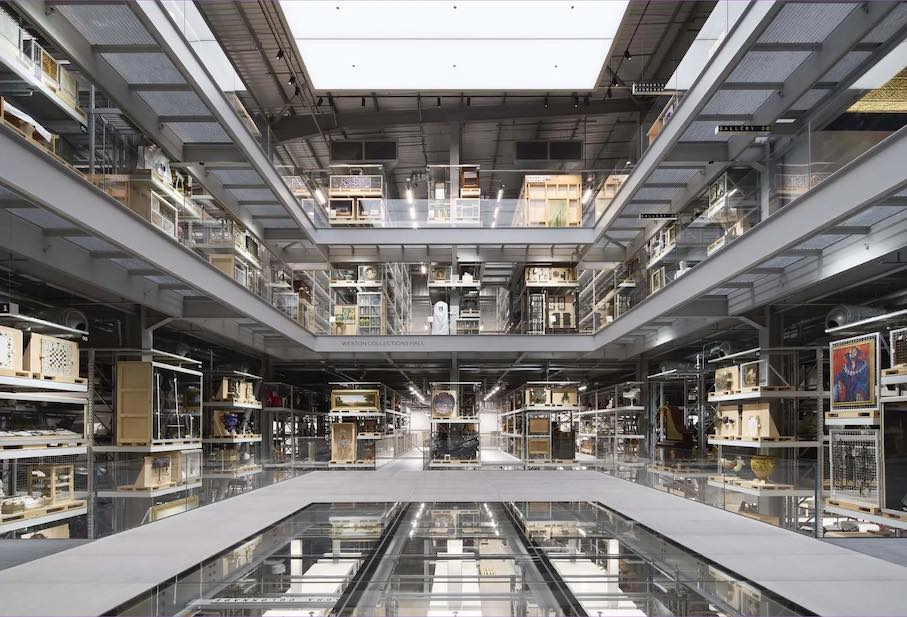
At the heart of the building, the Weston Collections Hall spans three levels, immediately revealing the vastness of the holdings. More than one hundred small, curated exhibitions fit directly between the shelves, juxtaposing objects of diverse sizes, eras, and provenances, conveying the complexity of the V&A’s five thousand years of creativity.
But the most interesting transformation concerns the way the public can engage with this heritage. With Order an Object, visitors can reserve one of the objects held in the Storehouse in advance and observe it up close with the assistance of the staff. This seemingly simple gesture challenges one of the most entrenched conventions of the museum experience: the curator’s suggested selection is complemented by individual curiosity.
The visit can thus begin with a work, an artist, a material, or simply something that would not normally find its place in an exhibition hall.
Even activities traditionally confined behind the scenes become part of the experience: Conservation, research, archives, workshops, performances, and screenings become part of an open system in which the public can understand not only what a museum holds, but also how it operates.
Photos: Hufton + Crow