Stone-Ideas.com


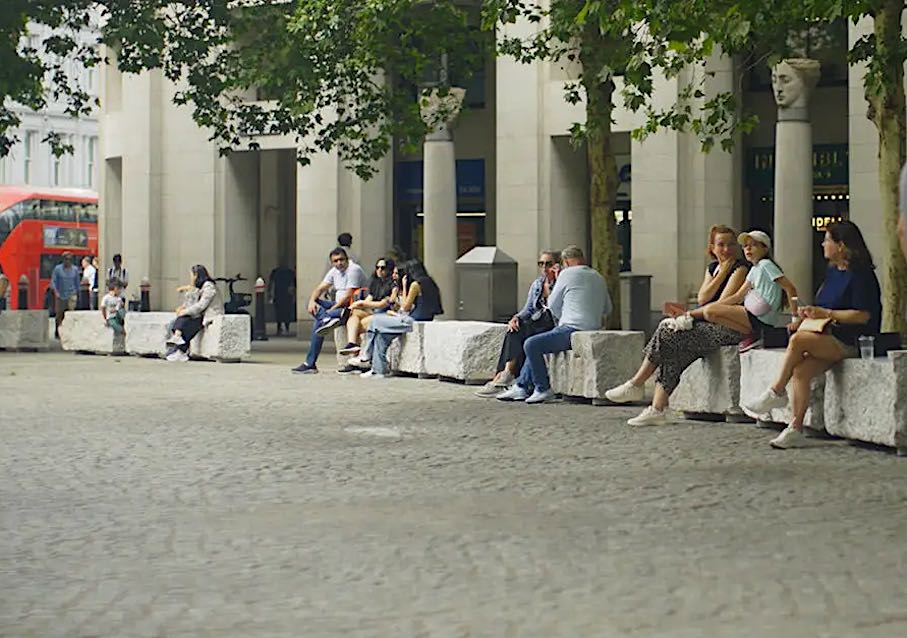
London’s municipal authorities treated the approximately 400 granite blocks – recovered during construction work on the Thames embankment – with great respect. After all, these stones are not only millions of years old; if they could speak, they would surely have many stories to tell about the history of the British capital.
Our story begins in 1858 with the “Great Stink,” an event that blanketed the city in foul odors. The cause was London’s growth into a major metropolis; despite its expansion, the city was still discharging untreated sewage directly into the river or allowing it to seep into the ground in courtyards. This created a breeding ground for disease – a problem also familiar from other cities.
In a monumental effort led by Sir Joseph Bazalgette, the city administration solved the issue by constructing a sewer system that garnered worldwide attention. Its main conduits were laid along the banks of the Thames and concealed behind a robust embankment wall. Granite blocks were brought in from across the country – primarily from Cornwall and Scotland – for this purpose.
It is worth noting that granite was used rather than limestone, which was the city’s standard building material.
The system was officially opened in 1870 and is now a protected heritage site.
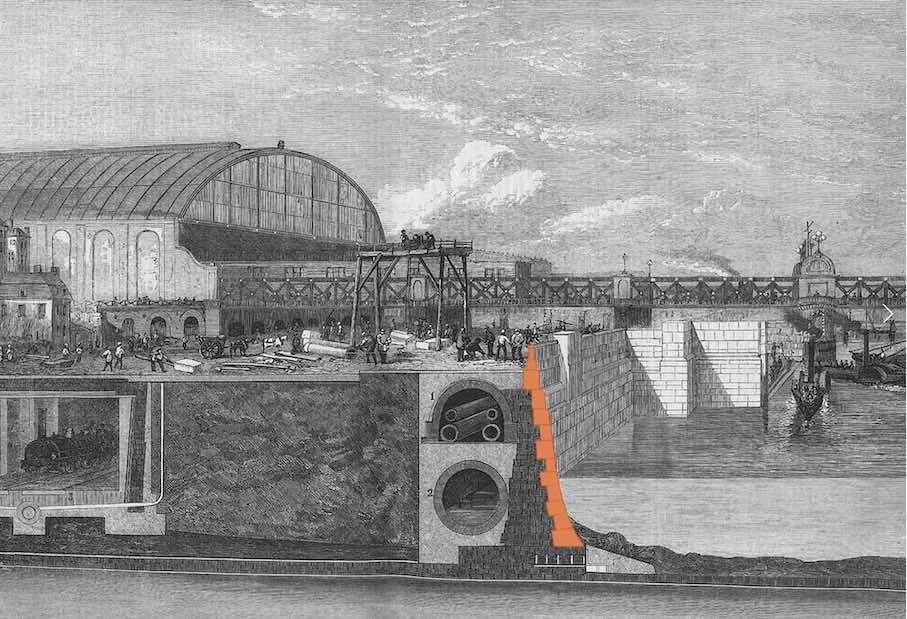
However, around the year 2000, a new problem came to light – or rather, the old problem resurfaced. London’s population had grown to over eight million. This, combined with the increasing prevalence of paved, impermeable surfaces, meant that even light rainfall caused large volumes of untreated water to flow into the river. The new solution is another sewer – this time located up to 70 meters beneath the Thames – known as the Thames Tideway Tunnel or, more commonly, the “Super Sewer.” Connecting the new system to the old one required modifying the river wall at Victoria Embankment, a process that yielded the granite blocks in question.
Initially, 53 of these blocks were distributed across various locations in the City to serve as temporary seating. After observing how much residents and tourists enjoyed them, the city turned the initiative into a spectacular project: under the title “From the Thames to Eternity,” 21 blocks were permanently installed in front of St. Paul’s Cathedral.
This time, however, the stones underwent some modification: curved seat sections were cut into some blocks, while others were fitted with armrests.
Recycling remained the guiding principle throughout, even down to the details:
* The armrests were crafted from wood salvaged from wind-fallen trees in a park;
* the bronze screws and and brackets for the seats were repurposed from old shop signs;
* even the stone fragments and sawdust resulting from the modification of the original blocks were utilized – serving as bases for the new benches and as plinths for the information panels, which were produced using 3D printing.
The benches come in three different heights, and the original tool marks have been preserved. Surface finishes vary depending on the intended use, accommodating individuals, couples, or groups.
Plans are already underway to install the remaining blocks in other parts of the city.
The bench design was created by CSK Architects and The Bartlett UCL, with stonework executed by Paye Stone. The project was realized through a collaboration between Tideway, the Greater London Authority, the City of Westminster, and the Arts University Bournemouth. The Stonemasonry Company Ltd and Webb Yates Engineers served as consultants.
Pictures: City of London