 Stone-Ideas.com


The natural stone sector is divided into different factions. We’ll mention two: those who sell the material as a luxury item, and, more recently, those who are transforming it into a mundane building material, particularly in solid construction. The reason for the latter is stone’s minimal ecological footprint.
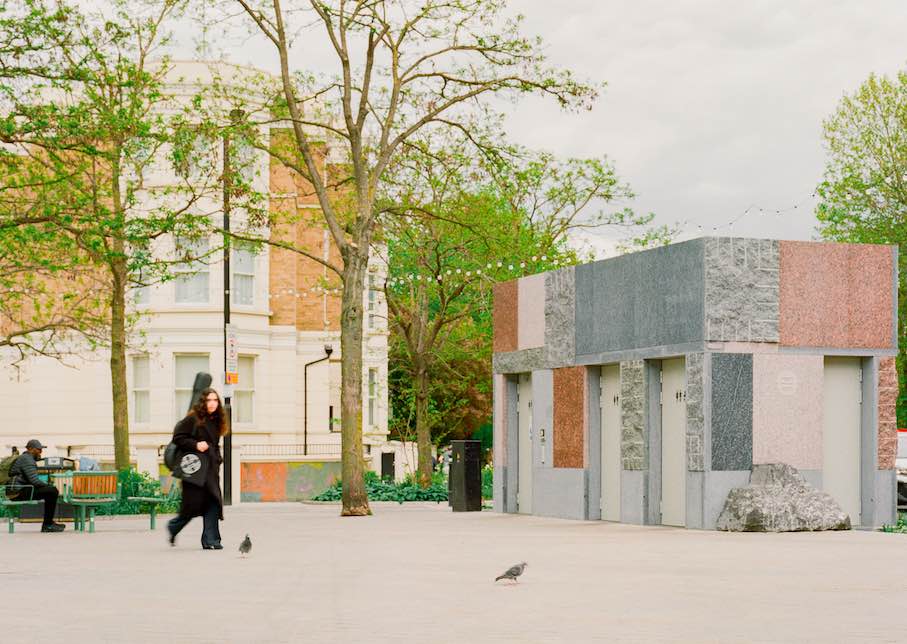
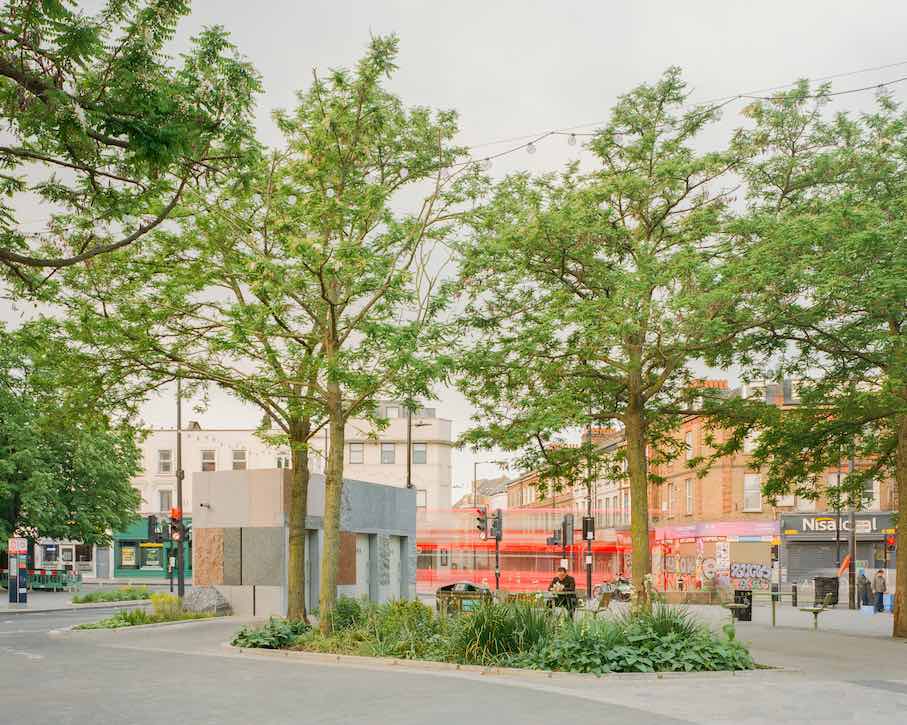
A project from England now takes the idea of “everyday stone” even further: Maida Hill Market in the North Paddington district now features a public restroom made of natural stone!
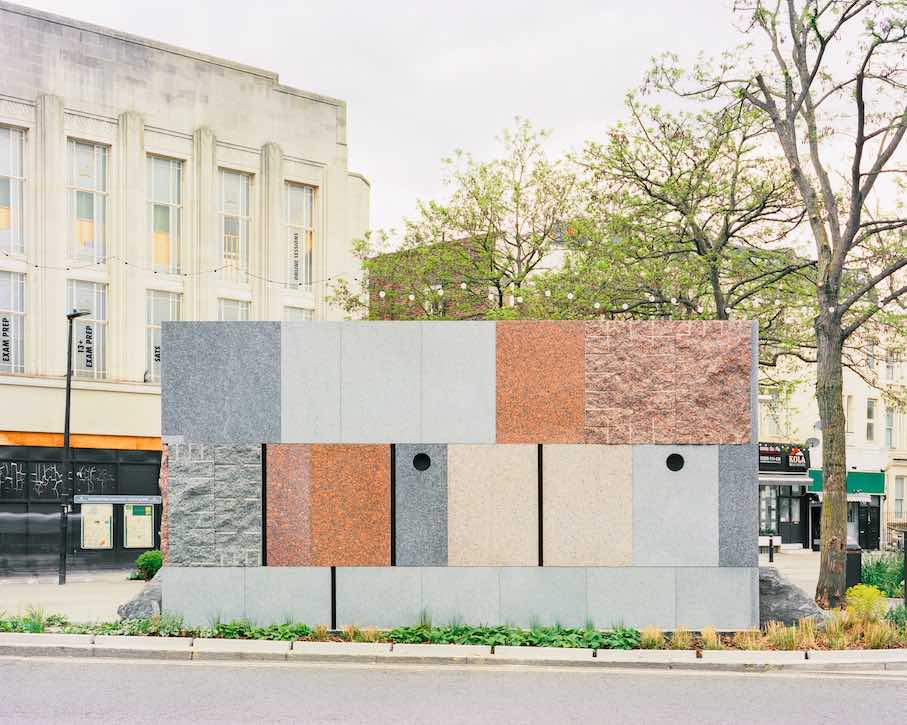
Of course, the stone in Maida Hill wasn’t used in the same way as, for example, in an exclusive bathroom. Here, it doesn’t decorate the walls and floor but rather forms the structure of the building. The stones are assembled for the exterior walls; inside, there are three toilets, one of which is handicapped accessible, plus two service rooms.
On the other hand, the stone is recycled and was salvaged from the demolition of previous buildings in the city. A side note: These stones once adorned façades in the financial district…
The architects at Studio Weave describe their approach as “deep reuse”: The size of the stone slabs (just under 180 cm high, 8 cm thick) was determined by their previous use; all surface finishes were retained as they were; and the structure is designed so that the stone slabs can be individually removed if needed. Conversely, the toilets can also be removed separately if, for example, their technology changes.
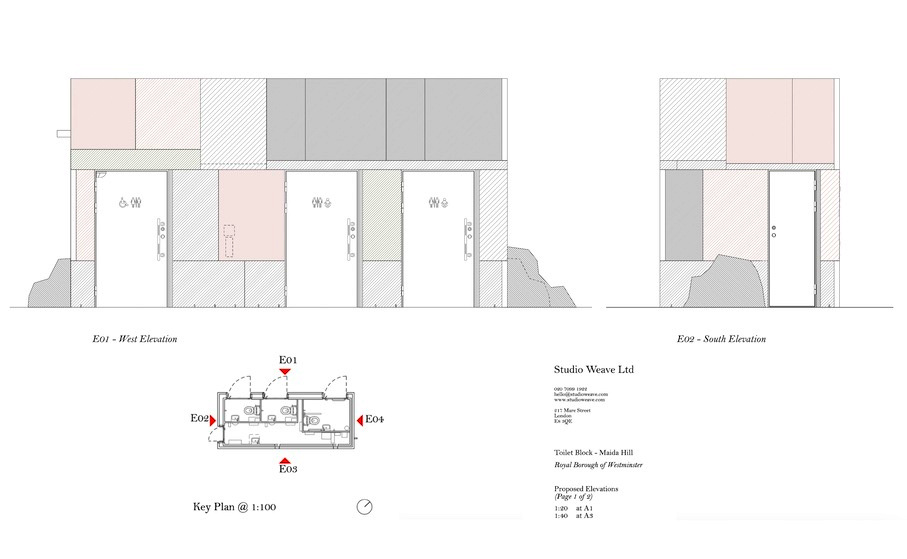
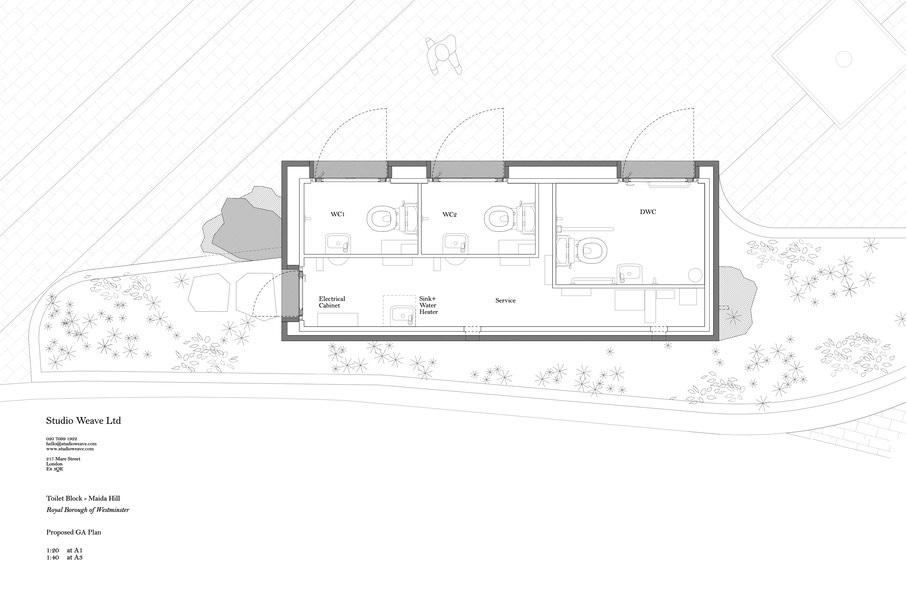
This use of recycled material embodies the concept of the “urban quarry” in its purest form: Demolition material is not disposed of and sent to a landfill but reused elsewhere.
The stone and the architects were brought into contact by the Stonemasonry Company, which had the material. The structural engineering for the new building was calculated by the engineering firm Webb Yates, known for its penchant for unconventional solutions.
Finally, the colorful stone structure was given a bit of visual interest: two boulders were added to the sides – these can also serve as seating. In a small garden on one side, sea thrift, known for its undemanding nature and low water requirements, was planted. The surrounding area was replanted and furnished with street furniture.
On a larger scale, the toilet could also represent a new beginning in another respect. According to the British Toilet Association (BTA), almost 40% of public toilets have disappeared in the past decade. The architects, for their part, would like to implement their idea elsewhere.
Photos: Lorenzo Zandri