Stone-Ideas.com


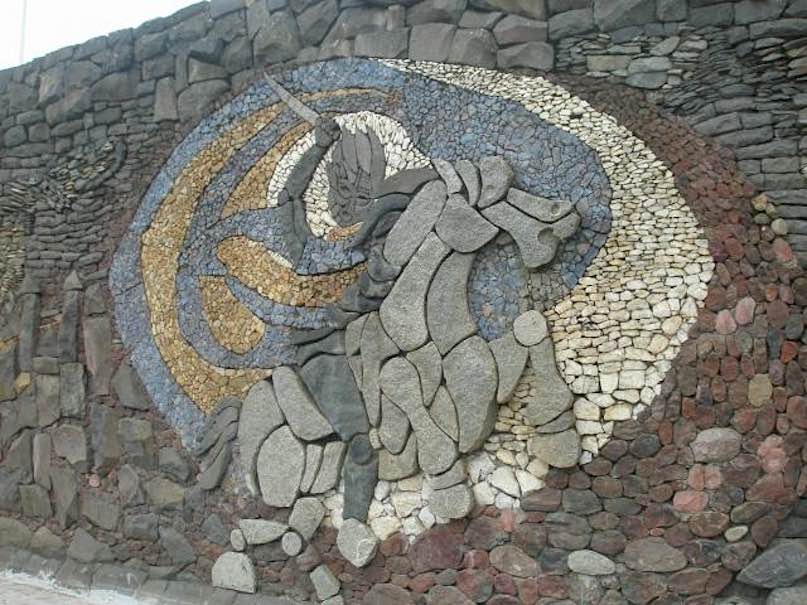
Façade-sized wall mosaics made of colorful natural stones were fashionable in Latin America from the 1950s to the 1970s. Famous examples can be found in Chile by the artist María Martner, and in Mexico by Juan O’Connor.
Even today, artists are still devoted to such mixed forms of mosaic art and sculpture. However, these are mostly smaller works commissioned by private individuals.
One of Maria Martner’s works in Santiago de Chile is currently being examined for its stability.
The work of Juan O’Connor for the central library of the Universidad Nacional Autónoma de México (UNAM) is world famous: All four façades of the box-like building are covered with stone mosaics – this amounts to a total area of around 4,000 square meters or millions of pieces of stone. The artist, who came from an Irish family, had the material collected from all over Mexico.
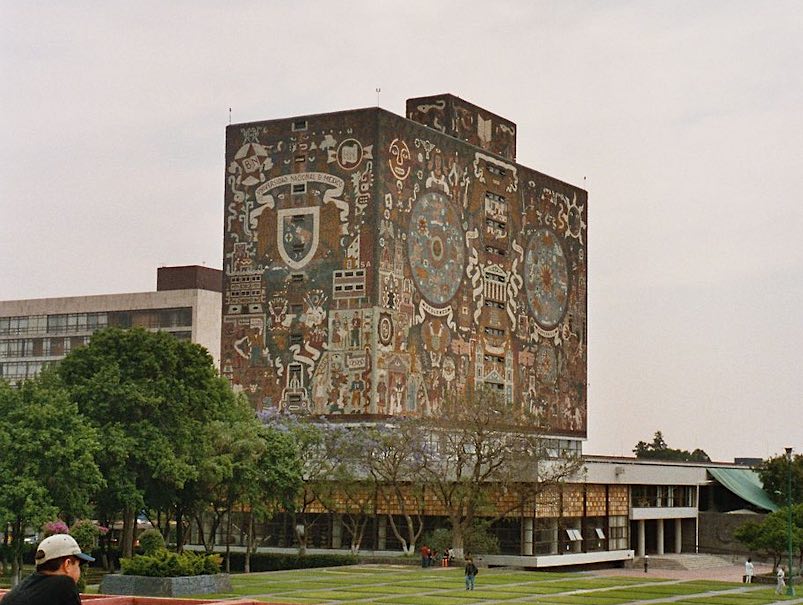
The library was opened to the public in 1956. Each side of the façade deals with a specific theme: the north side deals with Mexico’s history before the Spanish, the south side shows the colonial period, the east side deals with the present in general, and the west side with the university and Mexico today. “With these mosaics the library would be different from the other buildings of Ciudad Universitaria, and it would be given a particular Mexican character,” the artist is quoted as saying on Wikipedia.
In 2007, the entire campus, to which more than 60 architects, civil engineers and artists contributed, was declared a World Heritage Site by Unesco. The complex is one of the most important tourist destinations in the country.
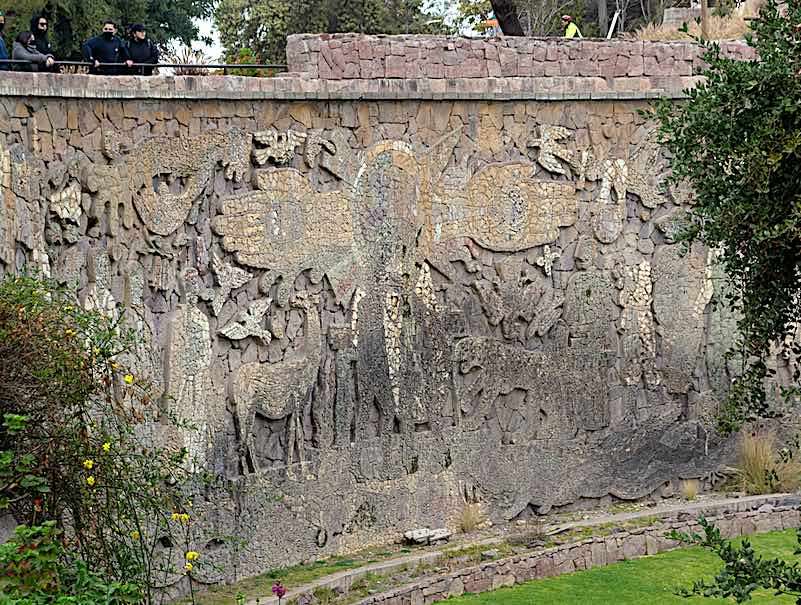
The wall mosaics by Chilean artist María Martner (1921 – 2010) in Chile’s capital Santiago are far from this level of fame. The connections to Mexico are striking, which also represent the time in the spirit of a progressive international: the work “ Tupahue“ in the city’s Metropolitan Park was designed by Juan O’Gorman, the theme is the friendship between the peoples of Mexico and Chile. It dates from 1964 and is 27 meters wide and 6.75 meters high.
It depicts Caupolicán, a war chief of the Mapuche in southern Chile who stubbornly opposed the Spanish conquest, and Cuauhtémoc, the last Aztec ruler of Tenochtitlán, who fought bitterly against Hernán Cortés. Incorporated into the depiction are important national symbols: for Chile the guanaco, the original form of the llama, the condor and a grapevine, for Mexico the cheetah, the eagle and a corn cob.
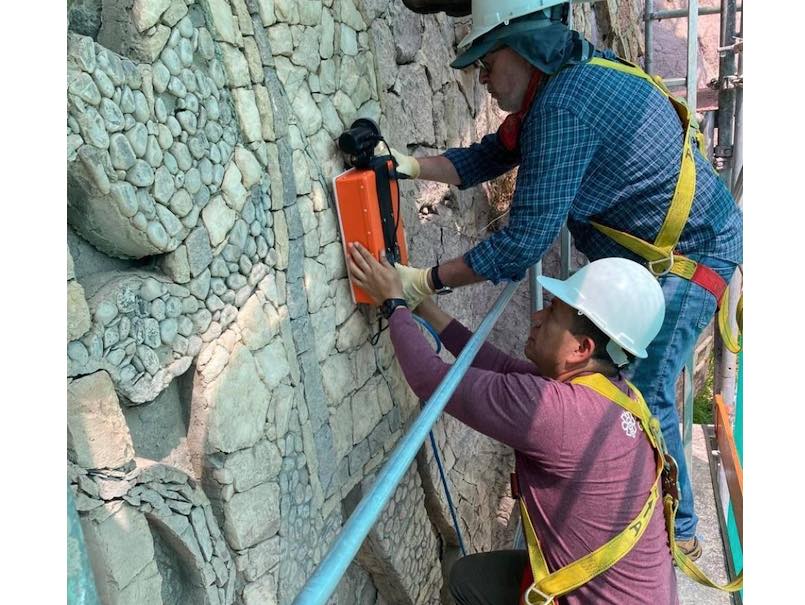
As the National Institute of Anthropology and History (INAH) announced at the beginning of November 2024, the condition of the work of art is currently being checked. Non-destructive methods such as ground-penetrating radar or electrical measurements are being used. Among other things, it is important to determine whether moisture has damaged the reinforced concrete wall to which the mosaic is attached, whether the weather has caused the stones to erode, or whether the roots of a parasitic plant have already caused damage.
Initial results indicate that there does not appear to be any “ structural damage,“ according to the (INAH) website. Researchers from the University of Strasbourg in France are also involved.
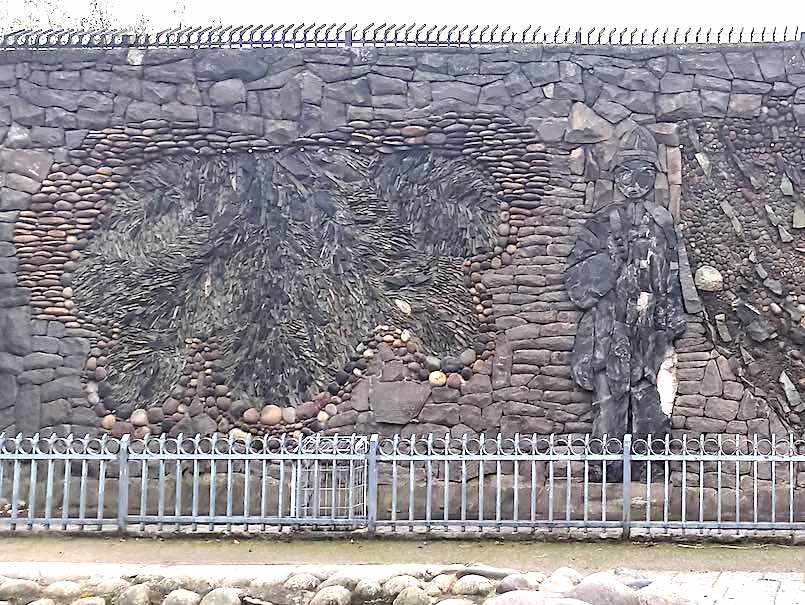
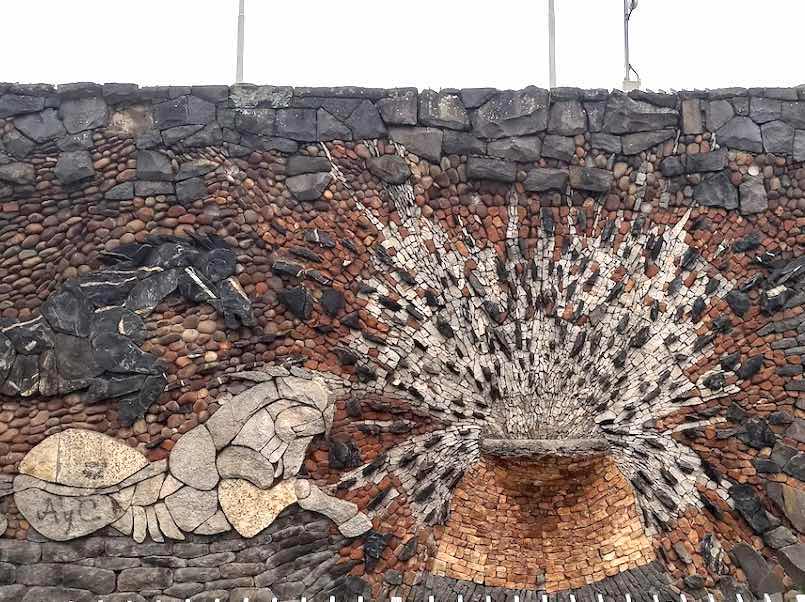
Another national monument of Chile is the wall mosaic “Los peces del frío“ in the park of the city of Chillán Viejo by María Martner. It was inaugurated in 1973 and depicts the life of the military and freedom fighter Bernardo O’Higgins Riquelme, who was named the first leader of the country after the independence struggle and was awarded the title of Director Supremo.
The work measures 60 m wide and 6 m high.
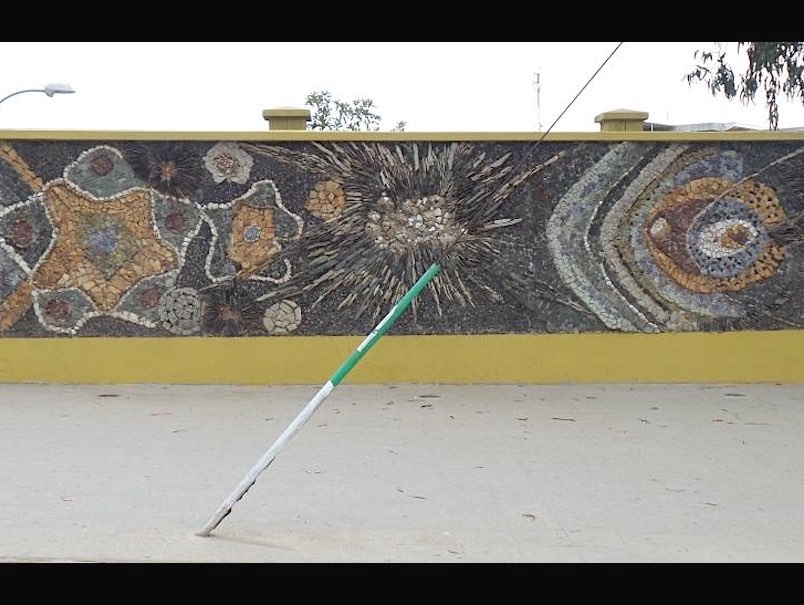
The mural entitled “ Life in the Ocean“ (Vida Oceánica) in the municipality of Valparaíso was completed by María Martner during the celebrations of the Sea Fair there in 1973. It is 8.05 m wide and 1.98 m high.
The website of the National Monuments of Chile (Conseio de Monumentos Nacionales De Chile, CMN) recognizes the importance of María Martner for the country’s culture:
* She represents the history of the country;
* reflects the harsh geography of Chile;
* dedicates herself to the new role of women in Chile;
* documents the 1960s and 1970s, when many artists were concerned with bringing work and society together;
* her works take part in politics, take up the values of matriarchal orders and distance themselves from the religious orientation of other sculptors.
Instituto Nacional de Antropología e Historia, INAH (Spanish)
Conseio de Monumentos Nacionales De Chile (Spanish)
Photos: Wikimedia Commons
See also: