Stone-Ideas.com


Our report about the symposium 2025:
https://www.stone-ideas.com/112280/6th-tuwaiq-symposium-riyadh-2025/
The sculptures of the symposium 2025:
https://www.stone-ideas.com/111994/tuwaiq-sculpture-symposium-2025-riyadh/
Every year, 30 monumental works in stone are created as part of the Tuwaiq Sculpture Symposium in Riyadh. They are to be distributed throughout the Saudi Arabian capital, beautify central locations there and introduce citizens to art, that is the aim of the organizers. This has been emphasized again and again in the previous six rounds of the annual symposium.
Not at all symposia around the world the works of art are really appreciated once the tourist event is over.
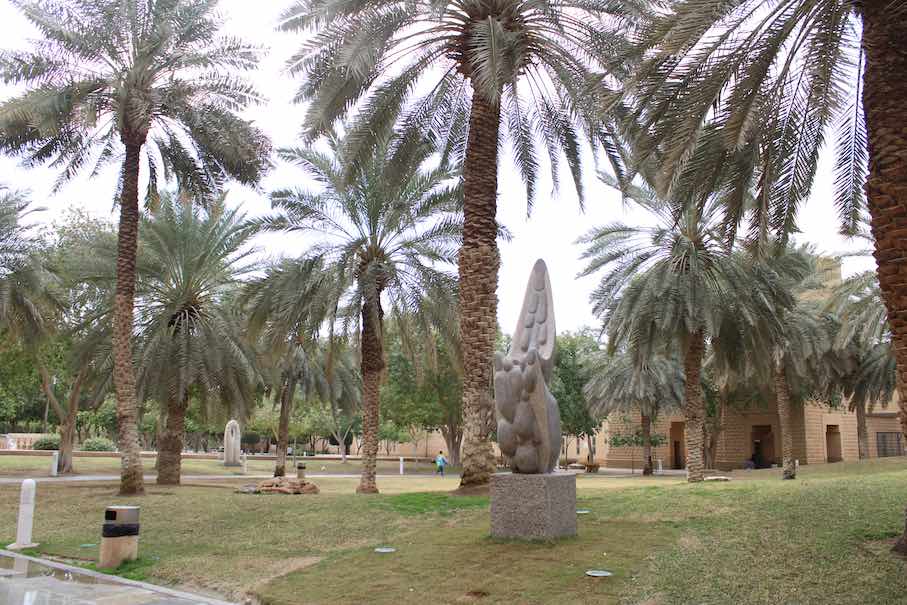
In Riyadh this year, the organizers brought a group of visitors to the King Abdulaziz Historical Center, i.e. the park at the National Museum of the Kingdom. 35 works from the symposium have now been installed in the area. Stone-Ideas.com was a guest on the visit program.
Our conclusion: The organizers have kept their promise that the works of art are close to their hearts. The works are placed in the park in such a way that they have a good impact. All of them also have plaques on which the artists, the title of the work and how they were created are named.
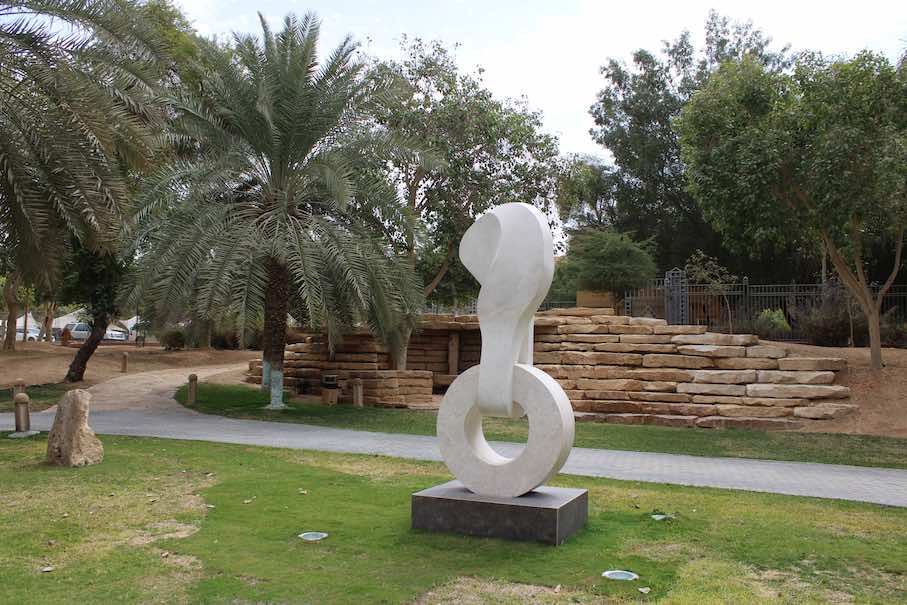
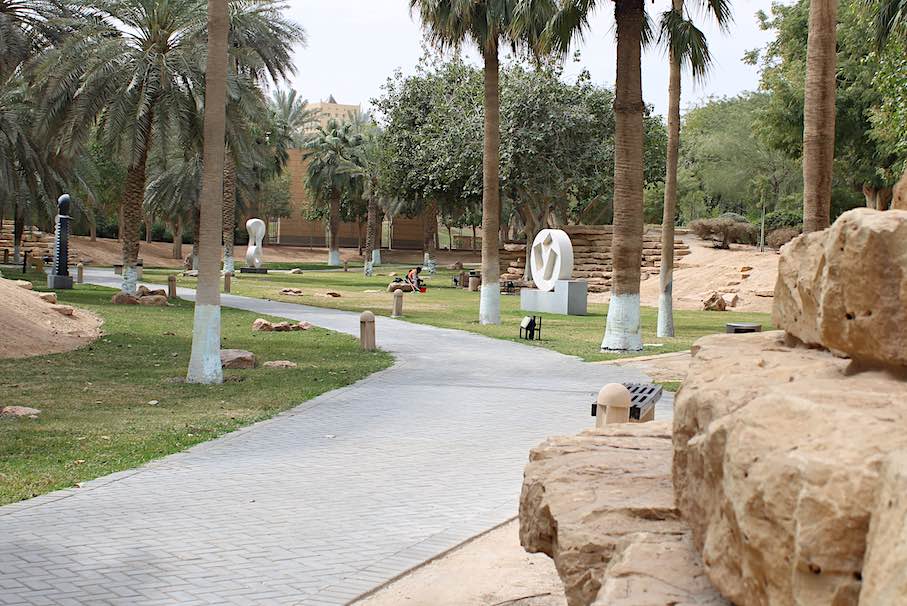
The park itself is remarkable: it is modelled like an oasis in the desert. In addition to palm trees and rock grottos, there are also rolled turf so that families with children can picnic there. It is admirable how much effort the city makes to keep the greenery alive during the summer period when temperatures are more than 50 degrees for weeks.
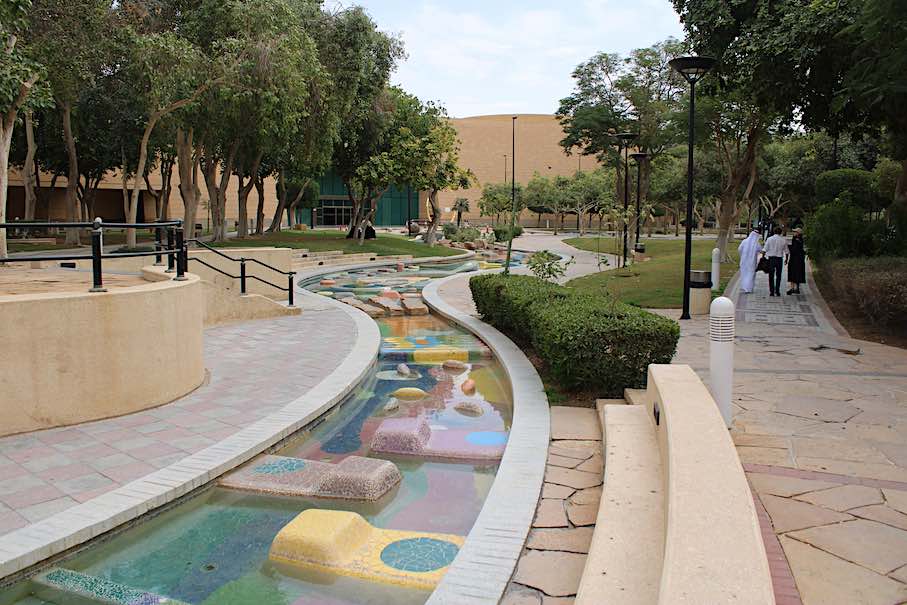
They even allow themselves the luxury of a watercourse with mosaic decorations. We already indicated in our report on the Tuwaiq Symposium that money plays no role here.
Sarah Fahad Alruwayti, mastermind of the symposium and a senior member of the Royal Commission for Riyadh City, repeatedly emphasises that the artists have a say in the placement of the works. Because special works sometimes require special effort, as in the case where the artist had planned the shadow as part of his work of art.
“Sometimes there are delays in the installation,“ she admits.
A total of 1,000 works of art are to be distributed across Riyadh. They will not only be created in stone as part of the Tuwaiq Symposium, but in many other materials as part of the 12 sections of the Riyadh Art program.
Two can already now be admired in the KAFD metro station: “LOVE (Red Outside Blue Inside)“ by Robert Indiana and “Janey Waney“ by Alexander Calder, both US artists.
The aim is to use the works to create a triad between the citizens and their city: dialogue, identification, and a better quality of life are the key terms.
This also includes contracts with companies for the care and security of the works.
The service companies will soon have a lot more to do. Omar Nasser Albraik, Senior Director of Art at the Royal Commission for Riyadh City, announced at a panel discussion as part of the symposium that orders for 85 works of art for metro stations would be awarded.
According to him, there are also plans to give the city’s major intersections a recognizable face with monumental works.
Riyadh is a car-friendly city: a square grid is criss-crossed by multi-lane roads, over which car traffic and transport roll around the clock.
Private tour of the Ghirnatah district
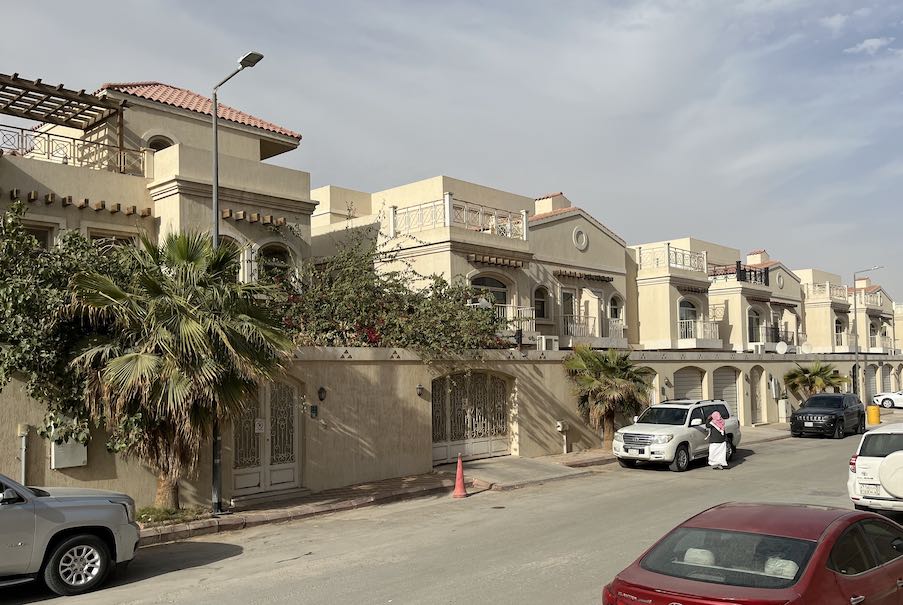
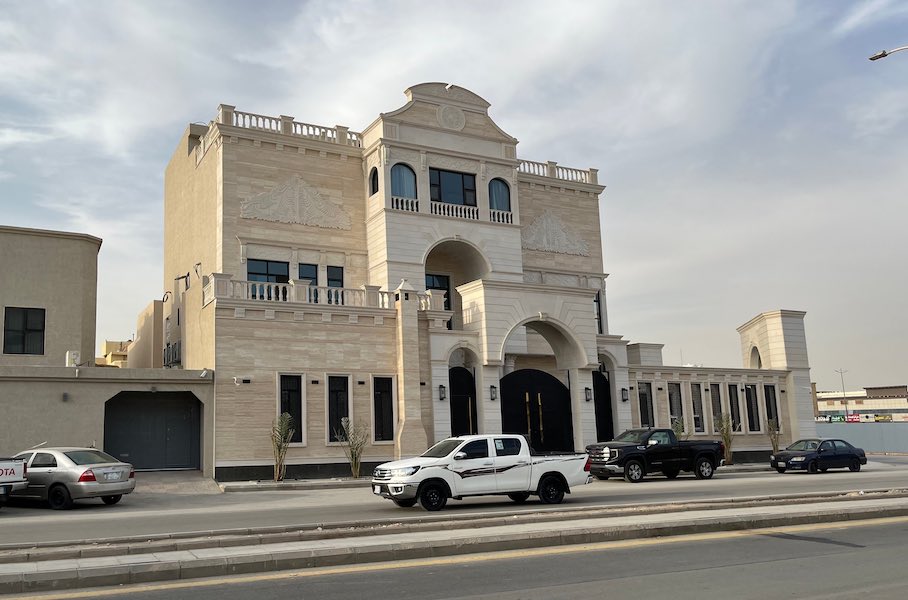
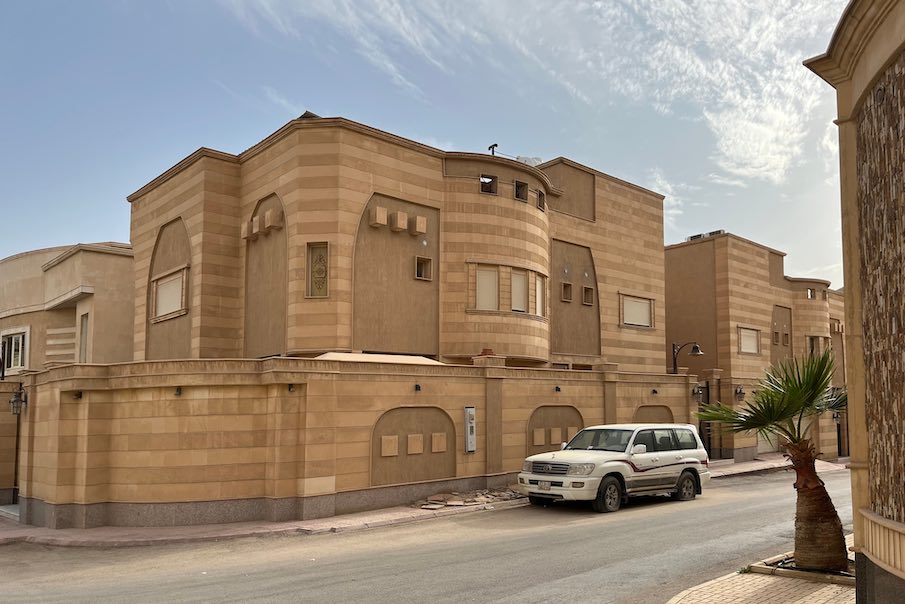
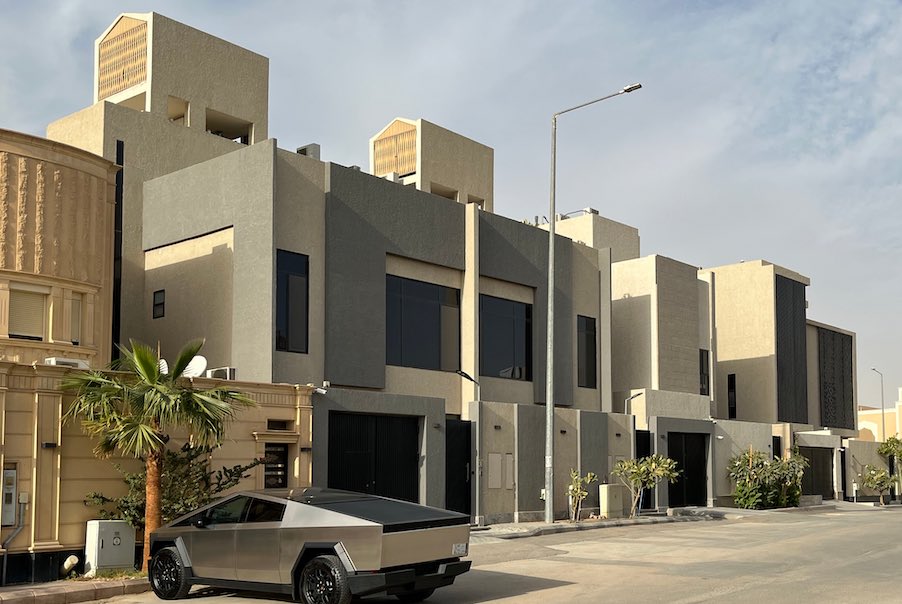
During a private tour of the Ghirnatah district not far from the Granadia metro station, we had the impression that a lot could actually be achieved here with art on the streets. At the moment there are only blocks of houses with two storeys and a walk-on roof between the streets, which are sealed off from the outside by walls. The reason for the walls, however, is not crime, which is practically non-existent in Riyadh, but the fact that the walls provide shade for the two lower floors of the building behind them.
There are many pretty villas there. Their beauty can be guessed from their facades. We show a few photos.
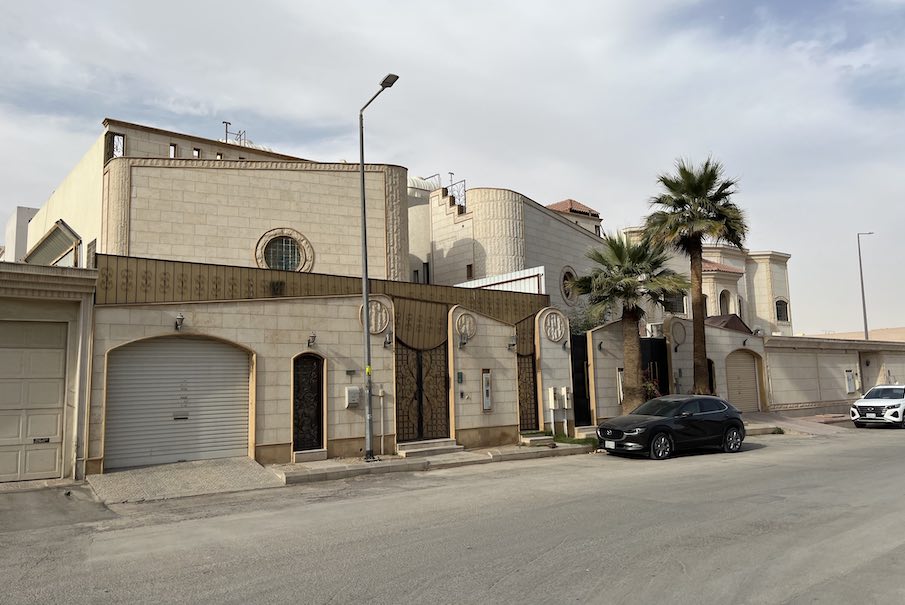
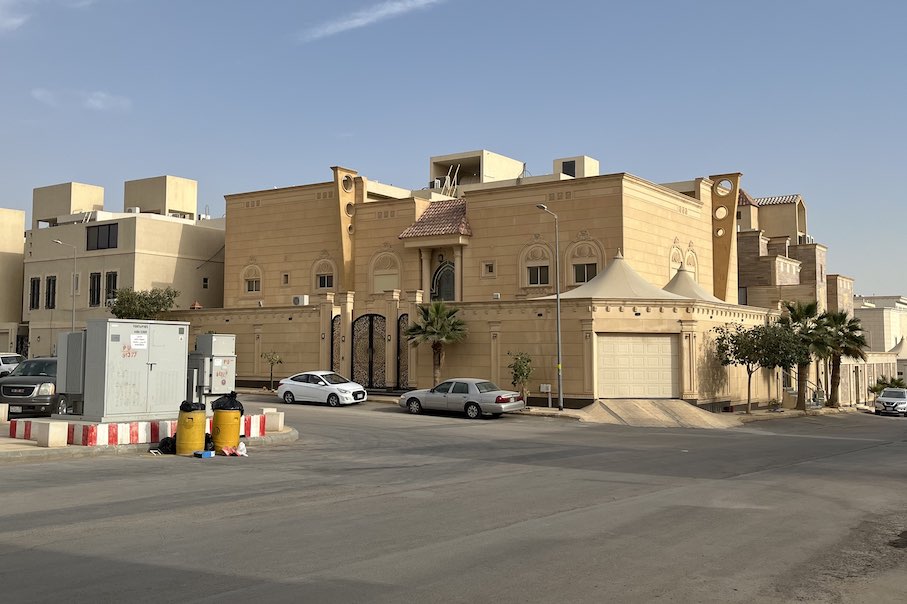
The streets themselves are plain, however, probably because nobody uses the sidewalks.
Where the streets come together to form small or large squares, there would be an opportunity for art. Sometimes such places already exist, for example when playgrounds have been created.
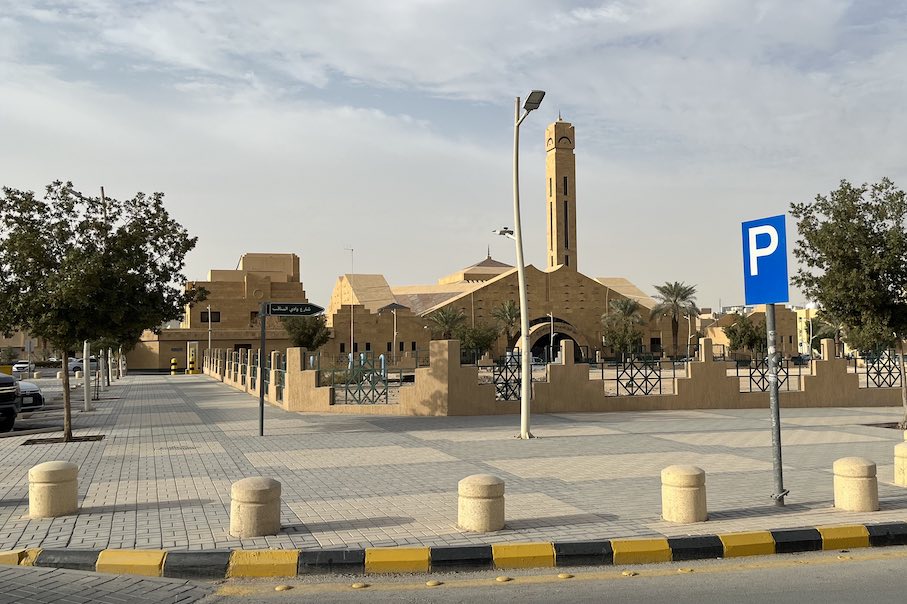
Works of art could also help to highlight the special buildings in such zones. In Ghirnatah, for example, there is the al-Dakheel Mosque with a large parking lot in front of it. With its modern architecture and sandstone facade cladding, it deserves special appreciation.