 Stone-Ideas.com


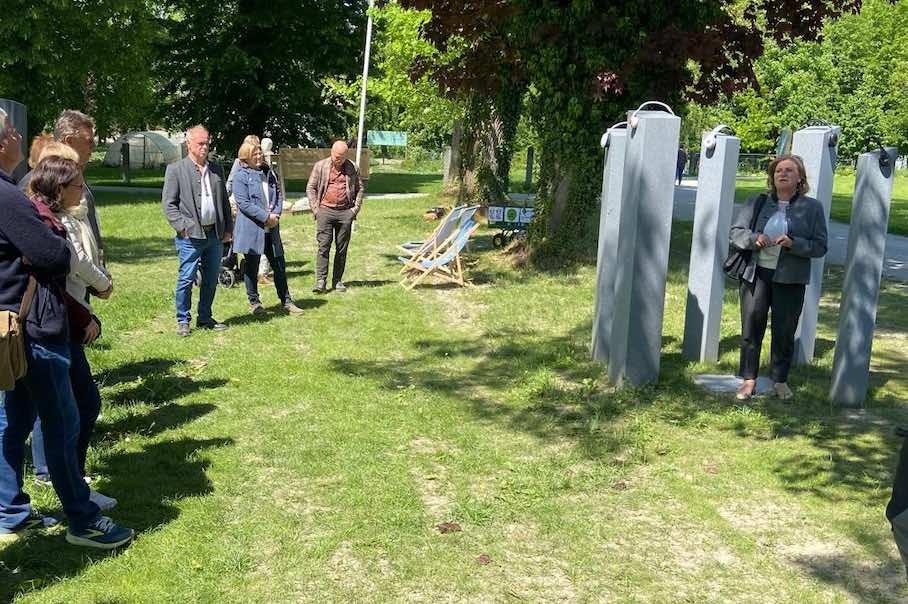
Austrian stonemasons, like their colleagues in other professions, earn their living primarily through routine work. However, they also want to incorporate their creative side, and so they regularly collaborate with Viennese artist Arnold Reinthaler on artistic projects. The Upper Austria State Garden Show in Schärding am Inn in 2025 once again offered a good opportunity for such an event – the stonemasons reinterpreted its motto play on words of visiting the green around the Inn river (“Inns Green”) as a journey into their inner selves (“Into the Self“).
The theme was to honestly ask ourselves, in our modern world of selfies, fakes, self-optimization, and rankings, who we really are and who we want to be. The result is twelve sculptures, which will be on display in a special area until the end of the garden show on October 05, 2025. The event was organized by the Steinzentrum Hallein (Hallein Stone Center).
The idea behind this was to focus the artistic work not on the client’s wishes, but on the individual: Normally, for example, a stonemason implements the memories of the bereaved on a gravestone – for the State Garden Show, the stonemason and his team were asked to represent “their own self with a certain amount of honesty,“ as the press materials put it.
In a sense, this is work in and of itself, to play with a famous phrase from a philosopher.
We are presenting the works with brief descriptions by the authors. The project catalog is available for download in German.
InnsGrün (German)
Download Catalog (German)
Steinzentrum Hallein (German)
Photos: Arnold Reinthaler (German)
Just published: „Modeling Temporality“ showing the artworks of Arnold Reinthaler (Verlag für Moderne Kunst)
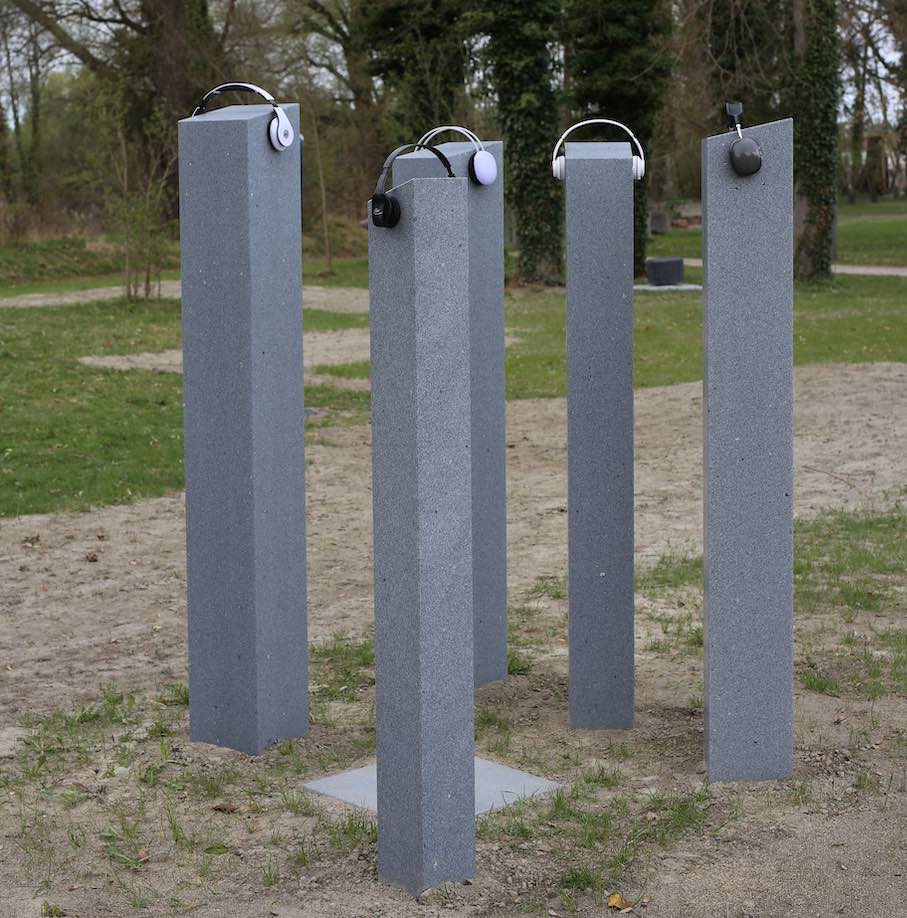 Gabriele Steller: “Dance of Anonymous Souls.“ The slender granite pieces invite visitors to mingle with the five abstract figures, to listen, and—if possible—to dance along. It seems as if the figures, isolated from their surroundings, hear voices or music, but remain expressionless and silent. A stone pedestal in the center of the group of figures invites visitors to become part of the collective.
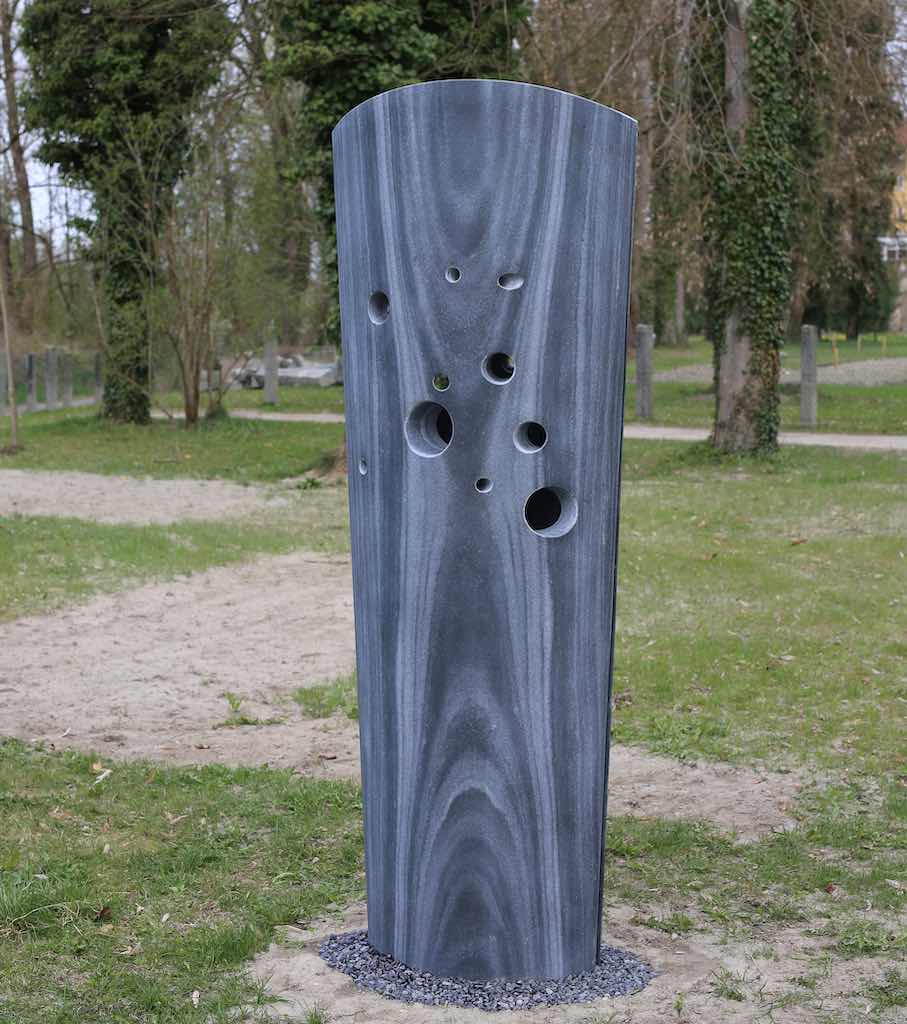 Bernhard Baumgartner: “I am the others.“ The stone self-portrait consists of two mirrored, larger-than-life elements, placed within the field of vision of the other works. Accordingly, the sculpture has many holes. Visitors are invited to look beyond the open self-portrayal and focus on the other works.
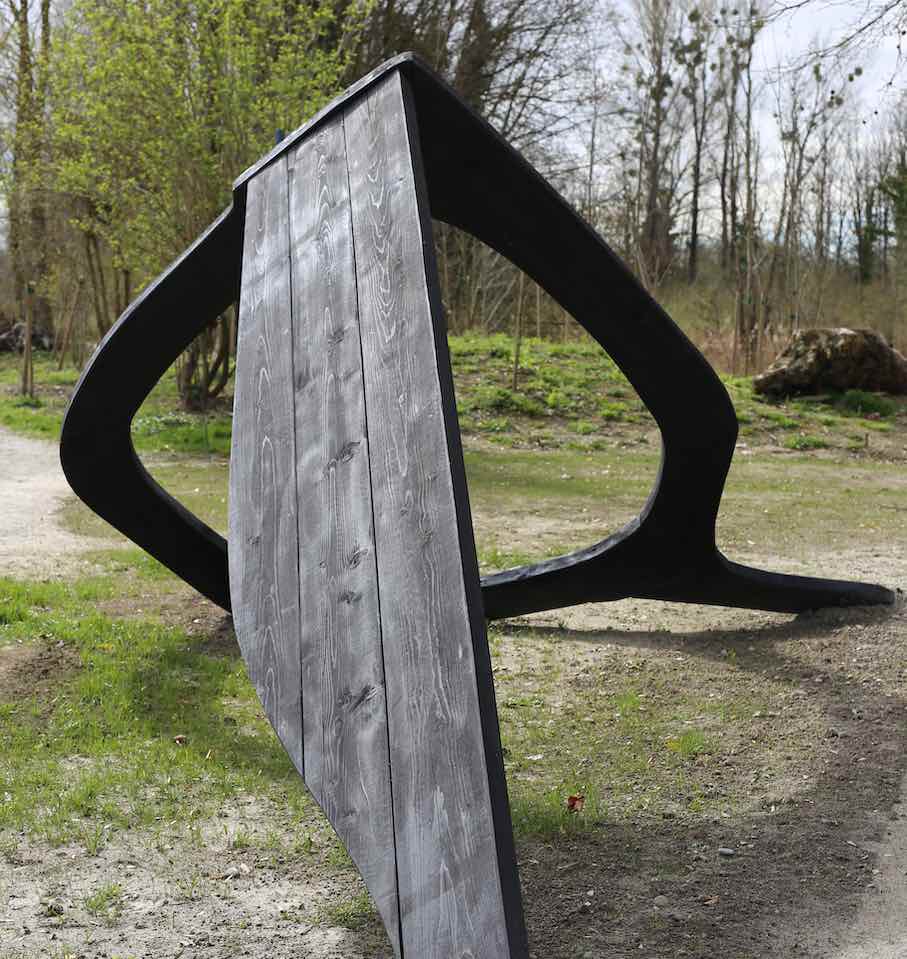 Wolfgang Gollner: “Into the Psyche.“ In the entrance area of the exhibition, the oversized frame of a pair of glasses invites visitors to enter the physical space of the exhibition. Part of the frame is sunk into the earth, while the visible part stretches out into the park as an abstract object. The sculpture begs to be entered. Does the path to the interior lead through the eye?
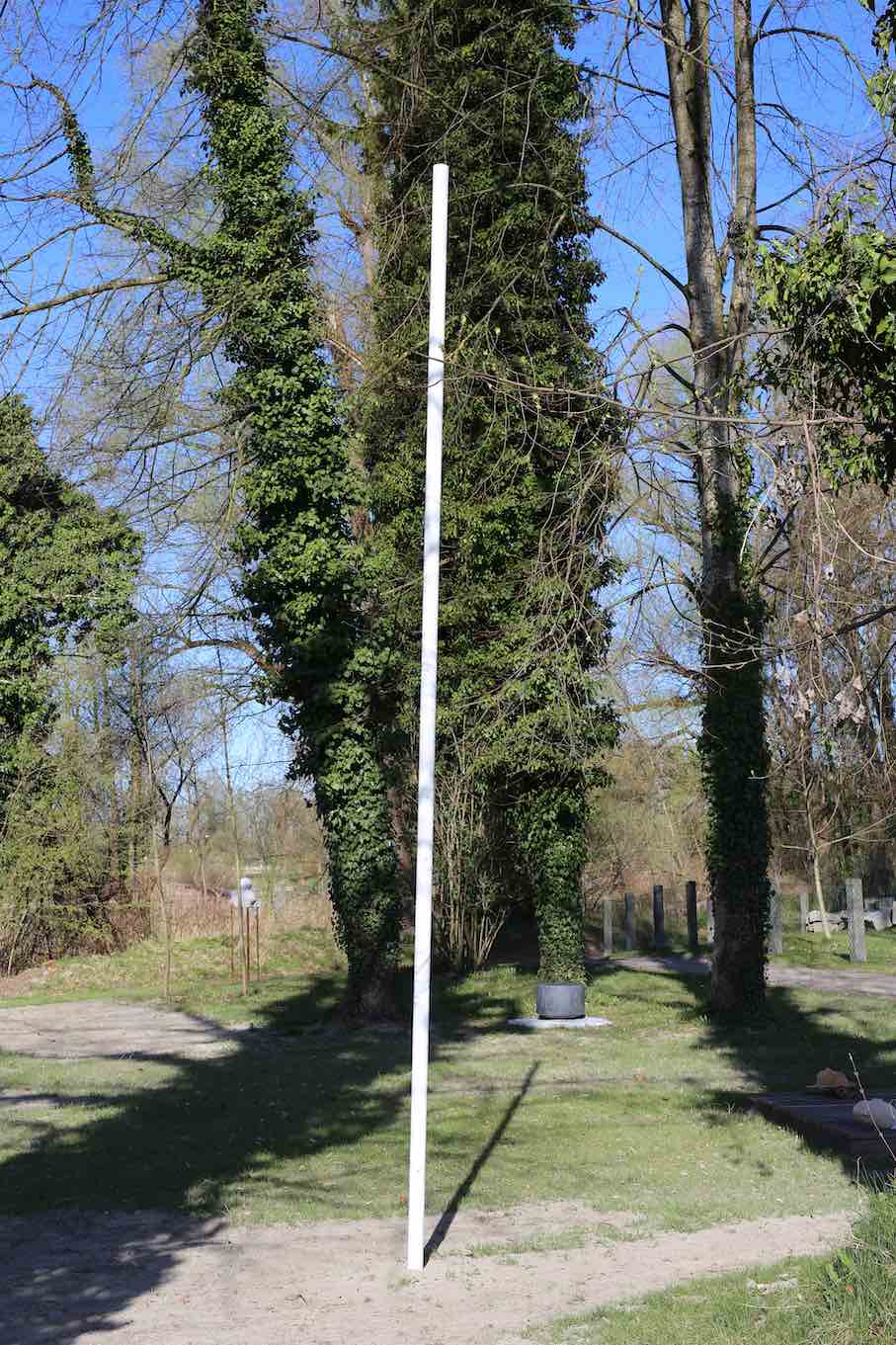 Norbert Kienesberger: “Always Jumping.“ An oversized marble pole protrudes from the greenery of the sculpture garden, reminiscent of a pole vaulter. The fragile object is slightly bent, as if it had just been used. Can stone be bent? Where did the person who was supposed to be practicing self-reflection go to?
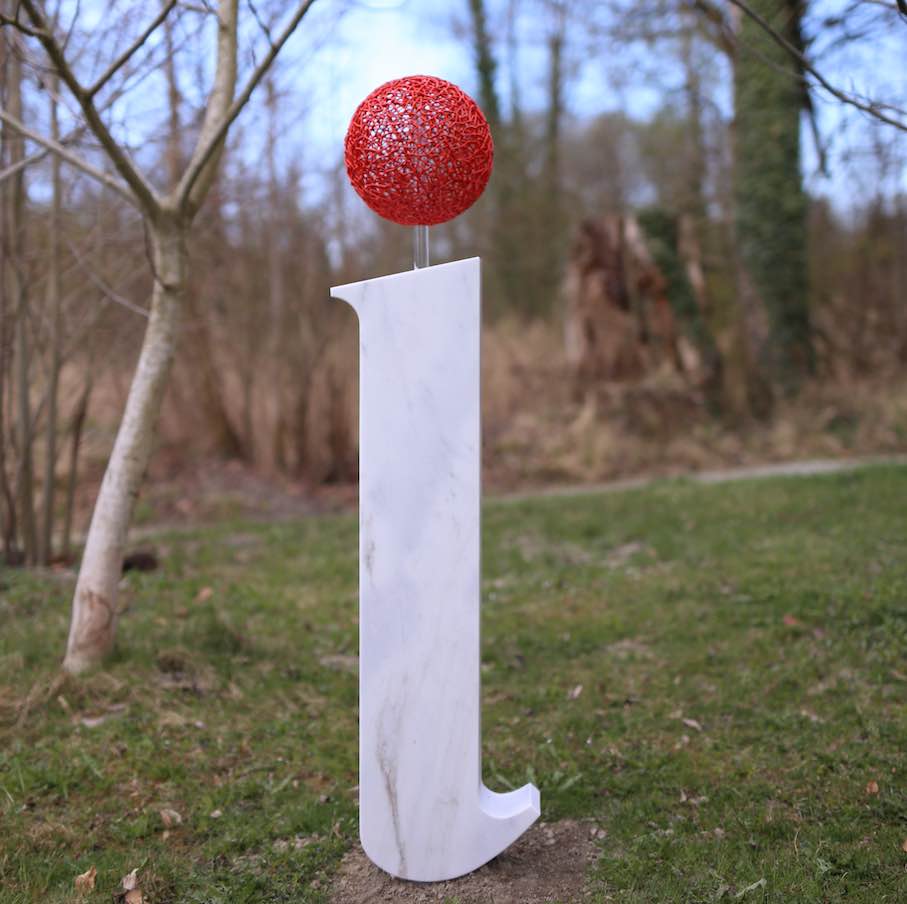 Ernestine Lehrer: “The dot on the ‘I’ (ich).“ In the local dialect, “ich“ is simply “I.“ The sculpture depicts this letter as a three-dimensional character turned to stone, in the author’s body size. The dot on the“I“ plays a crucial role: It is what makes the “I“ a complete self-portrait.
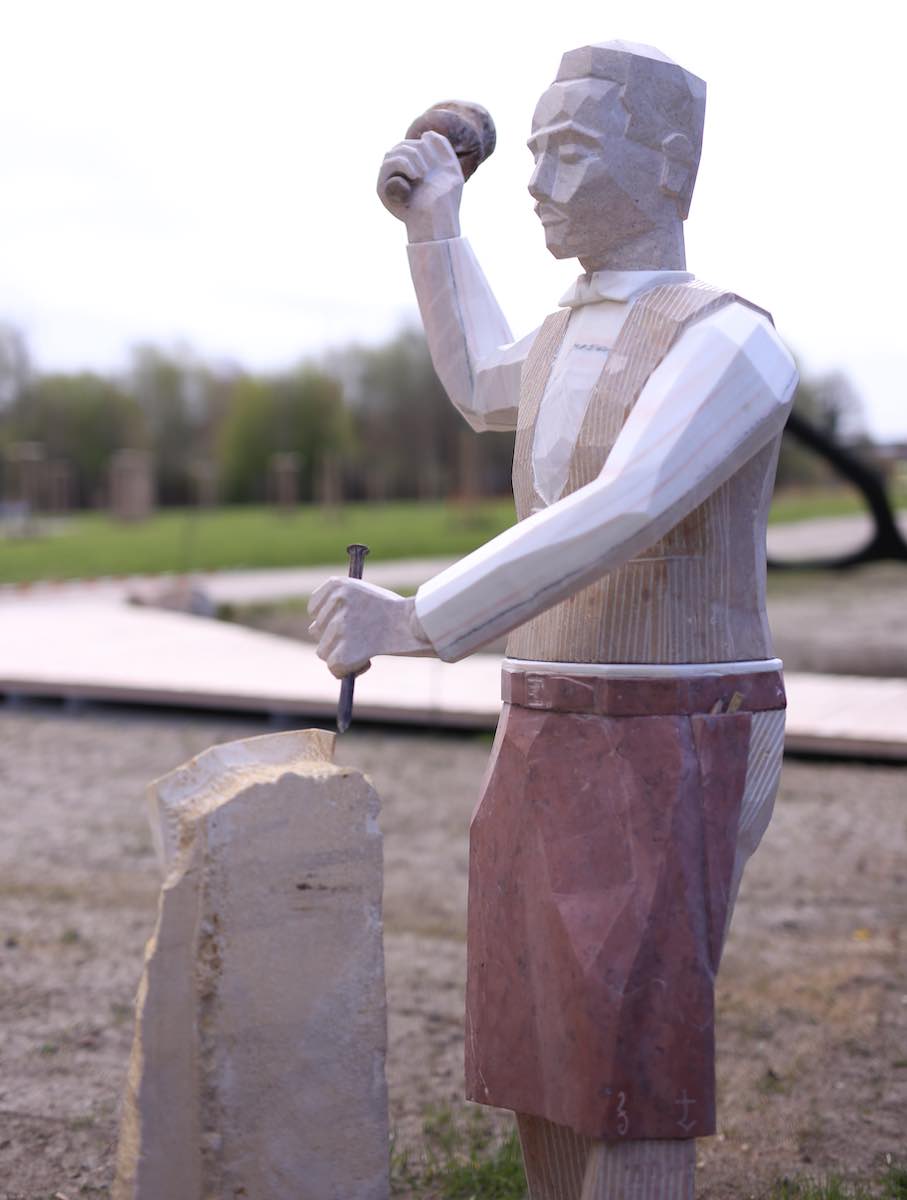 Helmut Moser: “The petrified image of the stonemason.“ The medium of stone dominates here, a sculpture composed of several parts, presented like a building using ancient stonemasonry techniques. It depicts a stonemason at work, his movement frozen in time. The life-size figure, made of local stone, shows itself creating: a few more blows, it seems, and then the headgear is finished, and the portrait of a master stonemason is complete.
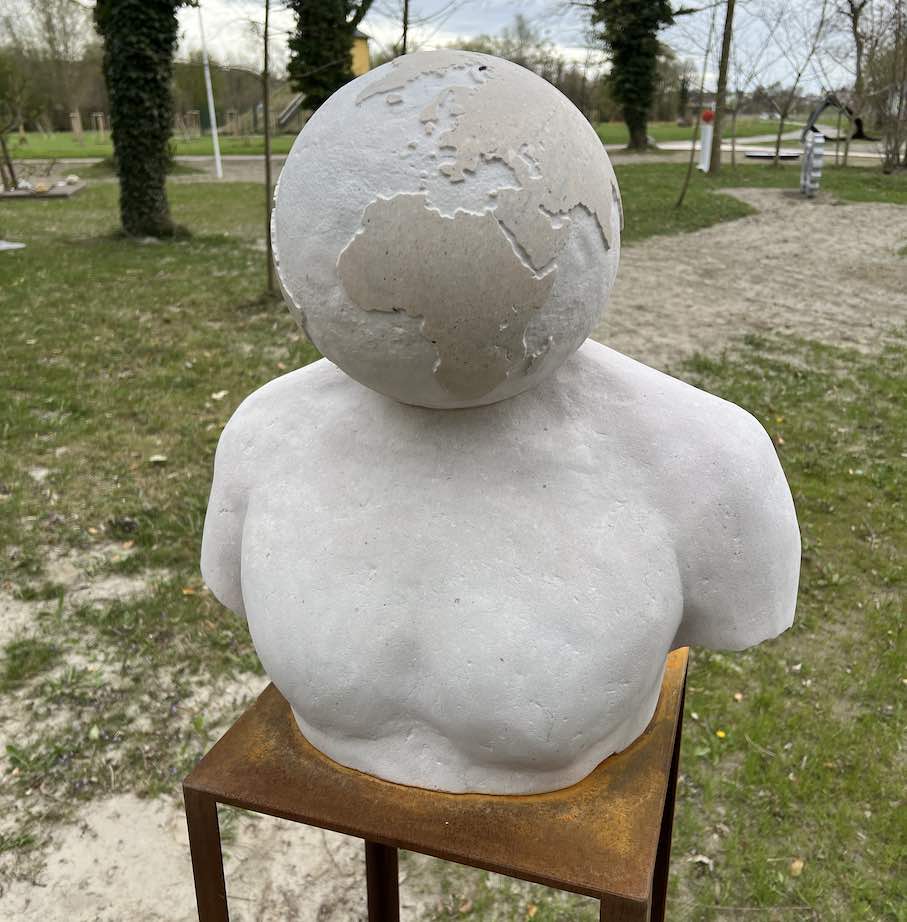 Robert Moser: “Nothing but the World.“ Enthroned on a steel pedestal is a classically designed marble bust, much like those created by sculptors throughout art history for the purpose of self-representation. Unlike traditionally designed portraits of important figures, which primarily sought to depict their external appearance, this one depicts a simple sphere. Upon closer inspection and touch, it becomes clear that it is a scaled representation of the Earth.
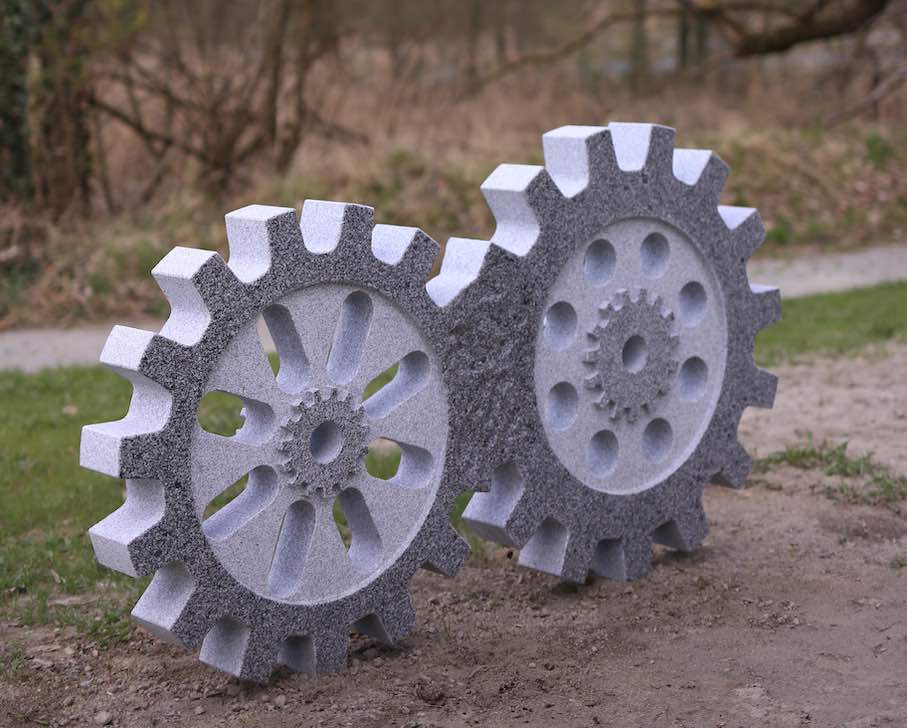 Sophia and Thomas Neukart: “Eternal Love.“ Two monumental granite gears mesh with each other but cannot rotate independently because they are fused together at their points of contact. They are also two wheels of different sizes, decoupled from an imaginary gear system, deprived of their function and standing motionless in space as a stone relic.
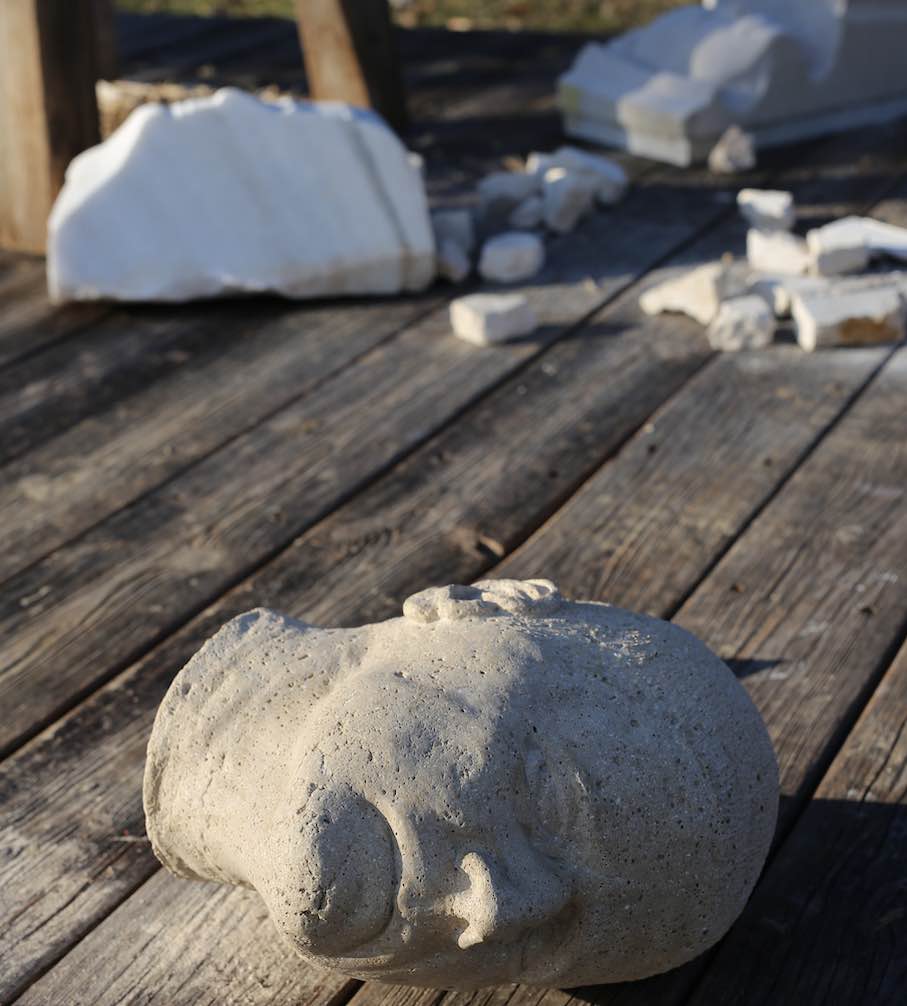 Hans Paar: “The Thousand Faces of Hans Paar.“ The installation depicts the workshop setting of a workbench with a prepared workpiece resting on it and several heads made of different materials lying loosely on the floor. The portraits resemble each other. It appears as if the stonemason is constantly working on a sculptural self-portrait, failing to fully define the facial features and repeatedly discarding the self-portrait shortly before completion.
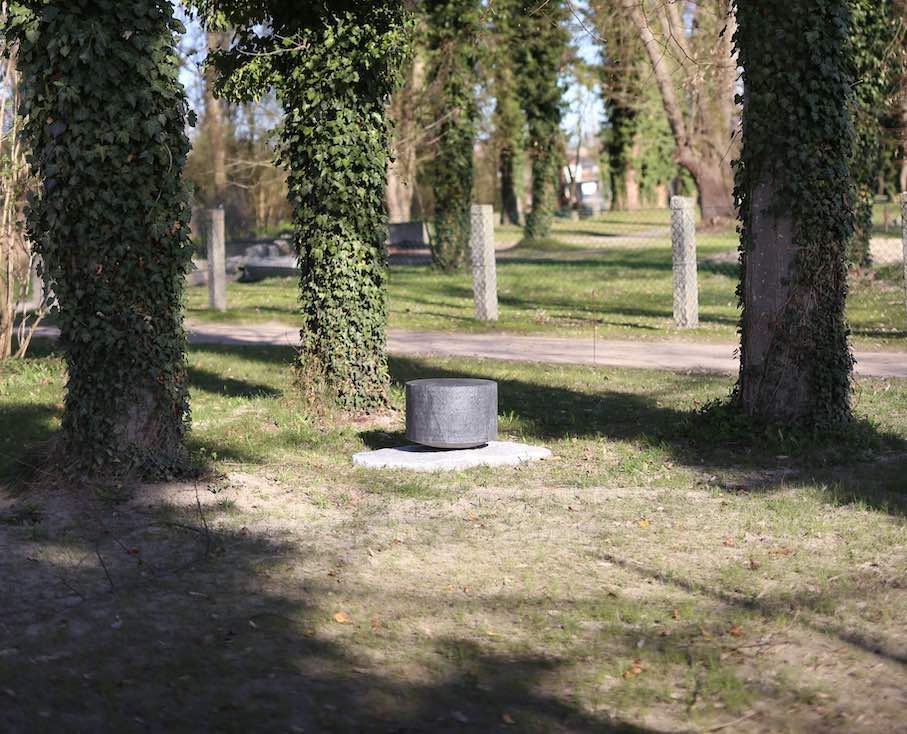 Thomas Pilsl: “The Yogi’s Rocking Chair.“ Nestled among three trees and close to the river is a rocking stone that resembles less a weathered boulder than an indoor seating piece. The minimalist design is modeled after a yoga cushion, inviting one to sit and meditate. The motto of the “Inns Grün“ garden show is taken up here and developed further into a (self-)communicative object: Come into the green, take a seat, and journey into the self!
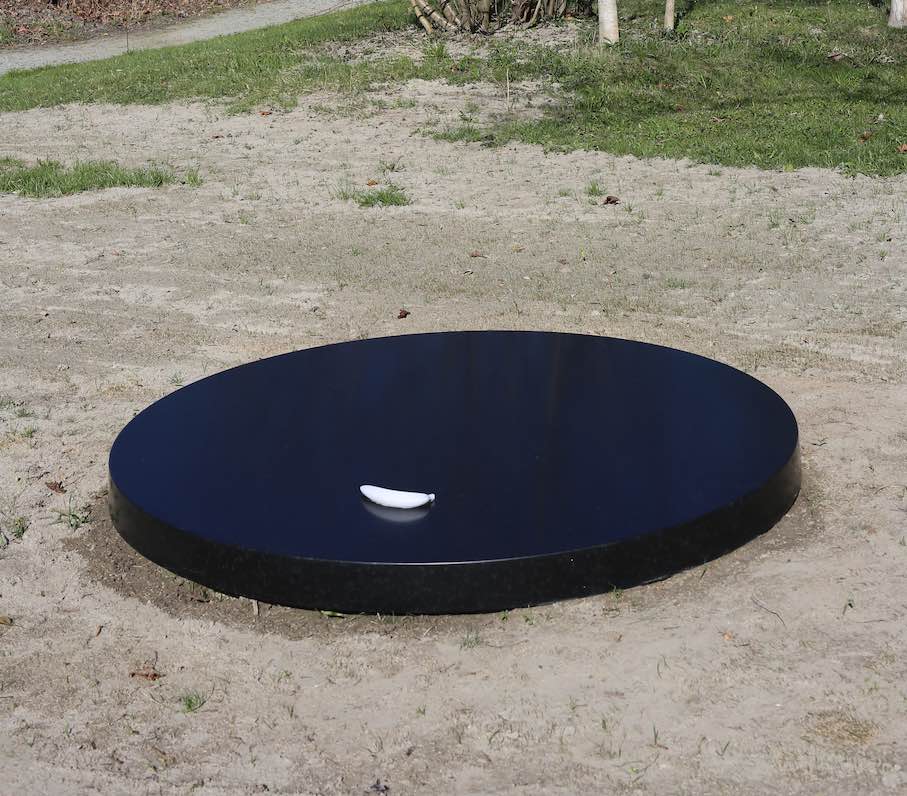 Erich Trummer: “I is Banana.“ Contrary to what one might initially assume, the banana on the circular presentation pedestal is not a perishable fruit, but an object made of white marble. As such, it defies any representation of the author. The self-portrait as a banana is an ephemeral, almost subversive object that not only ironically subverts the theme of “Into the Self.“ It also questions and comments on the value of works of art.
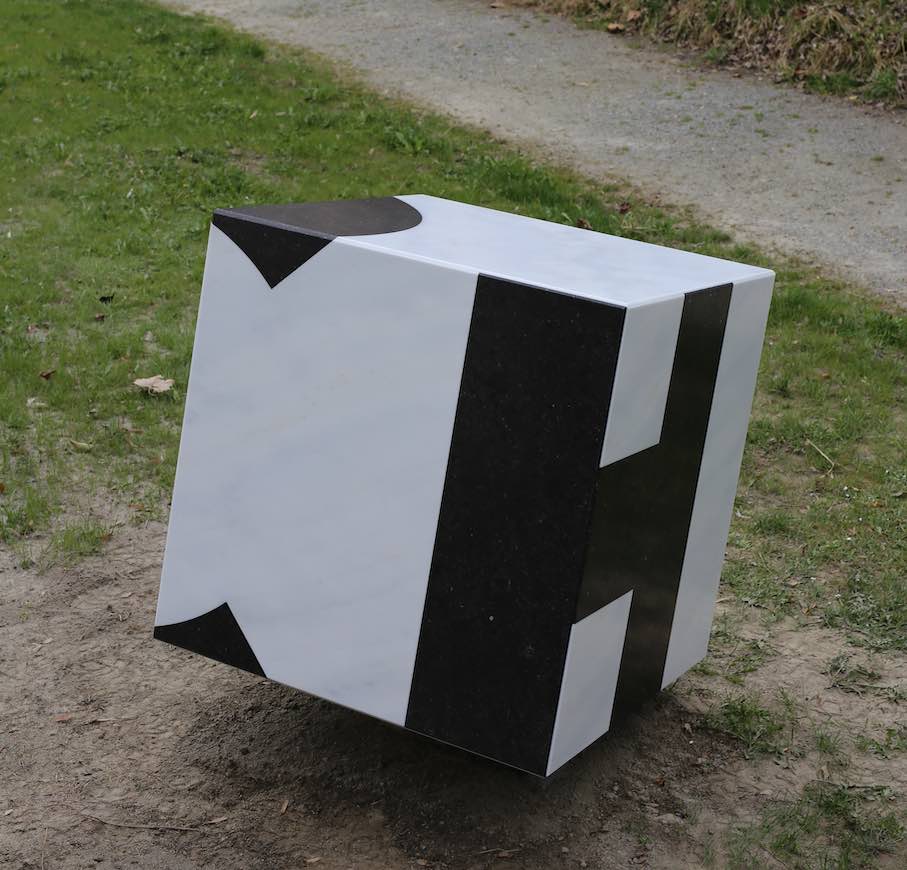 Rudolf Wienerroither: “The Fragmented Self.“ The white marble cube lies in the meadow as if it had just fallen. Black letter fragments are inscribed on its six sides, which, when combined, spell out “I.“ But the word can never be read as a whole. If the cube tilts, the “I“ is tilted or even turned upside down. It reveals itself from previously unseen perspectives.
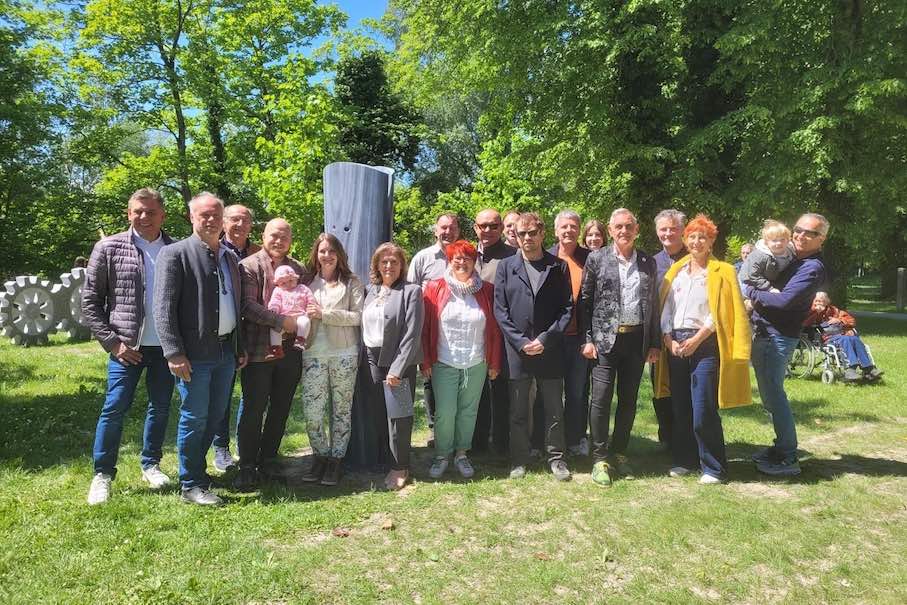 The stonemasons and Arnold Reinthaler (in the center, wearing sunglasses and a scowl).
