Stone-Ideas.com


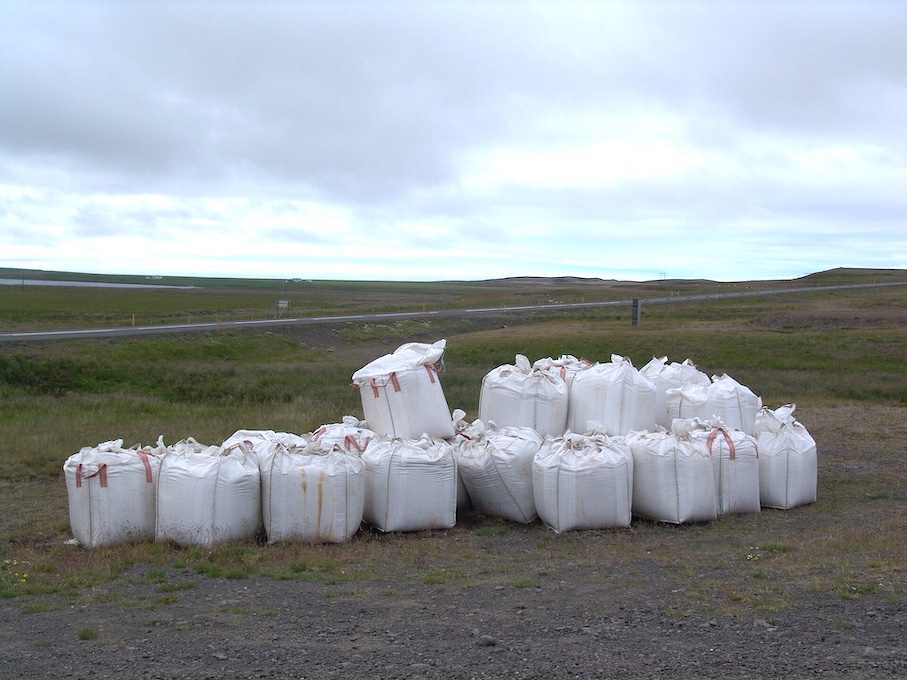
The repurposing of stone dust is a major topic within the natural stone industry. Currently, this byproduct is mostly sent to landfills, where it can occasionally lead to the contamination of nearby bodies of water. Yet, because it is a natural product, it stands to reason – following the fundamental principles of nature – that it should have some practical application.
In June 2026, the French CTMNC (Centre Technique de Matériaux Naturels de Construction) hosted a “technical day” (Journée Technique) focused on the utilization of granite powder. The event showcased research projects from three granite-producing regions: the Vosges (Raon-l’Étape), the Tarn, and Brittany.
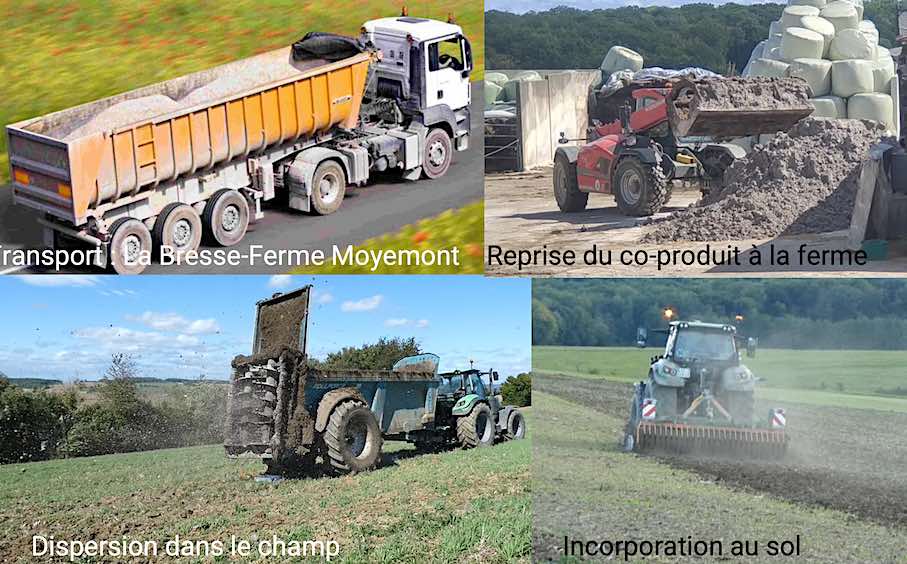
Some of these findings are quite advanced and highly promising: the byproduct can be used in agriculture as an effective fertilizer for alfalfa, a species in the clover family. It also offers potential applications in road asphalt, and can even serve as a raw material for new construction products or as a medium for 3D printing.
However, as Emilie Prin and Marie-Laure Moreau from the environmental consultancy firm Encem explained during their presentation, good intentions alone are not enough. Precise data regarding the material’s chemical composition, grain size, and other properties are essential. ”Stone powder does not become a resource simply because we want it to; it becomes one when we are able to identify a practical application and define the markets for it” – this is how we might summarize the guiding principle presented by the two speakers.
Research into the use of granite powder in agriculture is already well advanced. This includes the ”Climaxion1” and ”Climaxion2” projects, which were discussed by Marie-Pierre Turpault from the national research institute Inrae. The company Graniterie Petitjean led the first phase of the project.
The studies revealed that the sludge contains valuable nutrients, such as potassium, magnesium, calcium, and others. Furthermore, the particle size is such that plants are able to absorb these elements.
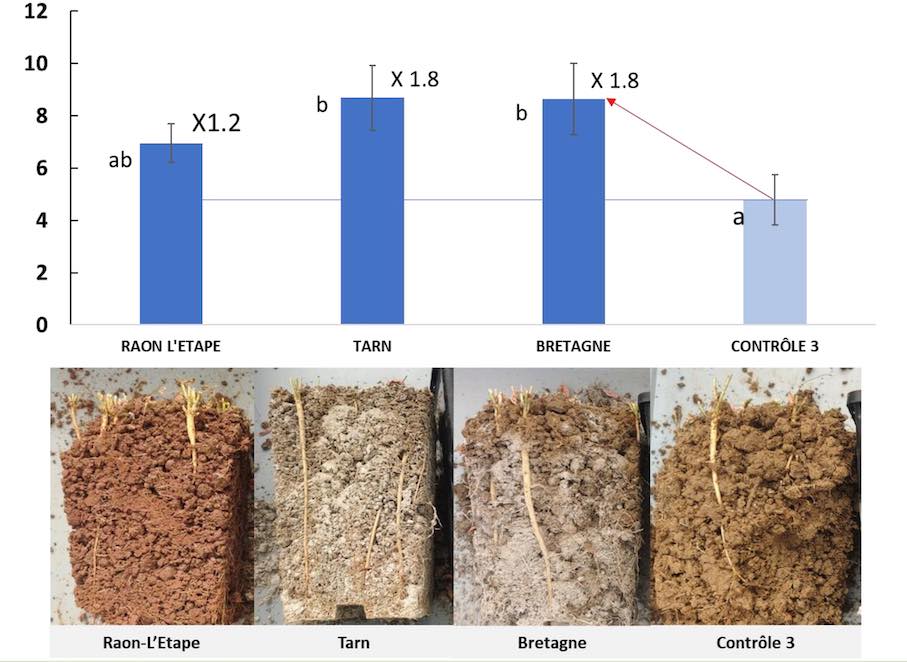
In greenhouse tests, researchers evaluated the potential of the sludge as a fertilizer: one batch of plants showed a doubling in growth, while others saw increases ranging from 21% to 35%.
There is significant interest among farmers. Field trials are currently underway to determine the optimal application rates for this new fertilizer. Work is also being done on the machinery required to spread the material across the fields.
Note: Any steel residue – originating from the gang saws or wire saws used to cut the stone blocks – poses no issue for agricultural land; the levels remain well below established safety limits.
Other potential applications include using stone dust to sequester atmospheric CO2 in the soil (through rock weathering) or, when combined with limestone dust, to improve acidic soils.
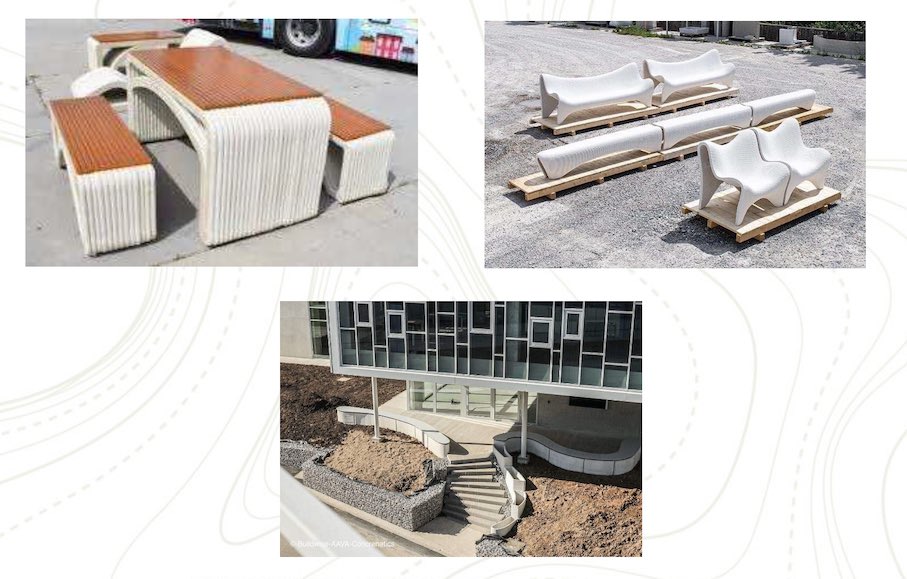
Another option is its use in concrete production. The key question here is: is the process of drying the granite sludge economically viable when compared to the cost of conventional fillers? Opportunities are also emerging in road construction: the water content in the stone sludge causes the hot asphalt to foam, which allows the bitumen to coat the aggregate particles in the road surface at lower temperatures than usual. However, while this works perfectly in the laboratory, the granite dust requires further refinement for practical, real-world application.
Representing the concrete industry, François Jacquemot from the Cerib institute expressed his sector’s interest. He noted positive results from trials using mortar, while also emphasizing the importance of quality control for the raw materials. Like other speakers, he highlighted the potential for local value creation by utilizing granite dust sourced from the vicinity of a concrete plant.
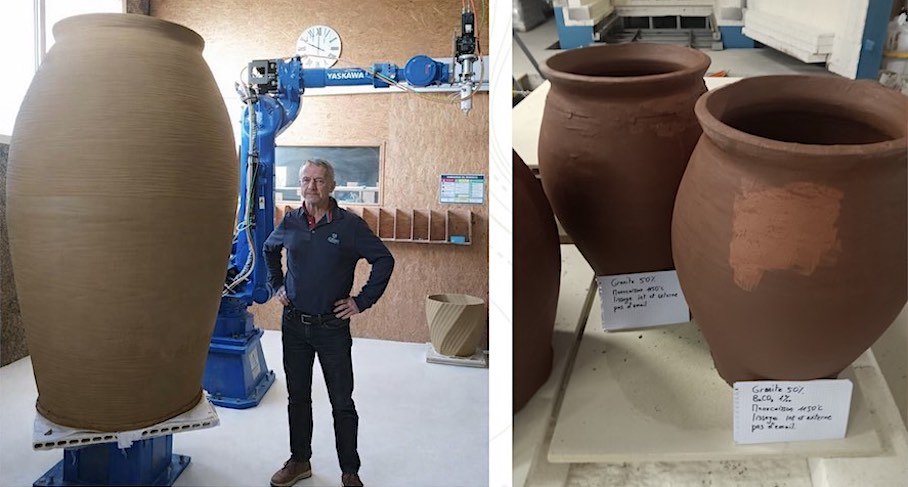
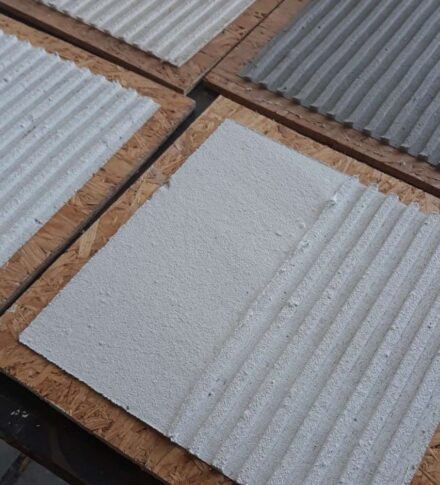
Florent Begey and Luc Segonne from the Sidobre association discussed the “Granular” project, which explores the use of granite dust in various fields, including the ceramics industry. A sub-project, “Graniprint,” is currently evaluating the use of dust for 3D printing. We present photographs of everyday products created using this method.
Minealithe is a company that already holds a patent for the production of new materials derived from sources including stone waste. Their process, known as “Lithosynthesis©,” mimics natural geological processes but operates at a faster rate and at lower temperatures.
CTMNC Journée Technique (French)
Our video highlights an unusual sight: in Rajasthan, northern India, a massive dump site for natural stone dust has become an attraction. Visitors come to admire the “snow-like” effect created by the vast quantities of waste material: