 Stone-Ideas.com


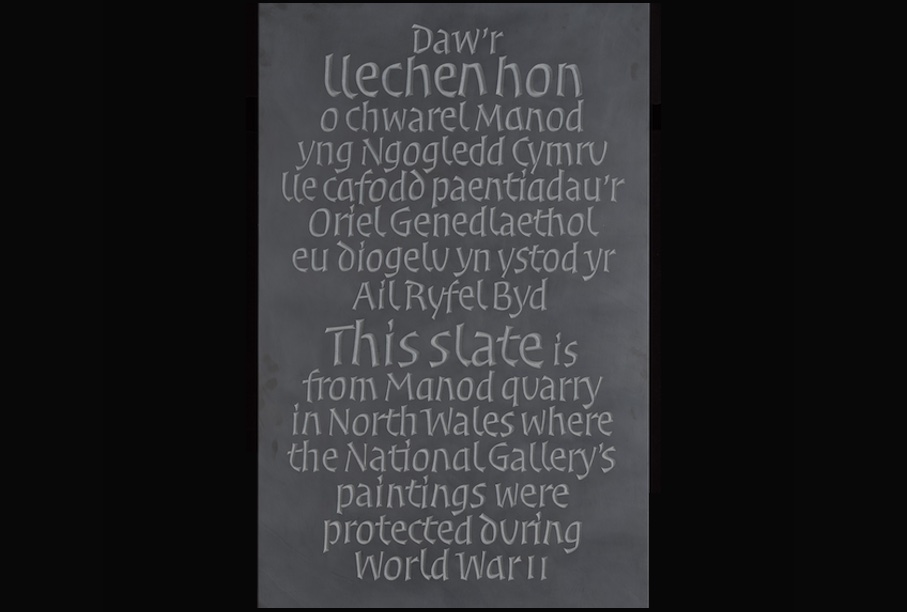
An inscribed tablet made from slate from the landscape of north Wales has been unveiled at the National Gallery to commemorate Manod quarry in Eryri (Snowdonia) which kept many of the nation’s pictures safe during the Second World War.
The inscription in Welsh and English reads: ‘Daw’r llechen hon o chwarel Manod yng Ngogledd Cymru lle cafodd paentiadau’r Oriel Genedlaethol eu diogelu yn ystod yr Ail Ryfel Byd.’ (This slate is from Manod quarry in North Wales where the National Gallery’s paintings were protected during World War II.’)
The tablet conceived by the artist Jeremy Deller and designed and carved by letter-carver John Neilson was commissioned by Mostyn, Llandudno, supported by CELF, the national contemporary art gallery for Wales, and presented to the National Gallery on the occasion of The Triumph of Art a nationwide performance by artist Jeremy Deller.
Manod Slate Tablet, on permanent display from December 02, 2025 in the Portico Vestibule of the National Gallery – close to Boris Anrep’s floor mosaic of Sir Winston Churchill depicted in war time – is a legacy of The Triumph of Art, a project that rounded off the Gallery’s Bicentenary celebrations in 2024-5. After a year-long celebration of festivals, gatherings, and art in the public realm throughout Britain and Northern Ireland The Triumph of Art culminated in a day-long public celebration in Trafalgar Square on Saturday 26 July 2025, where the Manod Slate Tablet was first revealed.
As part of The Triumph of Art, the Gallery partnered with Mostyn, an art gallery in Llandudno, north Wales, to bring young people together with Welsh-language theatre company Frân Wen to develop a multi-part performance titled “Carreg Atteb: Vision or Dream“? Beginning in the landscape of the quarries in north Wales, where many of the National Gallery’s pictures were stored during the Second World War, the performances saw the young people create their own mythological characters before delivering the slate tablet to the National Gallery’s director, Sir Gabriele Finaldi, in Trafalgar Square.
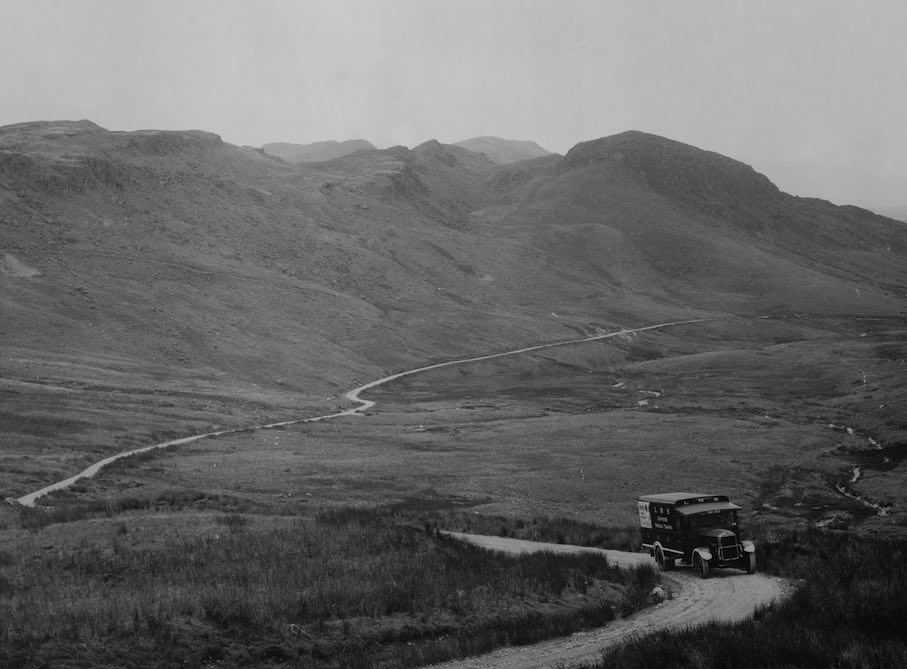
In May 1940 when the outlook seemed bleak for the Allies in mainland Europe and an invasion of Britain looked imminent, a plan was needed to protect the national art collection which was already in temporary hiding places in Wales where it had been since the beginning of the war in 1939. One proposal was for the paintings to be evacuated by ship to Canada, but the possibility of U-boat attacks worried the Gallery’s director, Kenneth Clark. He went to see Prime Minister Winston Churchill who immediately vetoed the idea.
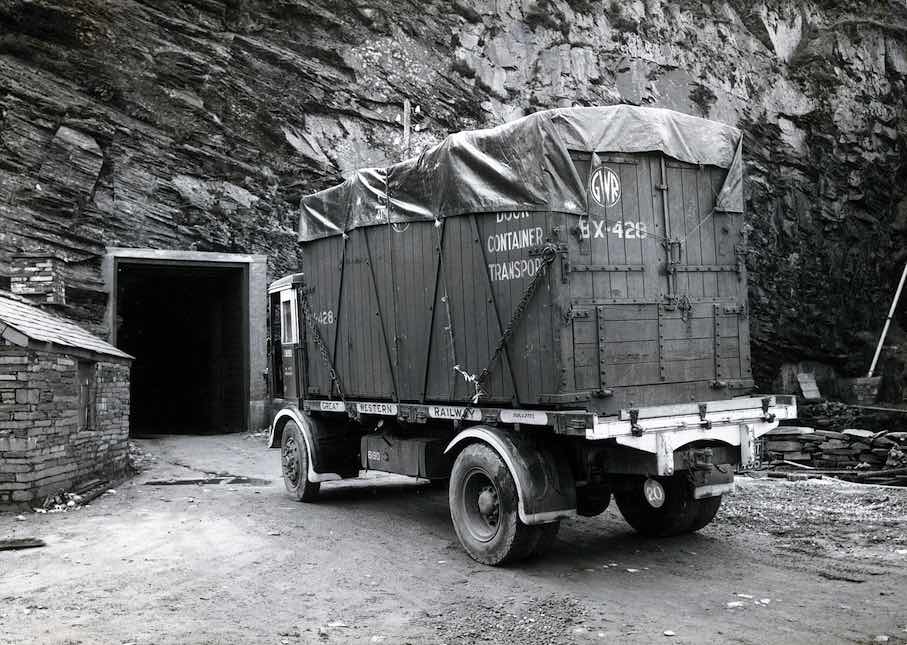
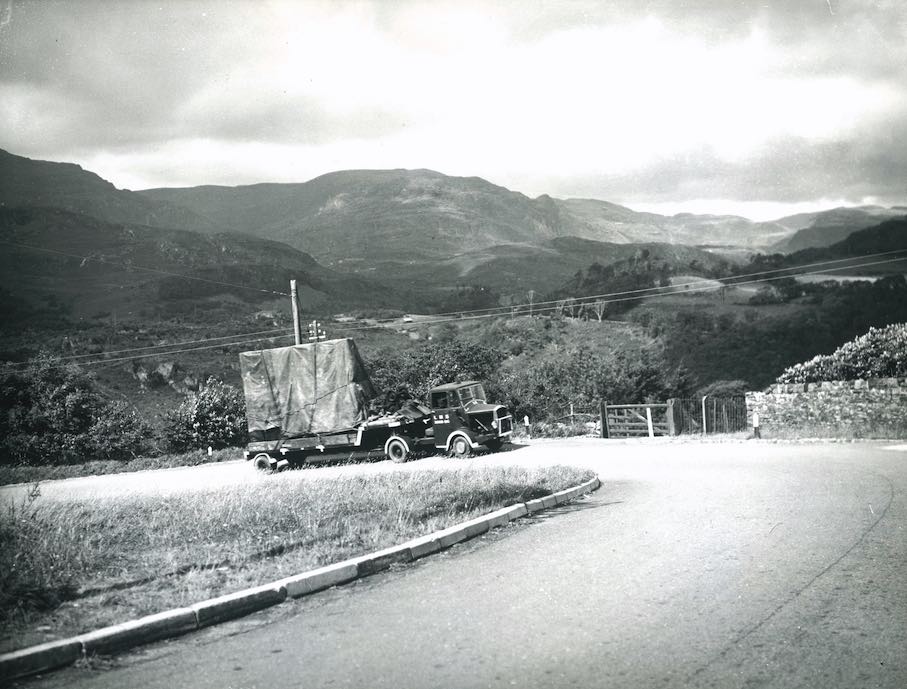
The Manod mine in north Wales fitted the bill of hiding place perfectly. Explosives were used to enlarge the entrance to accommodate the largest paintings and several small brick ‘bungalows’ were built within the caverns to protect the paintings from variations in humidity and temperature. A special ‘elephant’ case was constructed to transport the paintings safely on trucks to Wales. By the summer of 1941, the whole collection had been reunited in its new subterranean home, where it was to remain for four years.
Valuable discoveries made during this time were to influence the way the Collection was displayed and cared for when it returned to London after the war ended in 1945. It had long been known that paintings are happiest in conditions of stable humidity and temperature, but it had never been possible to monitor a whole collection in such controlled circumstances before. Air conditioning was included in the plans for the major renovations needed for the west wing of the National Gallery, which had been badly damaged during bombing raids, and the Scientific Department (which had been established shortly before the war) was joined by a newly-formed Conservation Department.
Daniel F Herrmann, Ardalan Curator of Modern and Contemporary Projects at the National Gallery, says: “We are grateful to Jeremy Deller, John Neilson and the team at Mostyn and CELF, the national contemporary art gallery for Wales, for their partnership in commemorating a significant moment in the history of the nation’s collection.“
Sir Gabriele Finaldi, Director of the National Gallery, says: “The Manod Slate Tablet serves as a reminder of the crucial moment when during wartime the nation’s paintings were secreted in caves in the slate hills of north Wales to preserve them for future generations.“
Dr Kath Davies, Director of Collections & Research at Amgueddfa Cymru, says: “It is wonderful to see how the CELF network is making a real difference to the contemporary art scene in Wales. Through CELF we are able to support contemporary artists to make new work and encourage our audiences to engage with Welsh stories and interests. This is a fantastic project that commemorates an important historic event but also preserves traditional Welsh craft and heritage. “
The National Gallery, Manod Slate Tablet in the Portico Vestibule, The National Gallery, Admission free
Source: The National Gallery