Stone-Ideas.com


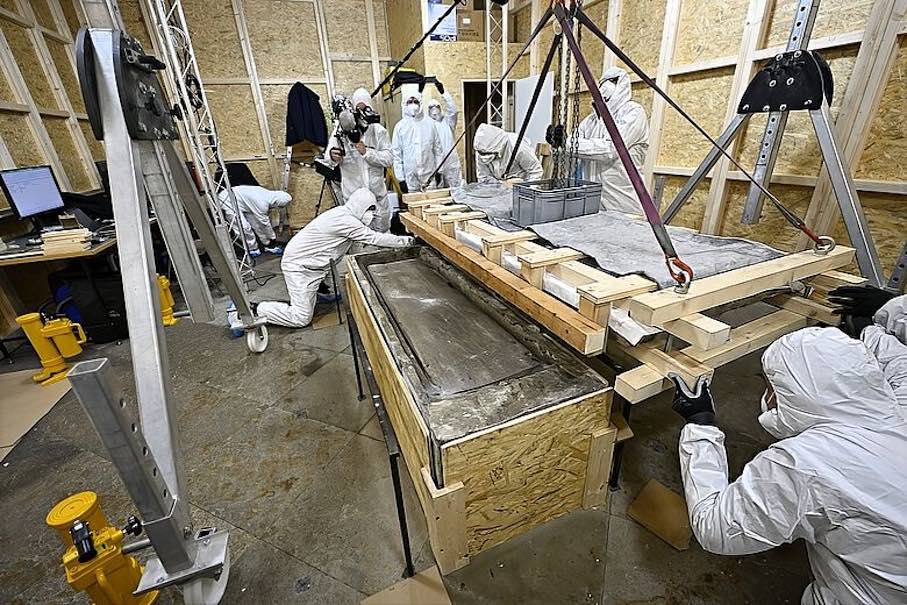
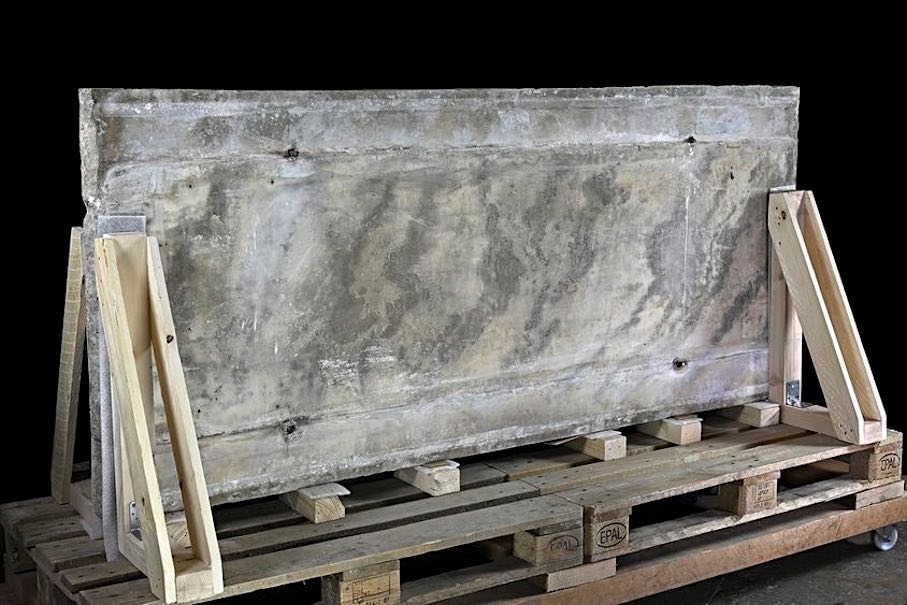
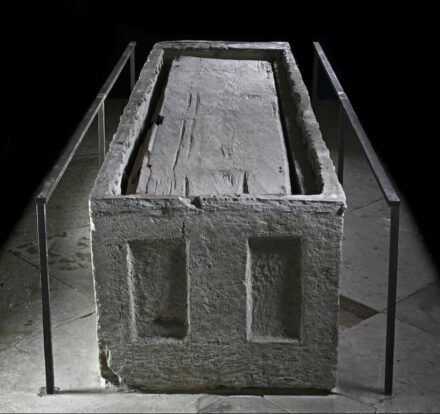
Current investigations of the tomb of Emperor Otto the Great in Magdeburg Cathedral, Germany, have yielded a surprising interim result: the cover slab of the sarcophagus clearly does not come from quarries in Italy or Greece, but from the Prokonnesos quarries (today: Marmara Island near Istanbul). This has been revealed by material investigations carried out by researchers from Vienna and Bochum.
However, it is still likely that it come to Magdeburg via Italy.
The investigations took place as part of a collaborative project between the Saxony-Anhalt Cultural Foundation and the Saxony-Anhalt Office for the Preservation of Historical Monuments and Archaeology (LDA).
Otto the Great (912–973) is one of the central figures in European history. With his coronation as emperor in Rome in 962, he continued the old dream of a European empire modeled on the Roman Empire, as Charlemagne had done some 150 years earlier. What was new was that they saw themselves as Christian rulers.
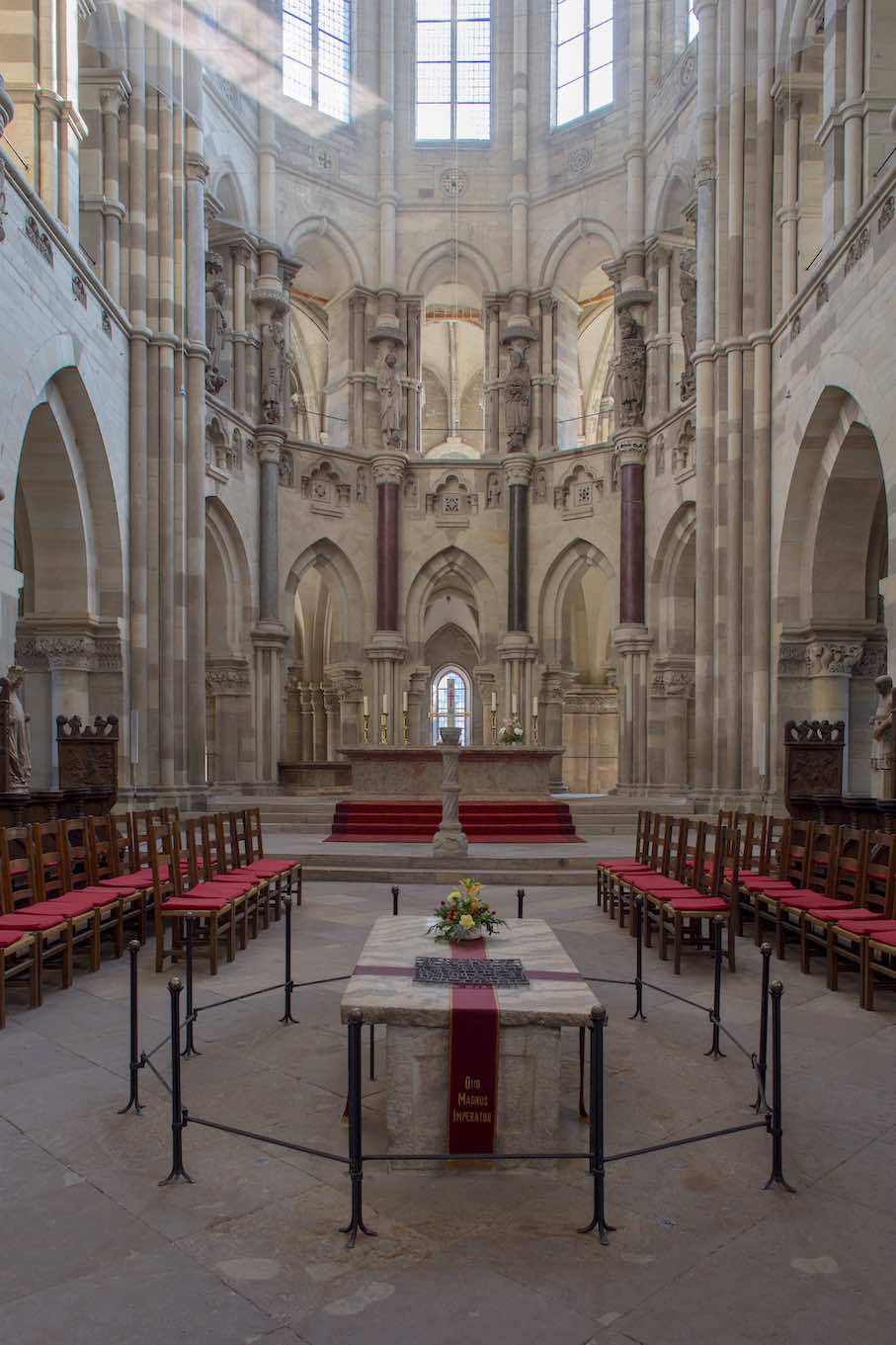
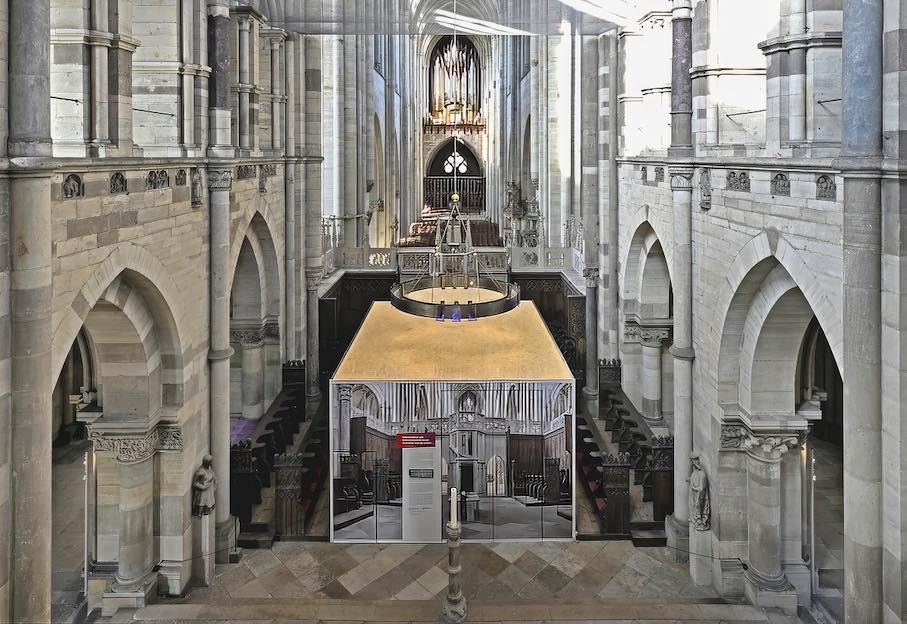
His tomb in Magdeburg Cathedral is of great cultural and historical significance, but had recently become so badly damaged that rigorous measures were necessary to save it. This included removing the marble lid from the stone sarcophagus. This was done in March 2025, providing a unique opportunity to examine the monument more closely.
Inside the limestone outer casing stands the wooden coffin. We have already reported on the analyses in our German issue.
It had long been known that lid of the sarcophagus was made of reused ancient material. Until now, however, experts had assumed that the stone was Carrara or Cipollino marble (from the Apuan Alps in Italy) or from quarries on the Greek island of Euboea. This assumption was based on examinations of very small samples.
Otto‘s life data and other facts had suggested this.
Now, two specialists in determining the origin of ancient marble, Walter Prochaska and Vasiliki Anevlavi from the Austrian Archaeological Institute at the Austrian Academy of Sciences (Vienna) and Vilma Ruppiene from the Institute of Archaeological Sciences at the Ruhr University Bochum, German, have examined the slab using scientific methods on “representative samples,” according to a press release.
To this end, they extracted one drill core with a diameter of approximately 1.5 cm from the white area and one from a dark layer of the slab. Thin sections of these samples were subjected to petrographic analysis. In addition, the rock was examined for its isotopic and chemical composition.
The results were compared with around 7,500 quarry samples from classical ancient deposits in the Mediterranean region, northern Italy, and the Eastern Alps.
The results clearly show that the marble used for the tomb lid originated from the deposits in Prokonnesos.
High-quality natural stone has been quarried there since the Archaic period (7th/6th century BC) to the present day.
Proconnesian marble is white and features narrow gray bands of varying intensity and rare folding. In ancient times, the stone was usually cut so that the bands ran along the longitudinal axis.
Experts believe that the structure of closely folded bands with dissolved and jagged edges at an angle to the longitudinal axis, as seen on Otto‘s tomb‘, probably only became fashionable in late antiquity.
Numerous examples of Proconnesian marble of this type are known from Hagia Sophia in Istanbul, San Marco in Venice, and Ravenna in particular. There, they were used for wall cladding, flooring, and columns.
Since Otto I spent about ten years of his life in northern Italy, it was highly probable that the slab for his tomb also came from there.
However, it is now clear that it could not have been transported directly from the quarries of Prokonnesos to Magdeburg.
This had been already unsecure for logistical and political reasons: after all, it is known that Charlemagne had to buy marble spolia in Rome and Ravenna because he could not find them elsewhere.
Landesamt für Denkmalpflege und Archäologie (LDA) Sachsen-Anhalt (Saxony-Anhalt Office for the Preservation of Historical Monuments and Archaeology, German)