 Stone-Ideas.com


 As we begin the new year, we want to look back at 2025 and examine the innovations developed by companies, researchers, and young people. We will not only focus on stone itself, but also on related materials.
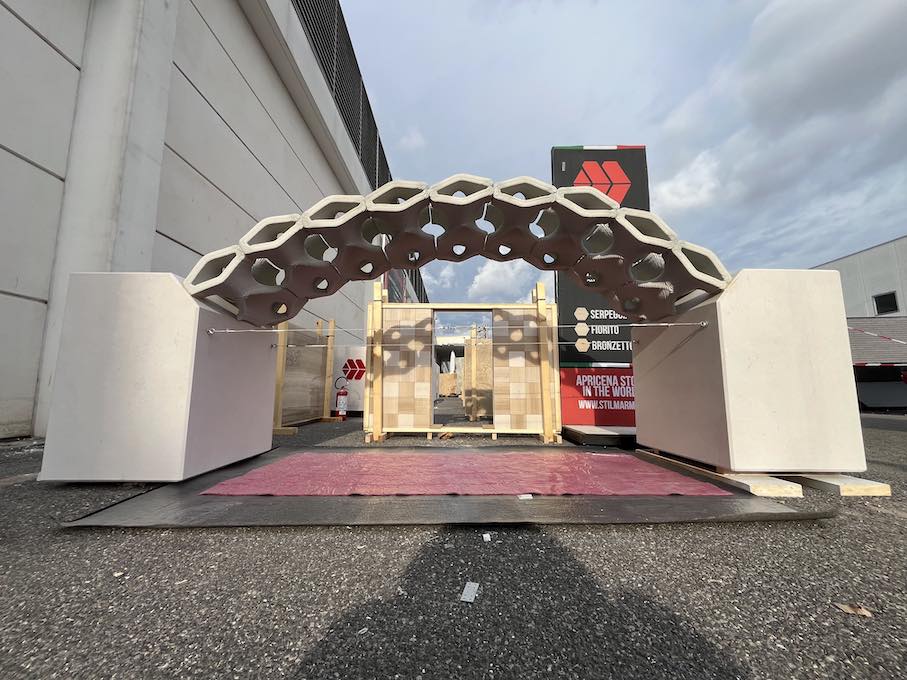
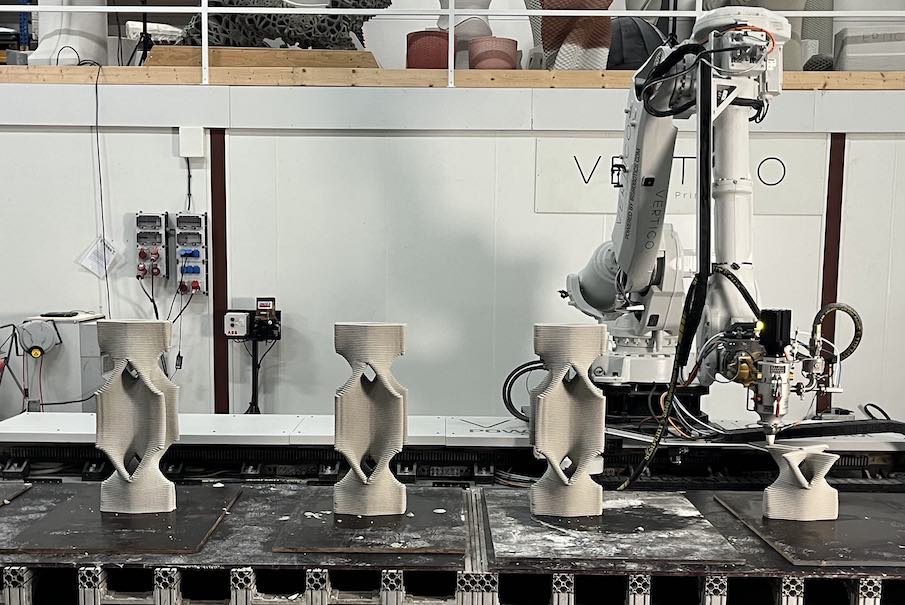
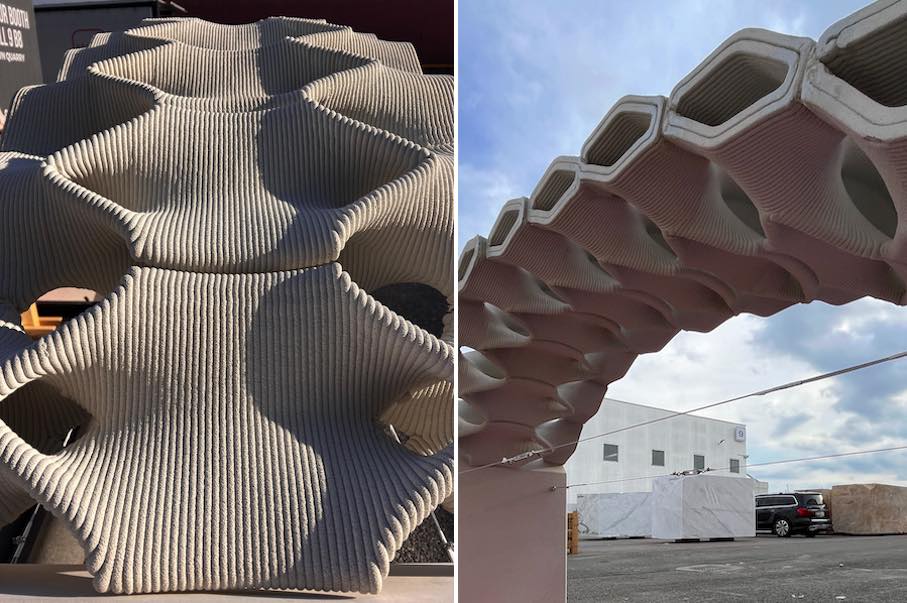 Professor Giuseppe Fallacara of the Politecnico di Bari, at the southern tip of Italy, has the use of natural stone powder as one of his topics for research & development. The starting point for his work is the fine waste material that results from sawing raw blocks or slabs, for example. It is 100% natural stone, but until now has been largely worthless – its utilization, however, is significant for the material’s environmental footprint. It is worth noting that the ceramics industry tirelessly emphasizes the “green“ aspect of its tiles, particularly the high proportion of recycled material added to their raw materials. Fallacara’s institute has long researched ancient construction concepts such as stereotomy. This time, at the Marmomac trade fair in Verona, together with student Francesco Ciriello, he presented a vault composed of individual stone elements produced by a 3D printer using stone dust. Titled “Minimal Vault,” it reflects the fact that comparatively little material was used. What makes this bridge special is the geometry of the individual elements, which is based on studies by the Italian engineer Sergio Musmeci (1926–1981). The construction of such a bridge follows a centuries-old method: first, two lateral abutments are built; then, the elements for the desired arch are laid out on wooden formwork; finally, the formwork is removed.
For 3D printing, Fallacara used a mixture of stone dust and cement as binder. As preliminary tests showed, these non-solid elements can withstand a load of up to 1000 kg. The prototype at Marmomac had a vault length of 3.5 meters and a width of one meter.
——————————-
(Photo on top) “Apriti Sesamo”
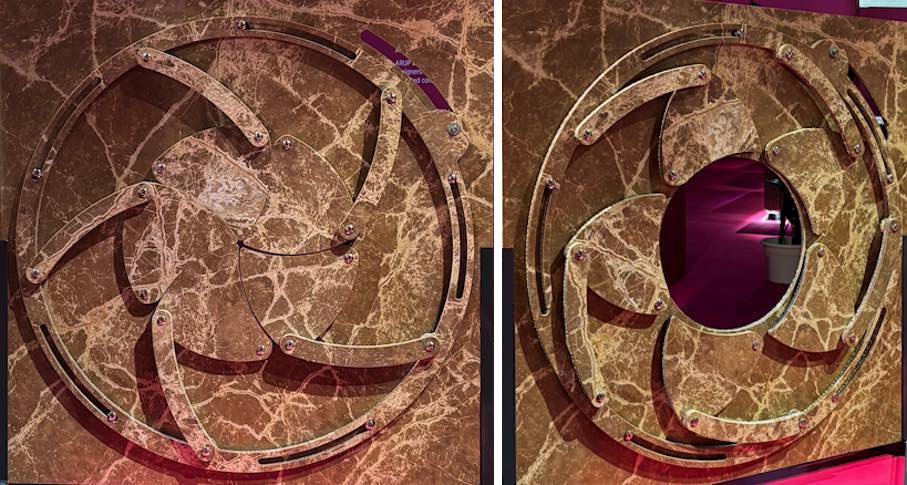
Another presentation at Marmomac 2025, specifically in the Italian Stone Theater in Creatives’ Hall 10, came from Sara D’Adamo, also a student at Fallacara’s institute. She had given her mechanical installation the picturesque title “Apriti Sesamo” (Open Sesame) and had adapted architect Jean Nouvel’s idea for the façade of the Institut du Monde Arabe in Paris to natural stone: a photographic lens made entirely of marble, which opens and closes automatically. With this marble construction measuring 80 x 80 cm, she demonstrated that façade decoration with natural stone is not limited to static slabs.
———————————-
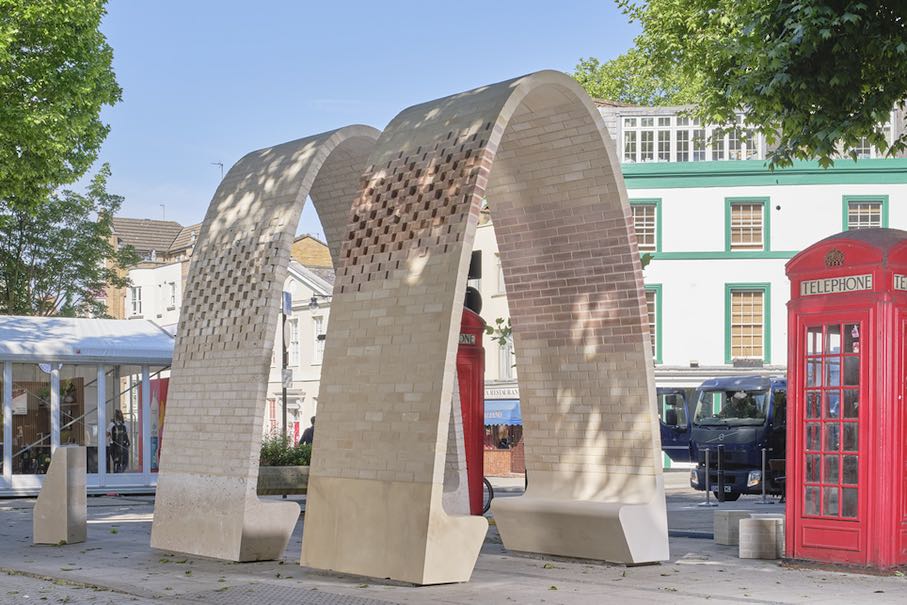
 Another new product of this year came from Great Britain, and the only truly novel aspect was that someone had recognized its market potential and incorporated it into their product portfolio. These were “Stone Bricks,” and the driving forces behind them are Hutton Stone and Albion Stone. For the first time, they had their production lines cutting these small bricks in defined sizes and large quantities from raw slabs. Their slogan for the product ist ”Brick from a Stone.” Our photos show their installation “Arch Revival” during Clerkenwell Design Week in central London, realisiert in cooperation with the engineers from Webb Yates and the designers from Hawkins\Brown. The types of stone used (Hutton Stone sandstone, Heritage Portland limestone) demonstrate that such constructions, like classic brickwork, also allow for interplay of colors.
https://www.stone-ideas.com/111849/stone-bricks-once-were-rubble-stone/
Photo Credits: Will Pryce & Sam Frost
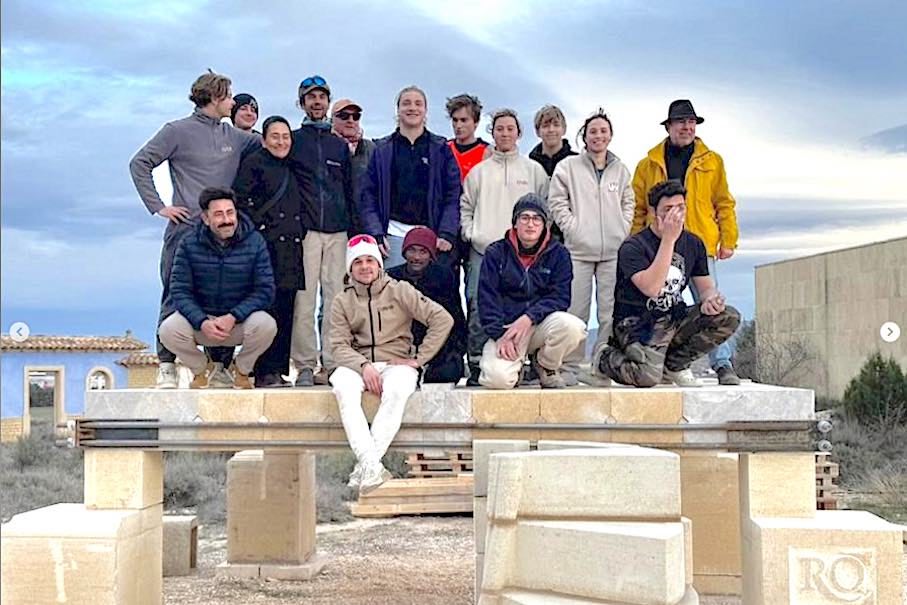 The core concept is building with natural stone as a load-bearing material; the goals are to minimize CO2 emissions and achieve cheaper and faster construction. In Spain, the company Rosal Stones created a building ceiling from small, interlocking stone elements held together by tensioned steel rods around the outside. The “Mass Piedra 25” (Massive Stone 25) project is scheduled to continue in 2026 again with the participation of universities and international stonemasons.
https://www.stone-ideas.com/112904/workshop-building-with-natural-stone-today/
 The “Stone Demonstrator,” on display in central London throughout the year, showcased a range of modern techniques for solid/load-bearing construction using natural stone. The exhibit featured structures where small solid blocks are held together by tensioned steel cables. We already published the long list of participants.
https://www.stone-ideas.com/119253/stone-demonstrator-london-solid-stone-construction/
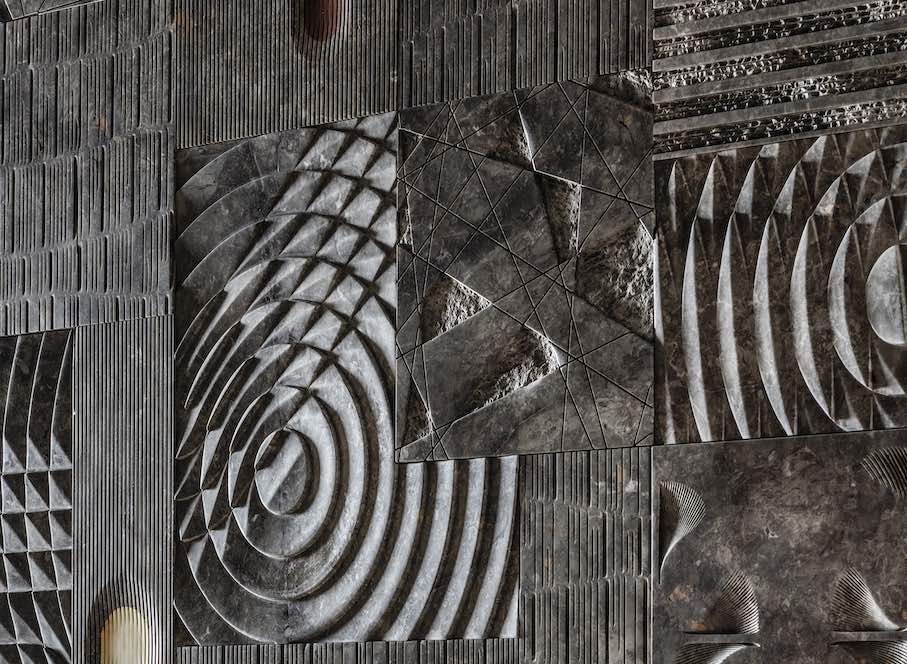 Speaking of product design with natural stone: The “Motus Animi” collection by the Sicilian company Lithea went far beyond ordinary wall tiles: It brought to market pieces that allow customers or interior designers unlimited creative freedom with the elements. Such a concept is only possible with natural stone.
https://www.stone-ideas.com/118352/lithea-from-sicily-motus-animi/
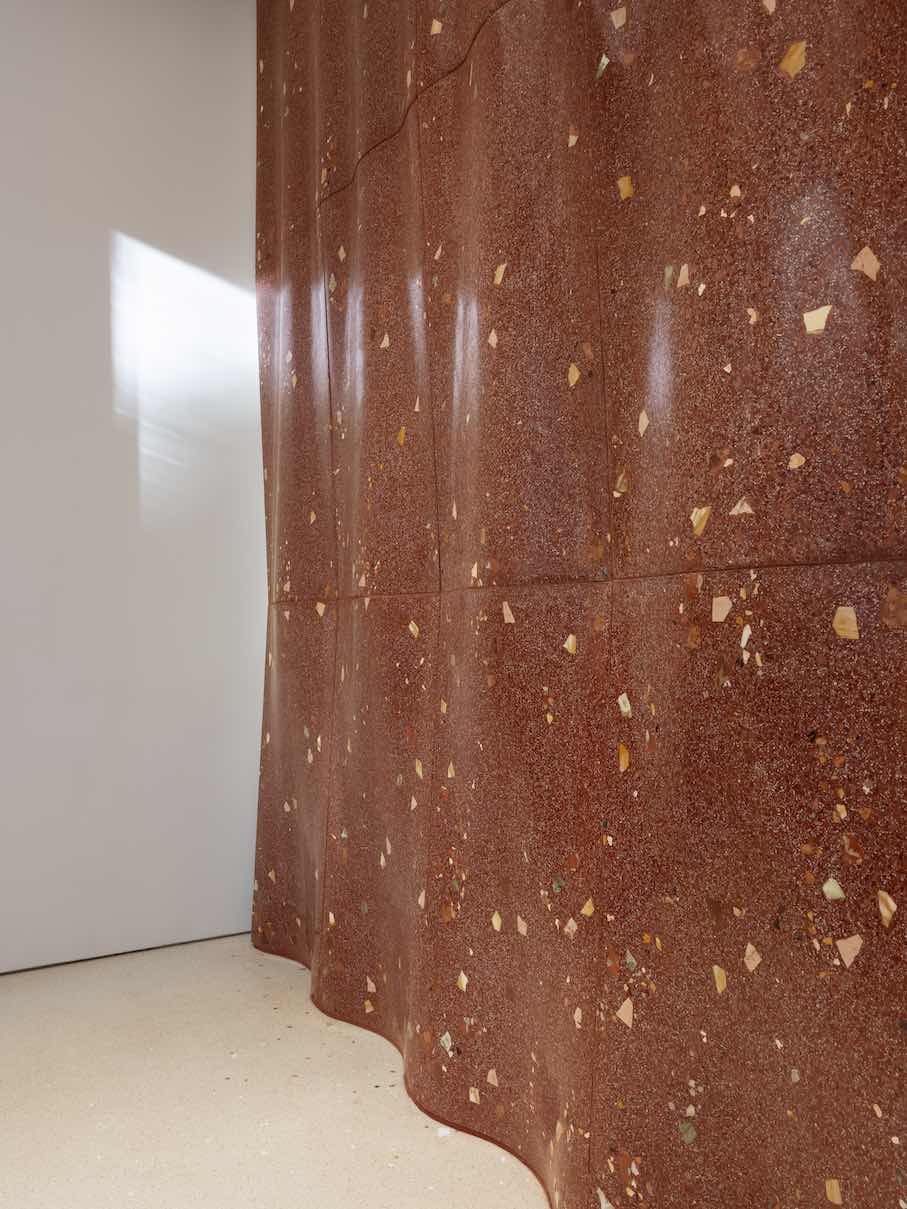 At Milan Design Week in spring 2025, we came across a presentation by Fantini Mosaici, who displayed a scented terrazzo. Their “Martian Veil” was used as a wall covering and emitted a pleasant fragrance of “eucalyptus, incense, and wood,” according to the press materials. The red-hued terrazzo was created using natural stone varieties such as Rosso Verona, Rosso Francia, Verde Ming, and Giallo Siena.
https://www.stone-ideas.com/114070/fantini-mosaici-terrazzo-with-pleasant-scent/