Stone-Ideas.com


Predicting economic developments in 2026 is even less feasible than usual: Political instability in many regions of the world is too great, and the actions of major players are too unpredictable.
However, with regard to the stone sector, some trends have now developed into genuine megatrends. They are so strong that their development can be outlined in individual aspects.
All of them revolve around “green” concerns, ranging from environmentally friendly quarrying to waste reduction in processing and energy from renewable sources.
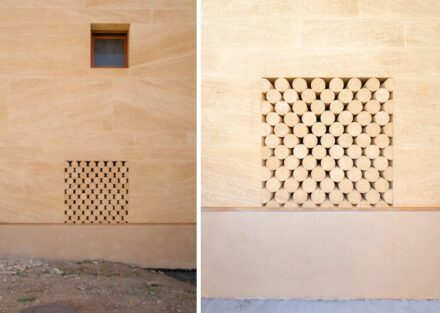
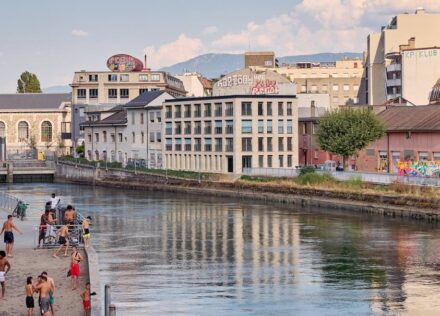
We want to focus on another voice in this overall chorus: solid construction with natural stone. This refers to the use of stone as a load-bearing material for walls or ceilings, no longer just as a material for cladding façades, walls, or floors.
This is creating a huge new market for natural stone – more precisely, the market for using stone as a load-bearing building material, as was once the case for temples, castles, or town halls, is making a comeback. This time, the reason for the demand is the material’s low ecological footprint.
The topic has already made significant progress in Europe. The Xiamen trade fair will dedicate a lecture to it in March 2026.
So far, the following forms of solid construction have been developed:
* Walls made of small blocks, similar to a modular building system;
* Poststressing: combining stone blocks with tensioned steel cables;
* Interlocking: various shapes of stone blocks or slabs that fit together;
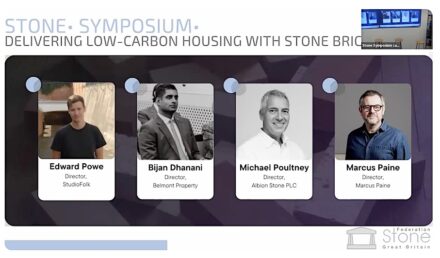
* Stone Bricks: building blocks in the form of the knewn clay bricks, which, due to the color variations of the stones, allow for many design options.
All in all, these are old ideas, but resourceful companies, engineers, and craftsmen are exploiting the possibilities of modern planning and execution.
One particular aspect is the fact that natural stone is used here like any other building material.
We have already discussed at length that this poses no threat to the image of exclusive varieties. We pointed to the paperback edition, which has not diminished the appeal of the elegant hardcover books.
On the contrary, and this is the debate we want to initiate here: How can suppliers of exclusive varieties participate in the boom in solid construction without damaging the luxury image of their stones?
We don’t have the answer. But it seems to us to be of paramount importance for stone companies.
Because especially in the quarries of exclusive varieties, large quantities of waste are generated during extraction. This waste is actually fully functional as stone, but it has to be sorted out or processed into gravel because its surfaces do not exhibit the color or texture that consumers and their architects prefer (or have preferred).
If a use for such material can be found in construction – as mentioned, without damaging the image of premium stone – quarry companies will have access to a vast reservoir of raw blocks that are already semi-finished and simply waiting to be used.
Other megatrends for the stone sector remain:
* As before, stone as a decorative material for façades, walls, or floors, because – natural stone is simply beautiful;
* Product design with natural stone. The possibilities here are far from exhausted. Truly successful design work has so far only been achieved in the ultra-exclusive market segment. We continuously present such innovations in our “Product Design” section.
* Circular economy is another exciting topic with the potential to become a megatrend. Natural stone is very well positioned here due to its long lifespan.
One more point: Solid construction is not a market for exporters. When stone has to be transported over long distances, its low ecological footprint is lost.