 Stone-Ideas.com


By Carlos Rubens Alencar*
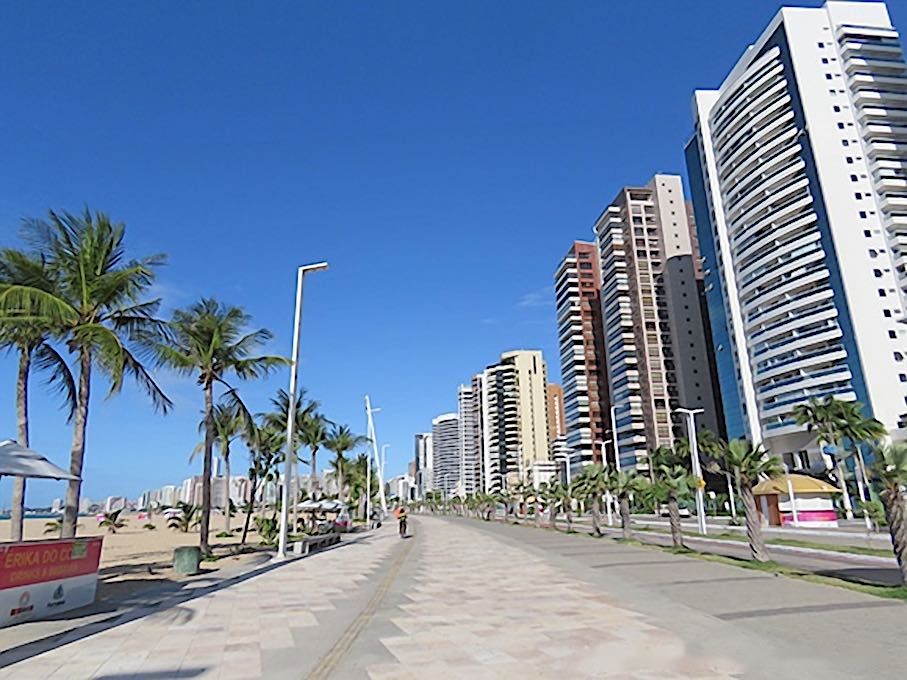
There is a paradox in the construction sector in Brazilian cities: on the one hand, large quantities of locally sourced natural stone are exported; on the other hand, large quantities of modern façade materials are imported. From a climate perspective, this can be summed up in a simple sentence: Brazil purchases climate-damaging materials from elsewhere while simultaneously selling its own climate-friendly materials to other countries.
There is also a design aspect to this issue: The character of Brazil’s major cities is becoming indistinguishable from that of other places around the world—if local materials are not used in architecture, the buildings lose part of their identity.
This applies, among other places, to Fortaleza, the capital of the state of Ceará in the north of the country, with a population of about 2.5 million. It lies just over 400 km from the equator—the natural conditions here are extreme, which is why these issues are particularly evident.
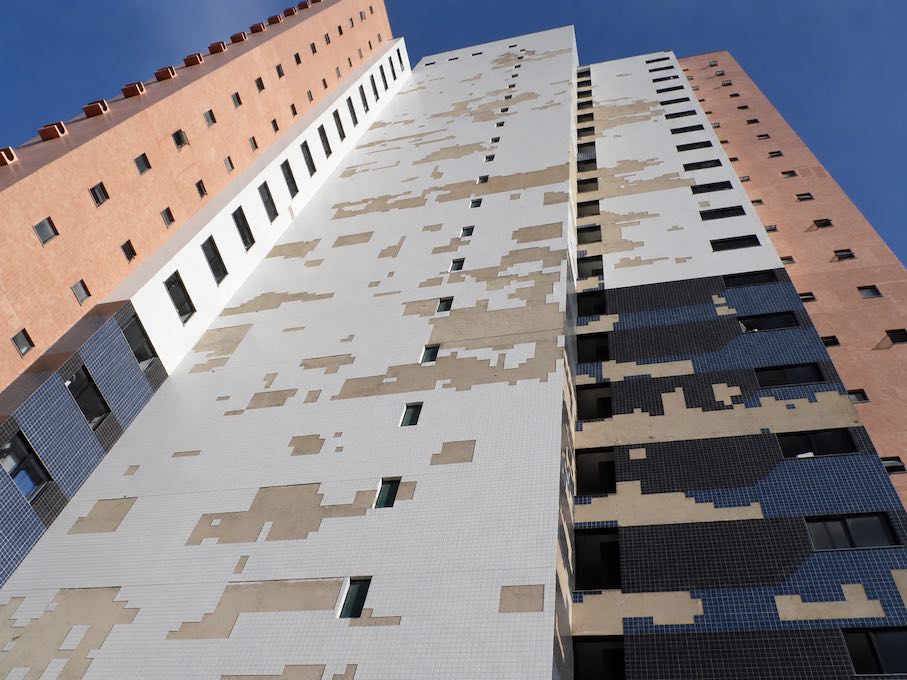
Currently, the following trend can be observed in Fortaleza: In the central districts of Aldeota and Meireles, as well as along the Atlantic coast in Beira-Mar, the ceramic tiles on the facades are falling off—the immense power of the sun has destroyed the tile adhesive and cement over the years. The proximity to the sea, with its high salt content in the air, also plays a role.
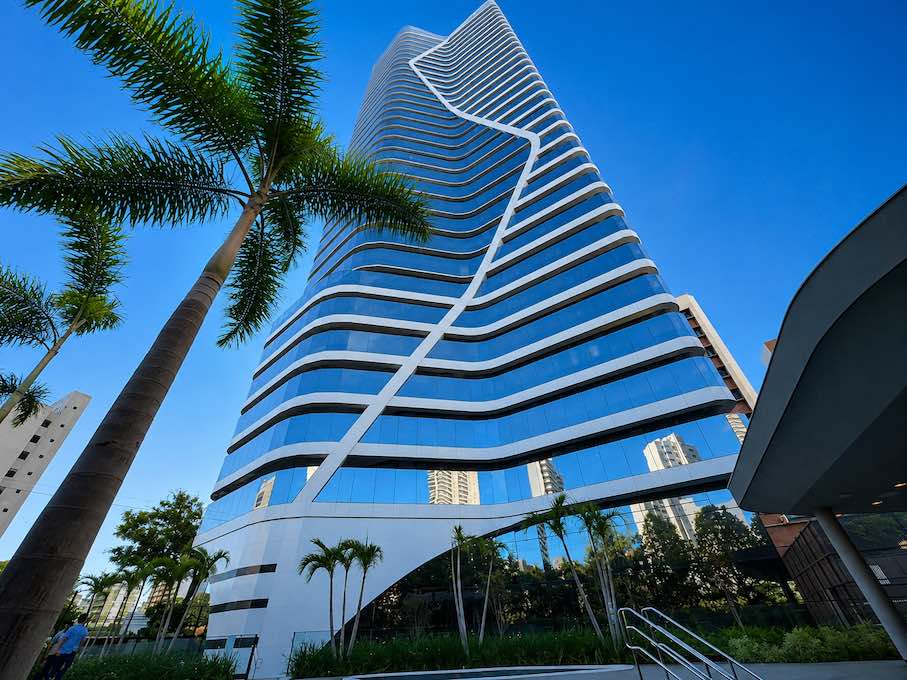
Currently, ACM is being used in large quantities for new facades on private and commercial buildings. It is a composite consisting of two thin layers of aluminum with a plastic layer in between. Some of the material is shipped from factories 18,000 km away.
The material has a metallic look and is much cheaper than standard aluminum.
However, its carbon footprint is catastrophically high.
At the same time, a facade material with much better environmental metrics is, so to speak, right under our noses in the hinterland behind Fortaleza: the vast natural stone resources that have now made the state of Ceará the country’s third-largest stone exporter.
We’re not just talking about the famous quartzites with their vibrant colors and exotic textures, such as Taj Mahal, Perla Venata, Cristal Saint Moritz, or the ultra-exotic Blue Deep and Sonata Blue. These are exported, primarily to luxury markets in the Northern Hemisphere—such as New York City, London, and Dubai.
Ceará is also home to well-known granites, such as Branco Ceará, Cotton White, Rain Forest, Red Dragon, Ouro Branco, and Ouro Light.
There is also an abundance of suitable limestones.
To resolve this paradox, we recommend a “New DNA for Building in Fortaleza.” It aims to incorporate ecological considerations and a sense of place into the architecture.
It uses local stones: granite as cladding for the exterior façades and quartzite for the interior design of the entrance area and for the floors above it.
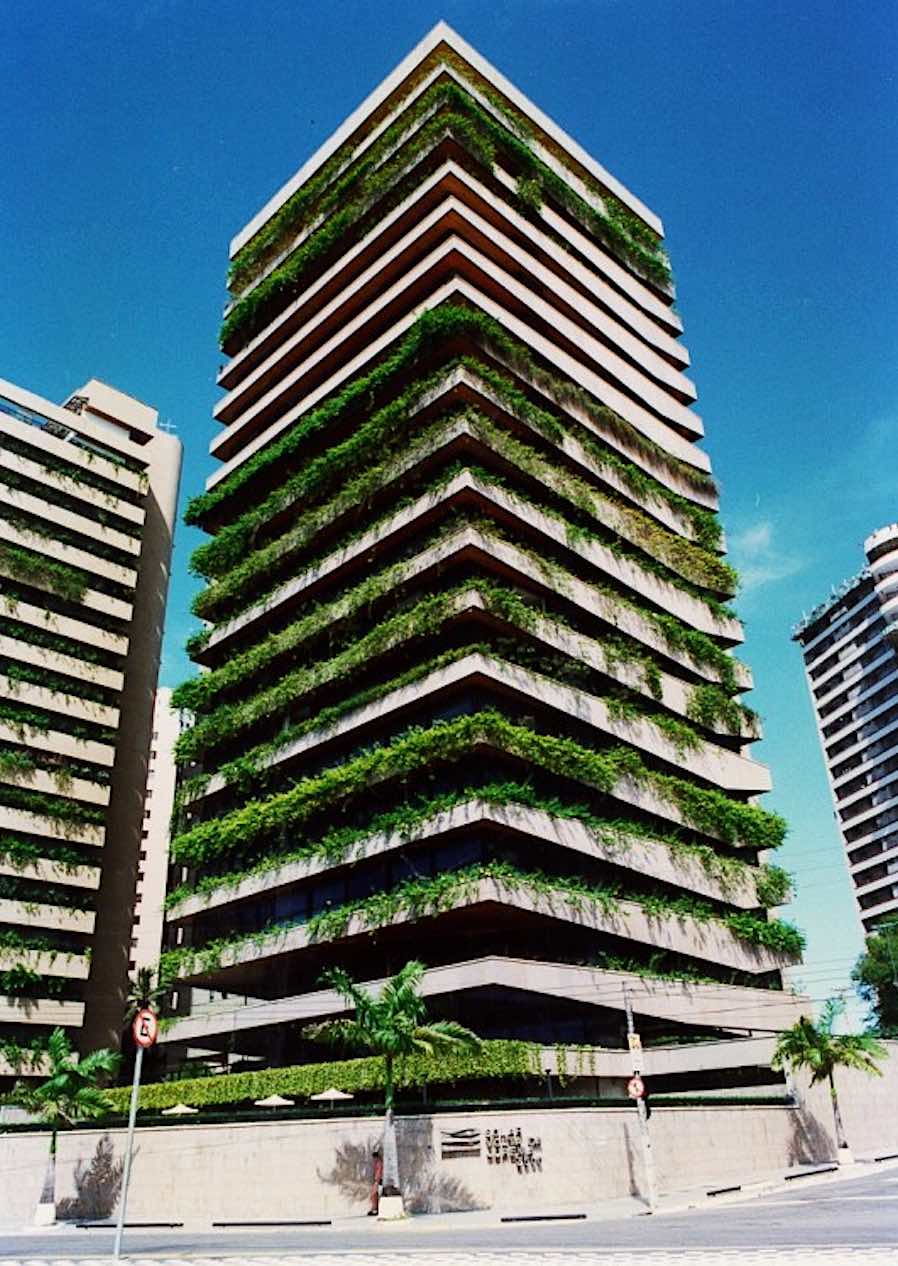
Such buildings would also differ from structures in other parts of the world: Just as in historic old towns, they would foster a sense of identity and make each city recognizable and endearing through its architecture.
Furthermore, not only would the material itself have a minimal carbon footprint, but CO2 emissions from transportation would also be significantly reduced.
And in the long run, the carbon footprint would be even more positive—because the stone on the facades withstands exposure to sunlight.
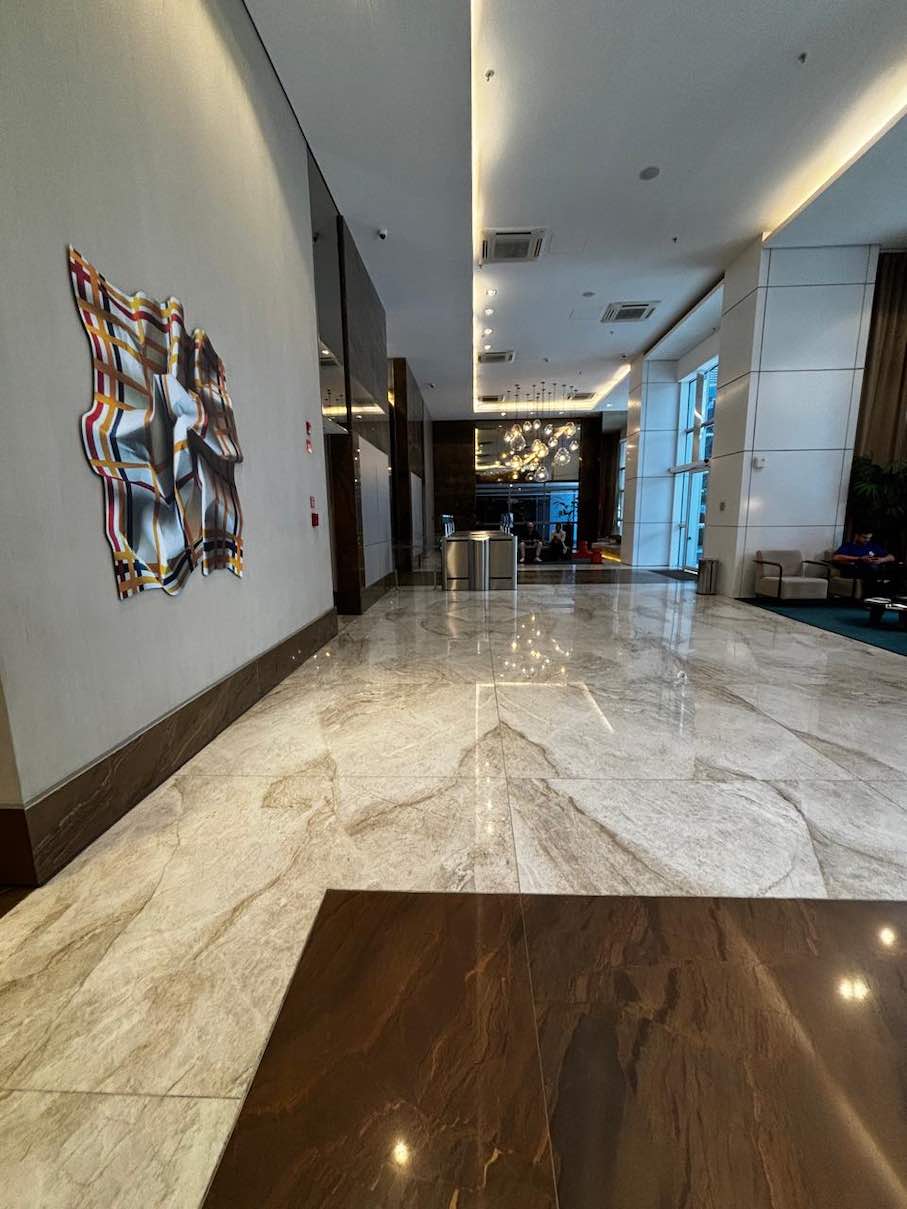
However, it should be noted that, in the very long term, even natural stone is unlikely to withstand the intensity of the sun’s UV rays near the equator. In the event of damage, however, it can be removed from a facade, restored, and reinstalled for the coming decades.
Such a “DNA” for construction can, however, only be established if people appreciate architecture because they recognize their place of residence in the materials. Then they will value the buildings and will not shy away from the costs.
Note: Paweł Wolniewicz of Adam Mickiewicz University has analyzed changes in the use of natural stone in the Polish city of Poznań: for example, transport distances there increased from 322 to 3,885 km between 1990 and 2019. The article was published under the title “Rapid Growth of Dimension Stone Imports: Implications for the Urban Geocultural Heritage of the City of Poznań (Poland)” in the journal Geosciences, Basel, vol. 16, no. 1, p. 45, 2026.
Download
* Carlos Rubens Alencar is a geologist with a Master of Science in Geodynamics and Mineral Resources. He is the president of the Natural Stone Association of the State of Ceará (SIMAGRAN-CE) and focuses on the intersection of regional geology, low-carbon architecture, and the role that natural stone can play in this context.
Mail, LinkedIn, Instagram