 Stone-Ideas.com


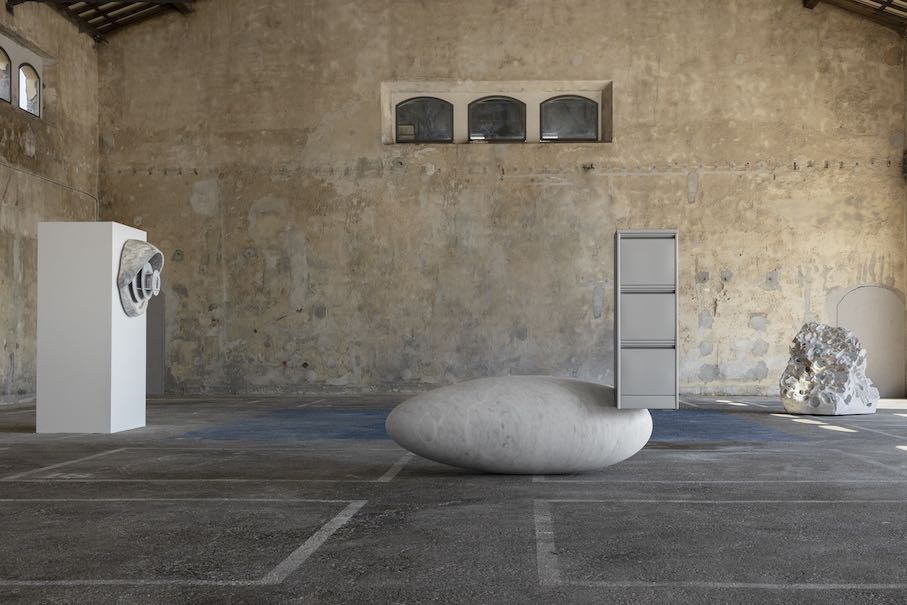
The Henraux Foundation sees the award as a platform for new ideas in contemporary sculpture for the purpose of further development and renewal
The 6th edition of the Henraux International Sculpture Prize winners are Olivia Erlanger, Nicola Martini, and Tarik Kiswanson. Remarkably, neither of them had worked with marble before.
The Prize, a biennial event open to artists under 40, is about research and experimentation in new artistic languages. The Henraux Foundation, as the organizer, does not simply aim to celebrate the white stone as a material for art but also understands the award as a platform for the development of contemporary sculpture and the renewal of art in stone.
Using modern tools like computer numerical control is an important topic.
The winners’ works will become become part of the renowned Henraux Foundation’s collection and will thus continue the revolution in contemporary sculpture that the company triggered in the 1960s.
The artists are invited to realize their ideas in the Henraux workshops located in Querceta in Toscani, if wanted with the help of experienced craftspeople. Paolo Carli, company CEO and foundation president, comments what the award means for his employees: “While on the one hand, we are used to fulfilling logical, systematic requests, on the other, through the Prize, we engage with new ideas and artists’ visions who want to achieve the impossible from the material. ”
The Henraux Foundation describes the works:
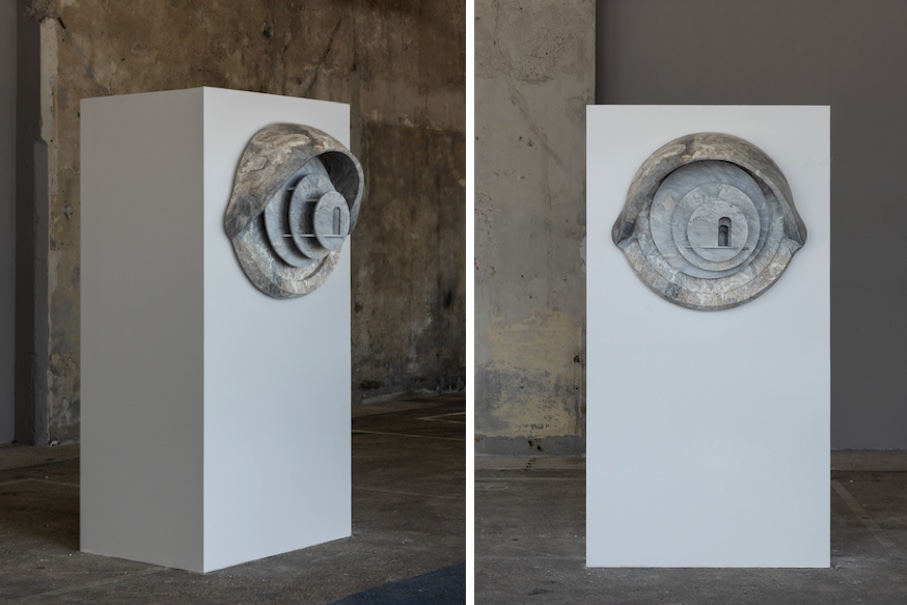
 Olivia Erlanger (USA, 1990, lives and works in New York) explores how environments and objects influence our identity and perceptions. Her visual language is disturbing and visionary in its capacity to manipulate reality. For the Prize, Erlanger created her first marble work, “Act III (Spellbound),“ focusing on the series of “eye-sculptures” (2022-ongoing), the irises of which represent mental spaces. In particular, the work explores memory and the “threshold effect,” a psychological phenomenon that connotes the loss of short-term memory upon the shift from one place to another: a series of open doors forms a corridor that then composes the image of a dilated pupil, reminding us that our experience in time and space is marked by the environments in which we live. Memory is a malleable material, and the artist turned to marble for its permanent qualities, as if to counterbalance the transitory nature of life.
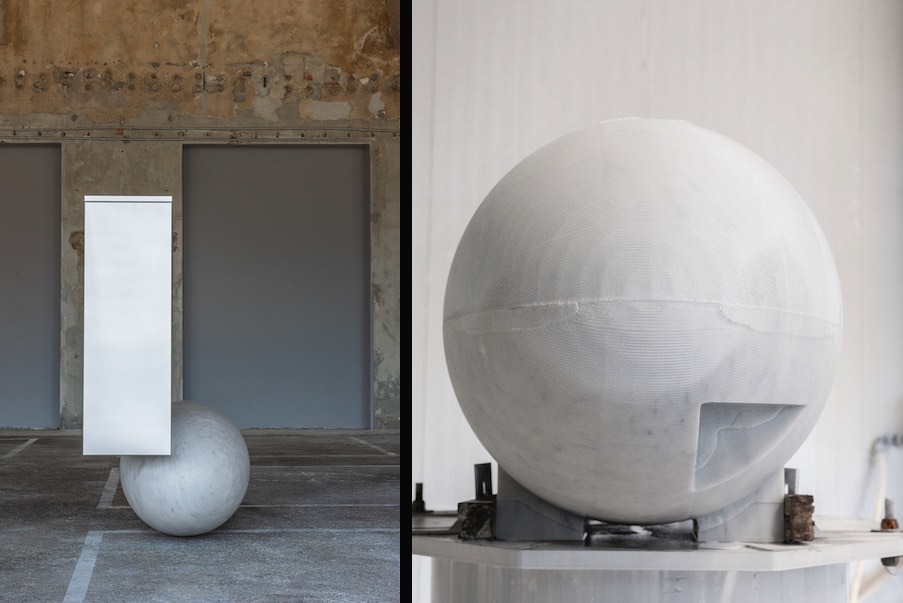
 Tarik Kiswanson (Sweden, 1996, lives and works in Paris) was born into a family of exiled Palestinians. In his works, shapes and perceptions are permeated by sensations of instability and transformation, connected not only to his identity as a second-generation migrant but also to historic and existential dimensions of rupture and loss. His research concentrates on the interstitial and transitory states of the human condition, exploring themes such as identity, metamorphosis, and renewal. His sculpture, entitled “Reconciliation,“ is, in turn, a transformation of a previous work, “The Wait“ (2023), and takes the form of a marble chrysalis or cocoon onto which a filing cabinet from an immigration office has been grafted. These two elements are fused into a state of instability and levitation, where the cocoon symbolizes birth and becoming, while the cabinet, interpretable both in the individual and collective senses, evokes the dynamics of assimilation into society. The tension between genesis and transition, life and death, is central to Kiswanson’s work, and the collision between these two bodies––which apparently belong to worlds very distant from each other––unleashes a primitive generative force that reveals unexpected possibilities and new horizons.
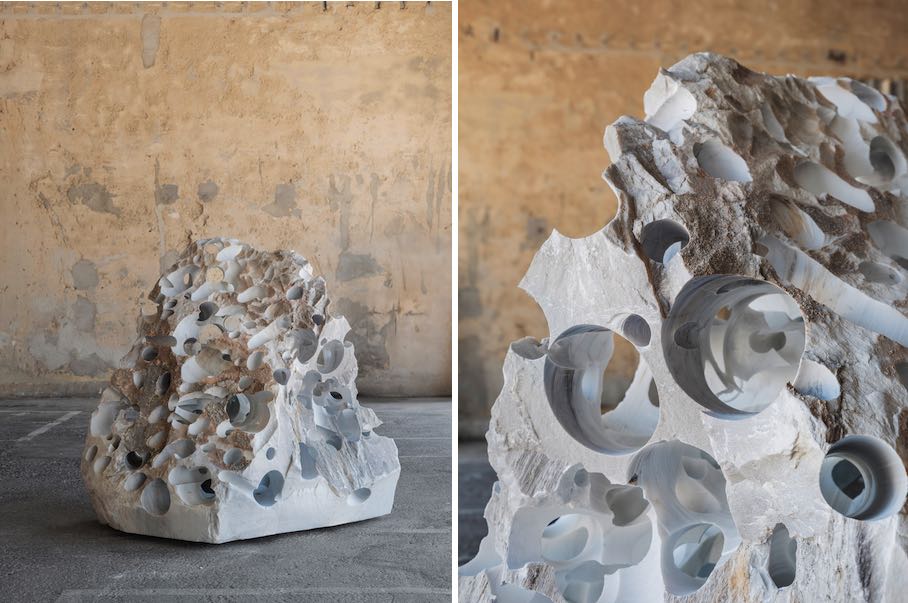
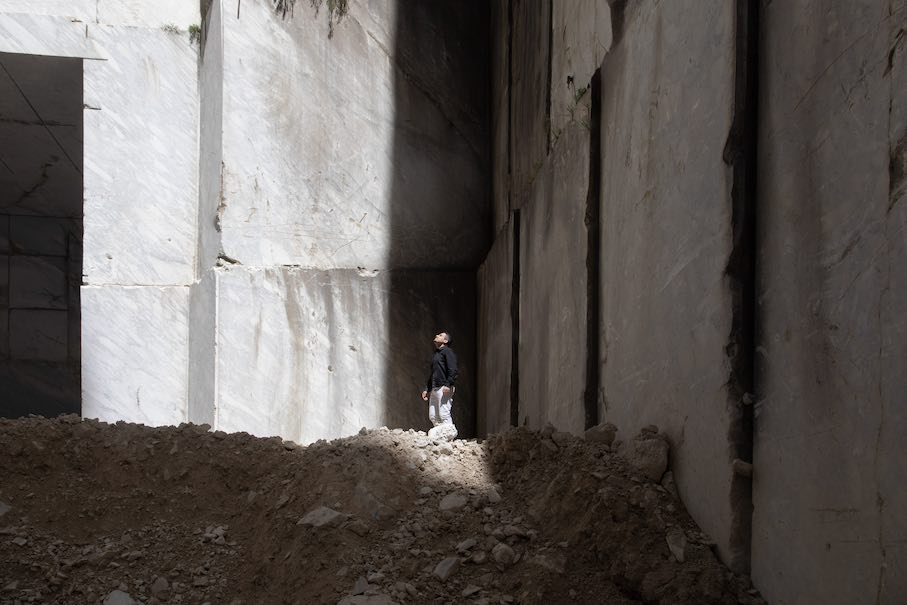
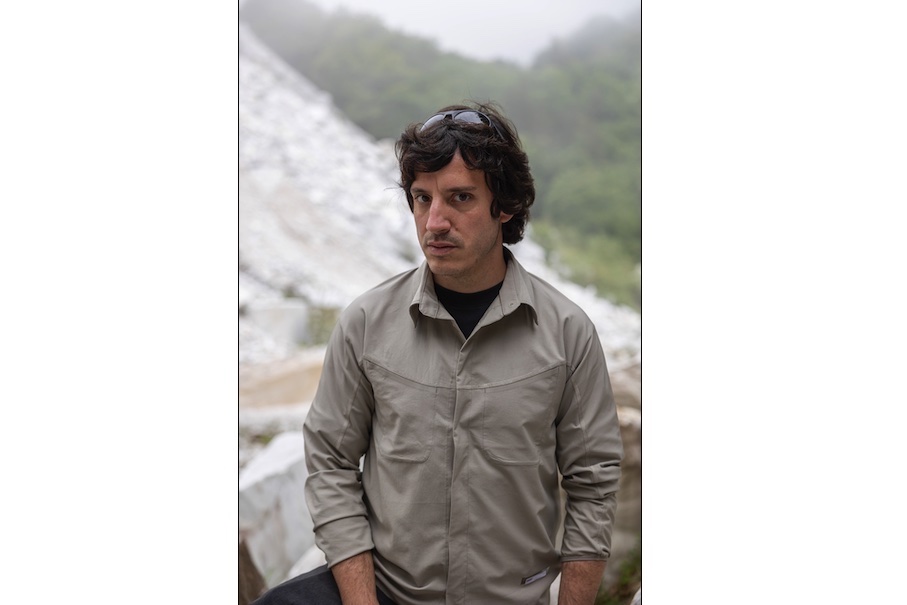 The work of Nicola Martini (Italy, 1984, lives and works in Milan), is entitled “Omag Tower 7 CNC,“ just like one of Henraux’s pieces of computer numerical control (CNC) machinery. The machine’s robotic arms travel along seven axes, and are used mostly to mill and remove marble. The process of subtraction is central to an understanding of a work that focuses attention on the relationships between the individual, the artefact, and nature. Martini selected a shapeless, residual block from the Cervaiole quarry on Mount Altissimo, perforating it in every direction right up to the limit of its mechanical resistance. Removing material from a block is the action that is required to create a sculpture, but at the same time it also means removing material from the mountain to which that block belongs. The artist invites us to move beyond the dialectical systems that place subject and object in opposition, encouraging instead a non-anthropocentric and non-hierarchical vision. To concentrate on the void is to overturn perspectives, highlighting the qualities and processes through which the material itself is created, with a view to establishing a connection between human memory and the millennial memory of nature.
Photos: Federico Gherardi/Nicola Gnesi
See also:

(22.11.2024, USA: 11.22.2024)