Stone-Ideas.com


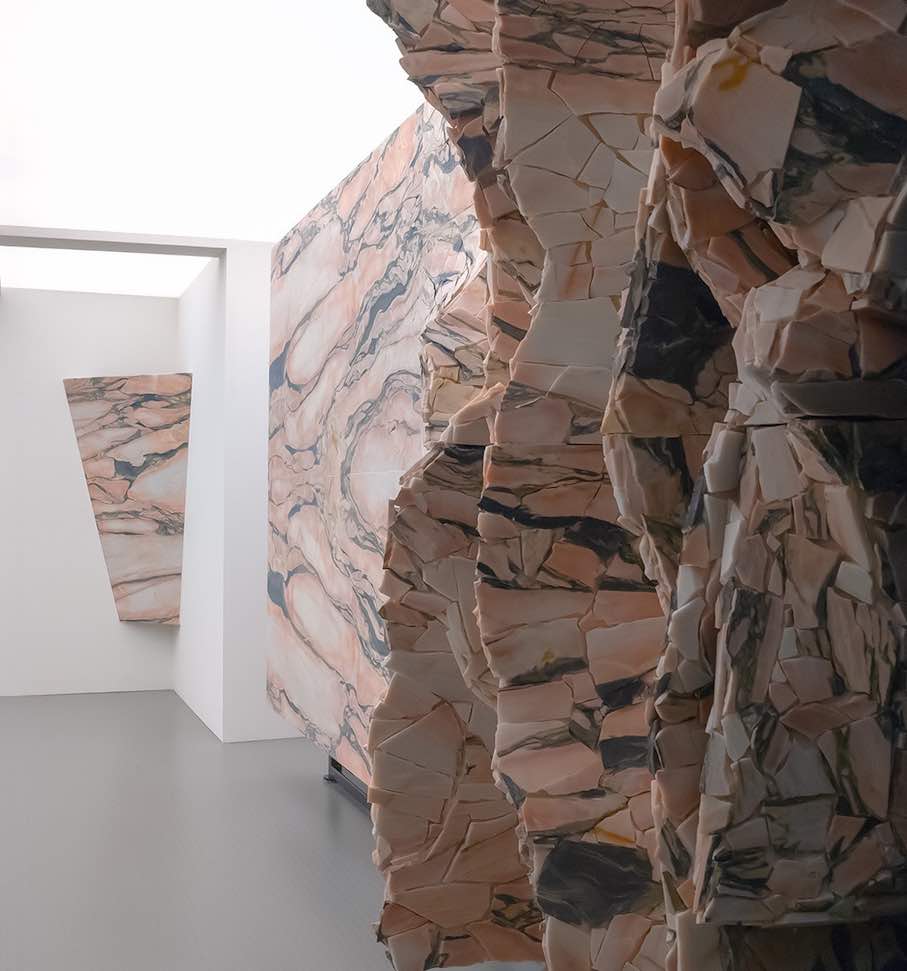
With the installation “Crash,“ Margraf company from Italy pursued a new concept: The focus was not on the beauty and diversity of the stone types, nor on the company’s skill in processing the material, but rather on an artistic alienation of the stones. Such art for marketing purposes is common among major brands in many industries, which simply seek to attract attention and hammer their brand name into consumers’ minds.
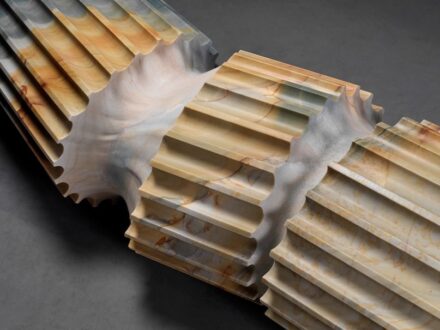
As recently as 2024, Margraf pursued the classic path of self-expression at the Salone del Mobile trade fair with designer Raffaello Galiotto and the “Frammenti“ project: Galiotto gave the marble flowing forms by creating ancient columns or capitals that had somehow lost their solidity. This was intended as a joke and a fun way to demonstrate what could be done with the familiar material with the appropriate expertise and modern tools (see link at the bottom).
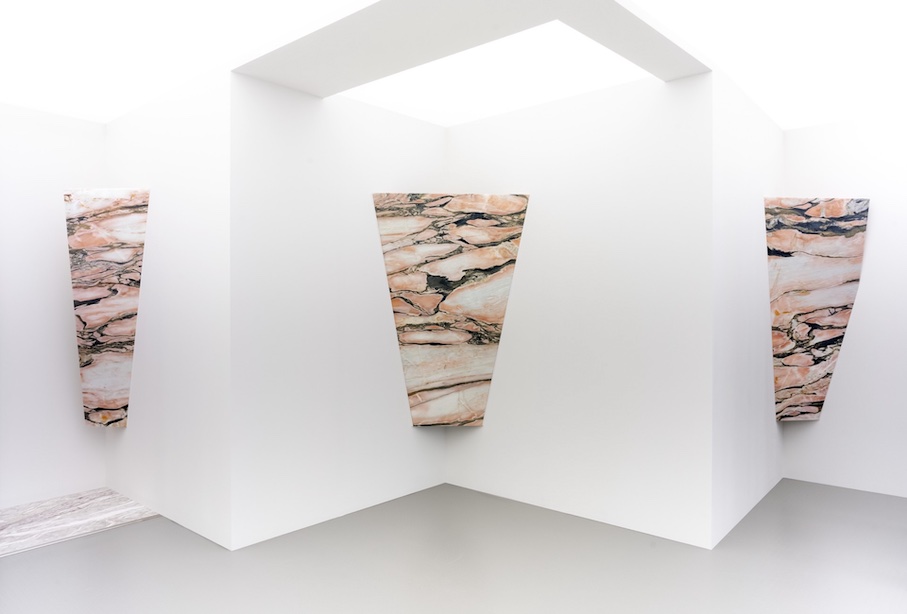
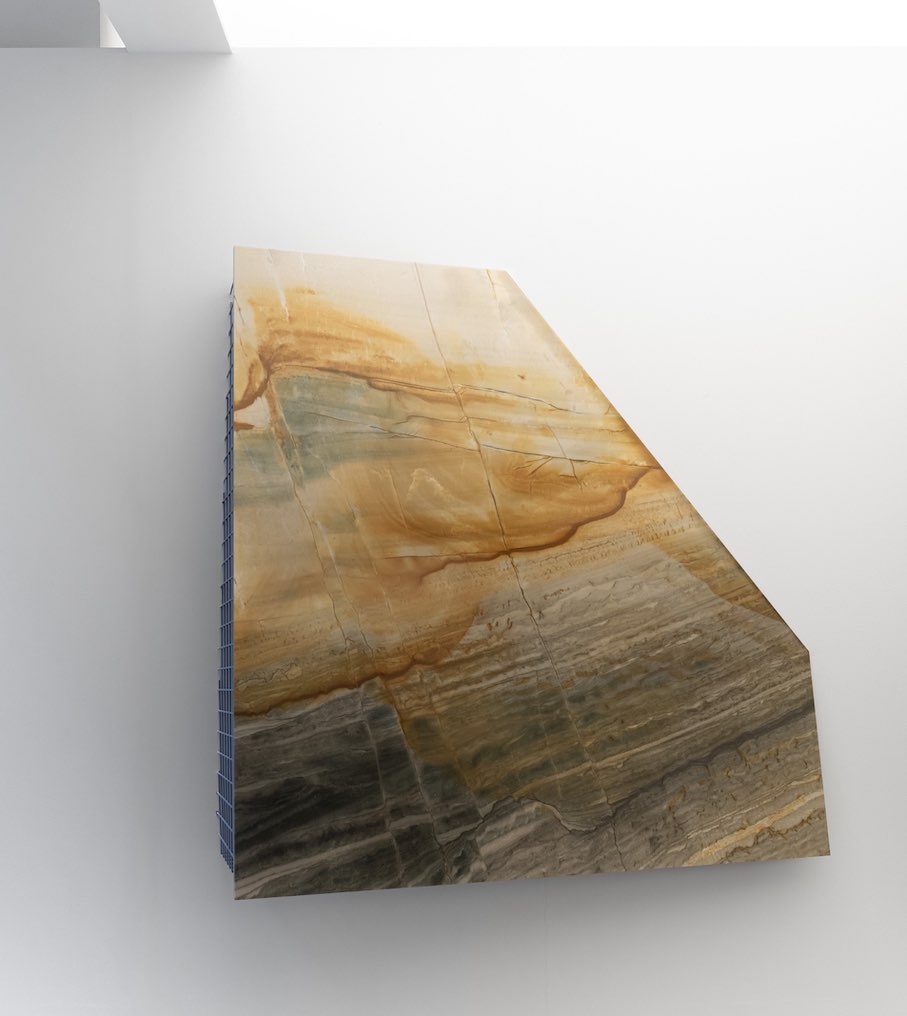
This time, Margraf invited the Italian architect Hannes Peer, who demonstrated the transformation of material through destruction at the Fuorisalone in the city center.
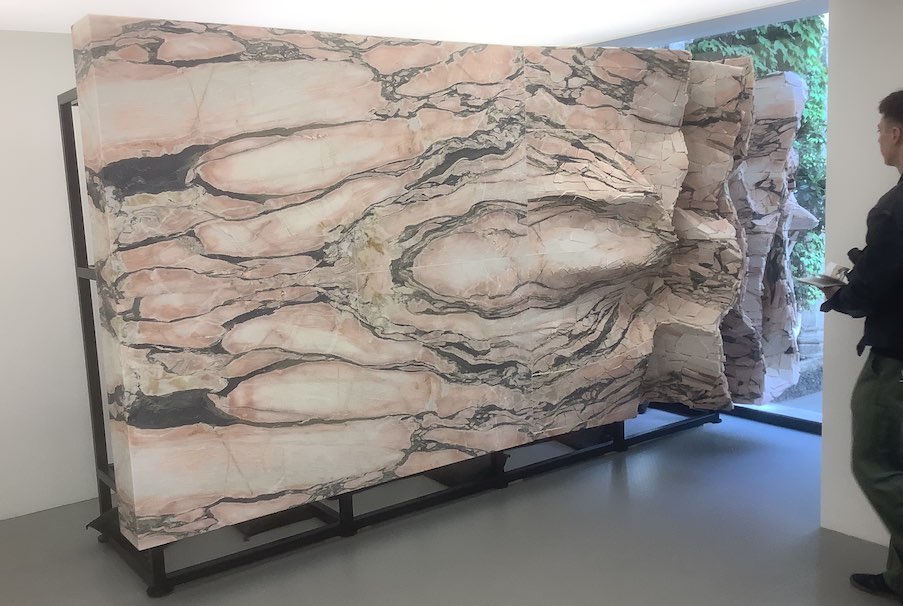
The focus is reminiscent of plate tectonics, which is based on forces in the Earth’s interior and is evident in earthquakes or the folding of mountains: Peer had smashed pieces of a man-sized marble slabs and reassembled the individual pieces as waves of material.
This was perhaps not meticulous, as the joints between the fragments were clearly visible. But that may be deliberate.
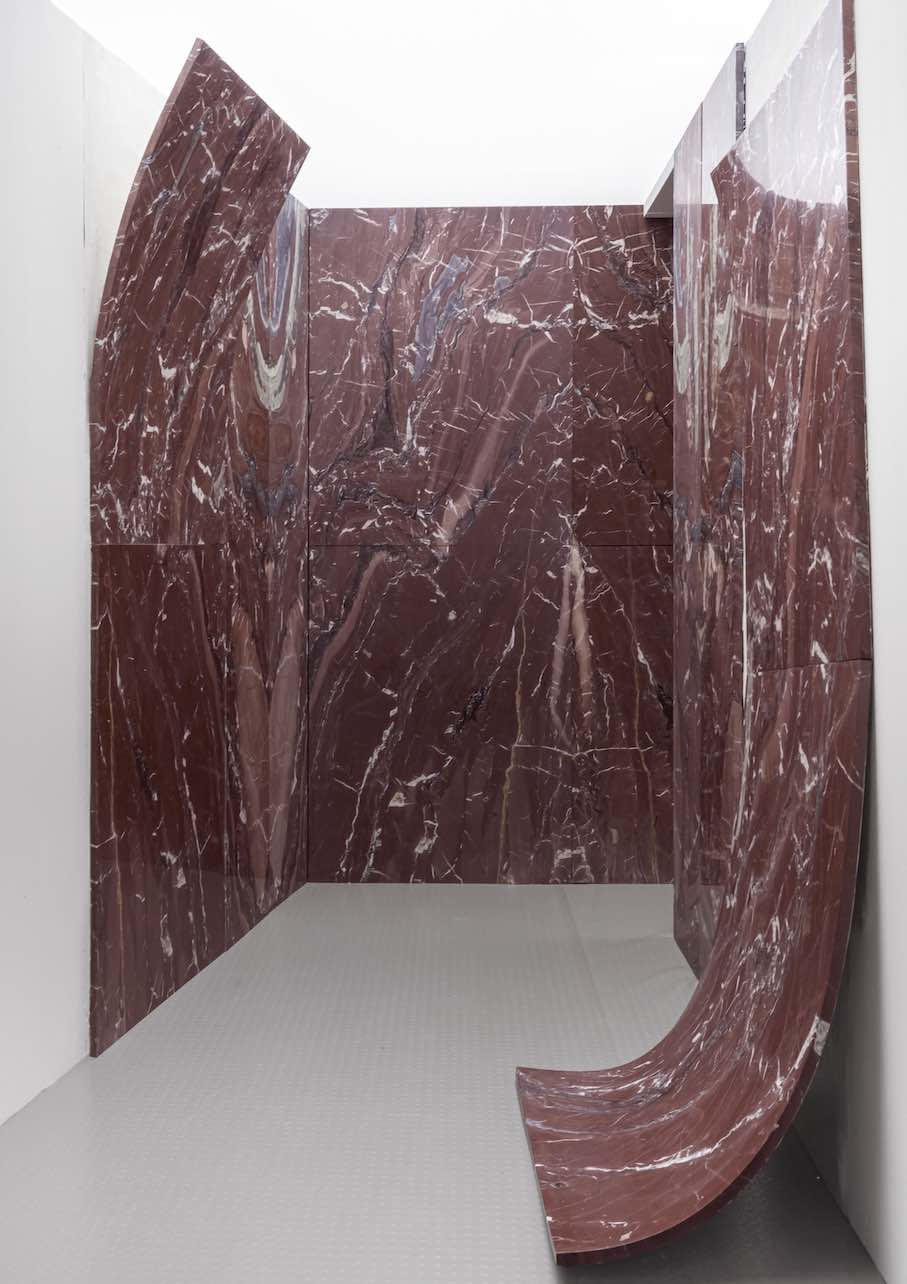
In another room, there were meter-high slabs, the kind commonly found in wall or façade cladding; here, the pieces had seemingly detached themselves from the top or bottom of the wall and were probably meant to give the impression of threatening to slide or fall on the visitor.
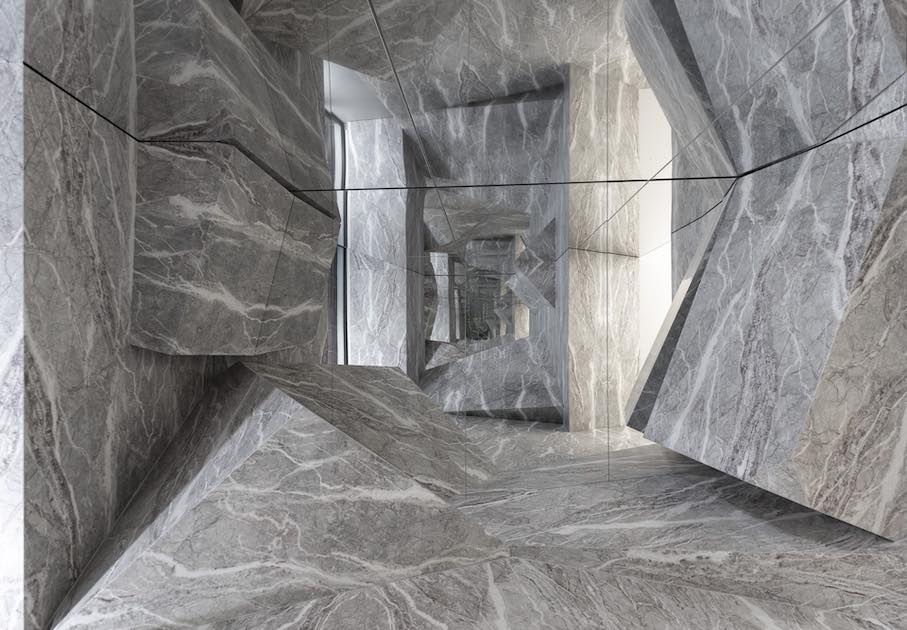
In the entrance area, an underground quarry was recreated: the marble “no longer accepts its fate as a ‘vertical slab,’ but instead slides down to the ground under the weight of its own mass or suddenly disrupts its natural logic,” was the description in the press materials.
The intention was probably not to stage the demise of the mountains. Rather, the designer and company wanted to question the well-known “stoic solidity” (quote) of natural stone: The unfolding or bending shows the stone as “an autonomous, living entity that breaks free from rigid historical expectations. It defies such constraints, bending and contorting to escape its traditional function, as if awakening from a long period of submission.”
Have we stumbled into a Hollywood cartoon? Was that meant to be a joke?
Whether that is a good branding strategy seems questionable to us. In 2021, we reported on activists in the mountains around Carrara demanding a “liberation of the mountains from the ‘yoke of the quarries’” (see link below).
It is also questionable whether such and similar art installations really pay off in terms of marketing benefits. A few years ago, the via Tortona was conquered by major fashion brands and car companies during the Fuorisalone, which displayed artistic installations there. That has all vanished into thin air.
But unfortunately, there is also nothing left of the original Fuorisalone, where young designers once lived out their lives on former industrial land.
Photos: Margraf / Peter Becker