 Stone-Ideas.com


You can meet Susan Moser at Marmomac 2026 at the stand of the Natural Stone Institute (Hall 11, A3). To arrange a meeting, please send an email.
The new building is called “Marmormolen,” and its address is Marmorvej in the Nordhavn district of Copenhagen, Denmark. Readers will guess that this refers to marble, of which the country itself has no quarries – more on that later.
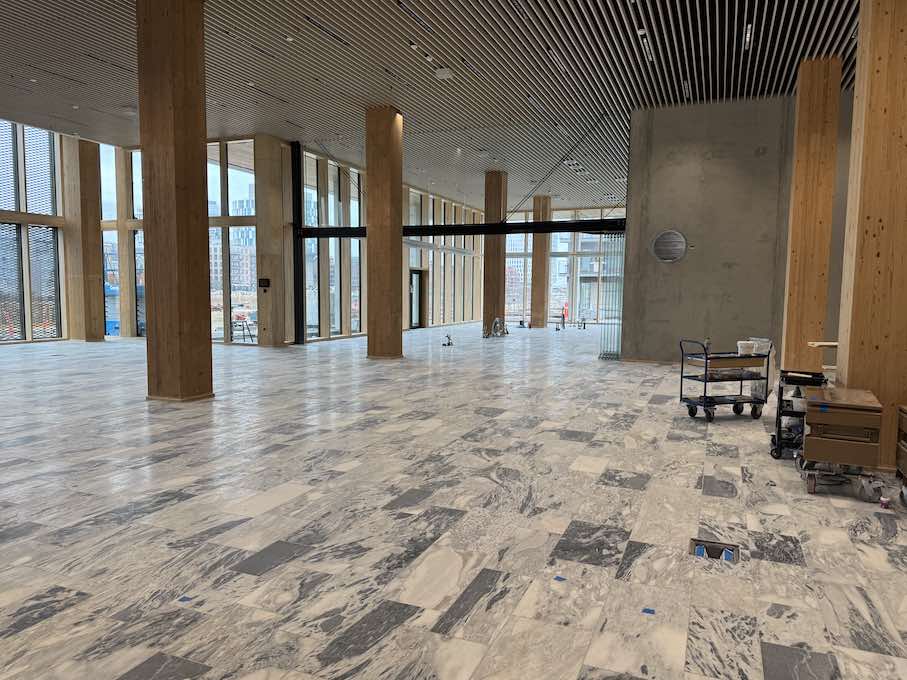
Marmormolen is a new multi-purpose building with retail, restaurants, and offices on eight floors, totaling 28,000 m² of usable space. It was designed by the architectural firm Henning Larsen for the pension fund AP Pension. The load-bearing structure is made almost entirely of wood, and it is the largest building of its kind in Copenhagen. Where concrete had to be used, the FutureCEM variant from Aalborg Portland, which emits 30% less CO2, was chosen.
The client is aiming for DGNB Platinum certification for the building, the highest level of sustainability certification.
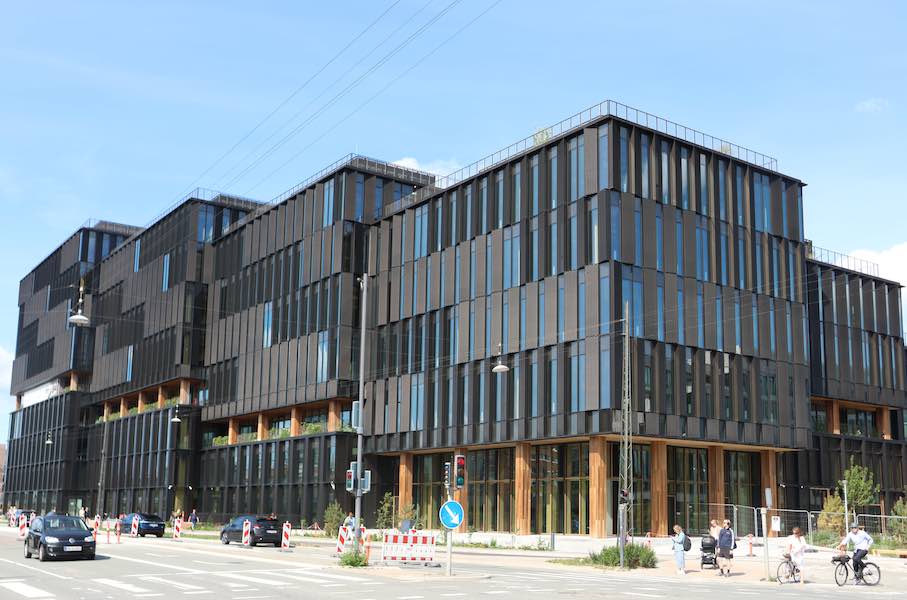
The architects describe the new building with a nod to their own profession: “Architecture can no longer pursue design excellence based on aesthetic goals and measurements. Everything must be set up against your impact on society and the environment.”
At Marmormolen, the goal was to reduce the building’s ecological footprint by using low-impact materials. Wood is one such material, natural stone another.
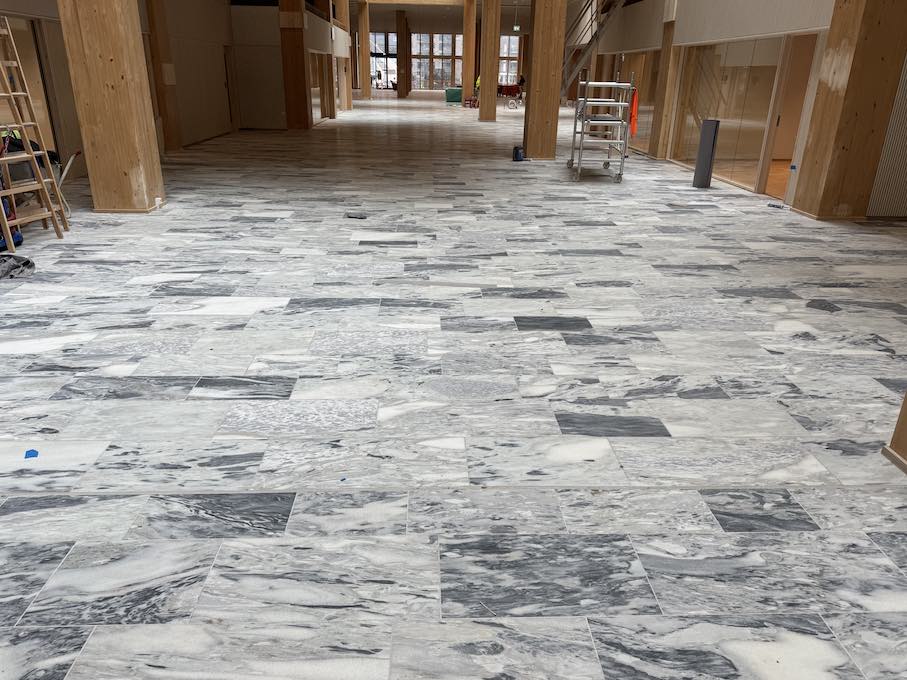
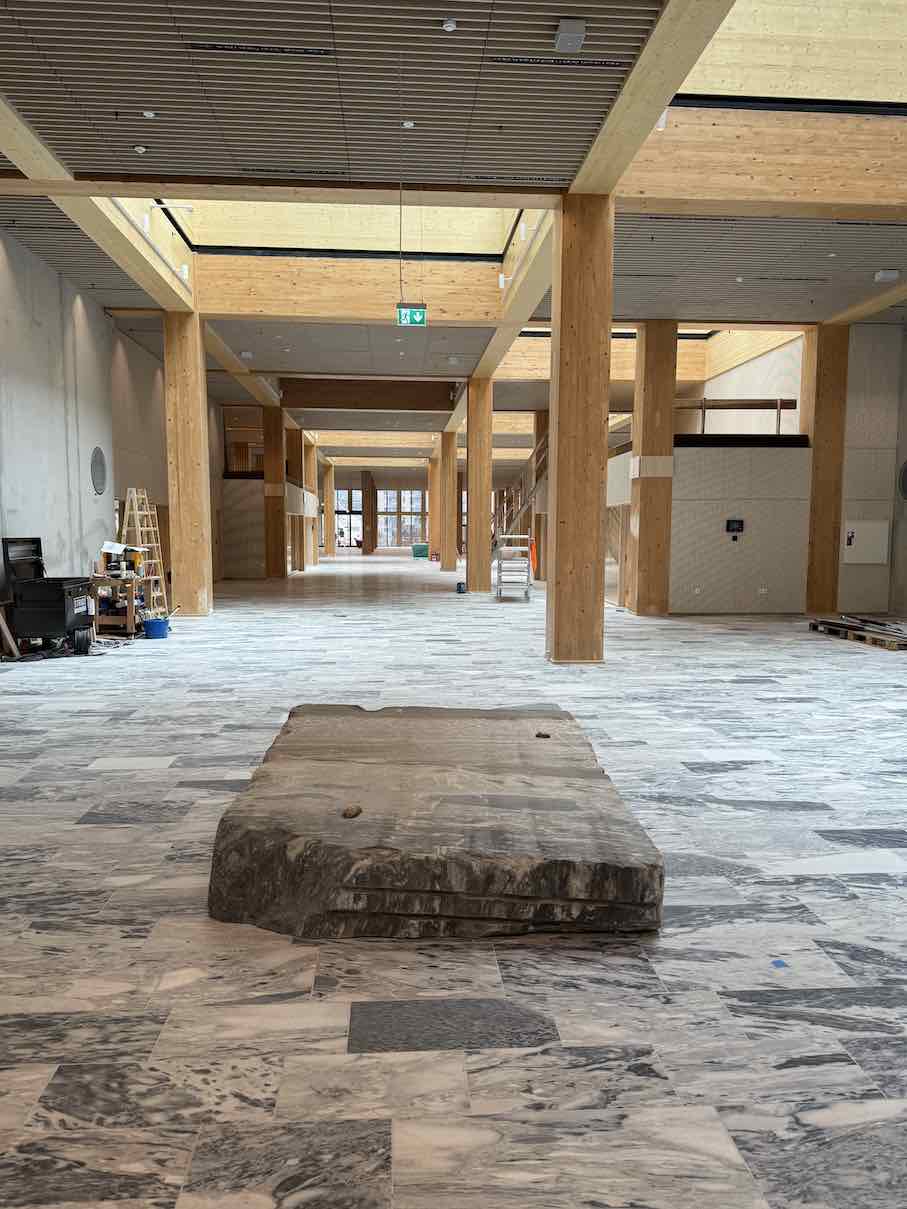
Stone also features prominently here: On the open, high-traffic ground floor, the floor is made of Norwegian marble. It’s the Hermelin Light variety from the company Fauske marble by Moser, and the story of Copenhagen’s port goes like this:
A free port was established there between 1893 and 1896, and industrial companies set up operations on the site to process goods they had purchased abroad and wanted to sell as finished products to consumers in Denmark.
One such company was “Den Ankerske Marmorforretning” (translated: The Anker Family Marble Business), which unloaded rough blocks from their own marble quarry in Fauske in Norway, cut, resold, or stored them together with other stones from all over the world. In the early days of industrialization, the company stood out from the surrounding businesses, and so the pier and soon the path leading to it quickly acquired the nicknames “Marmormolen” (Marble Pier) and “Marmorvej” (Marble Road). This quickly became the official name given by the city administration.
Meanwhile, the new Nordhaven district has sprung up on the site of the former free port, featuring modern residential buildings and proving very popular with the local population. “Marble City” is the nickname.
And when the AP Pension Fund acquired a plot of land there, it named it after the old pier. But that’s not all: For the stone paving, they chose Hermelin Light marble from Fauske, Norway, which the Anker family had already imported and distributed around Denmark.
As an aside: At some point, trends in the stone trade changed, and marble was expected to be pure white, perhaps black, but no longer bluish with wild veins like Hermelin. Fauske had numerous blocks left, which had once been awaiting transport.
The 15 varieties coming from the Fauske marble quarry are now enjoying a revival in demand on the global market, and Susan Moser, head of Fauske marble by Moser company, selected a few of the very old blocks specifically for Marmormolen and delivered them to Marmorvej.
Approximately 3,000 m² of brushed Hermelin Light was laid on the ground floor of Marmormolen. The Light variety was mixed with 25% of the Dark variety. The installation comprised random lengths with two widths to minimize waste in processing.
Photos: Fauske marble by Moser


