Stone-Ideas.com


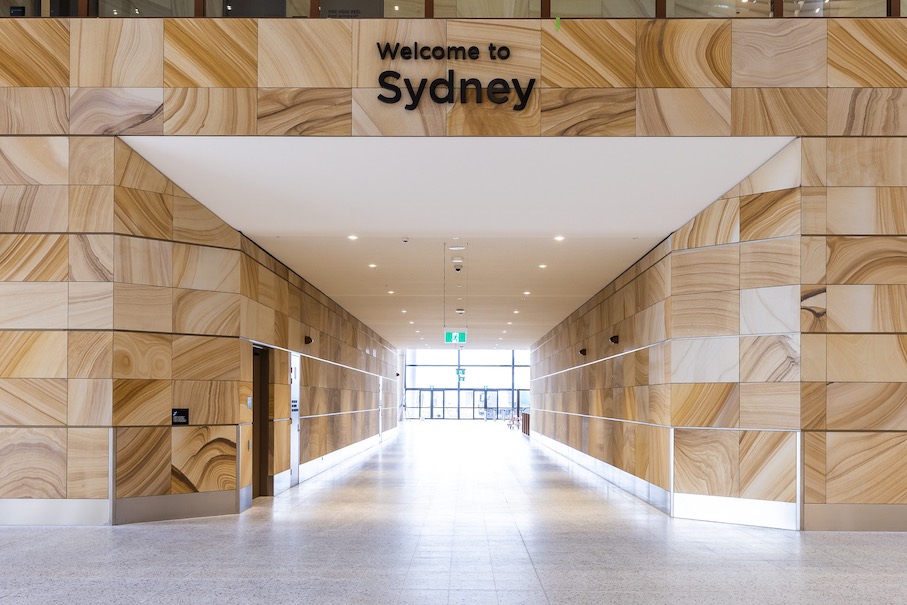
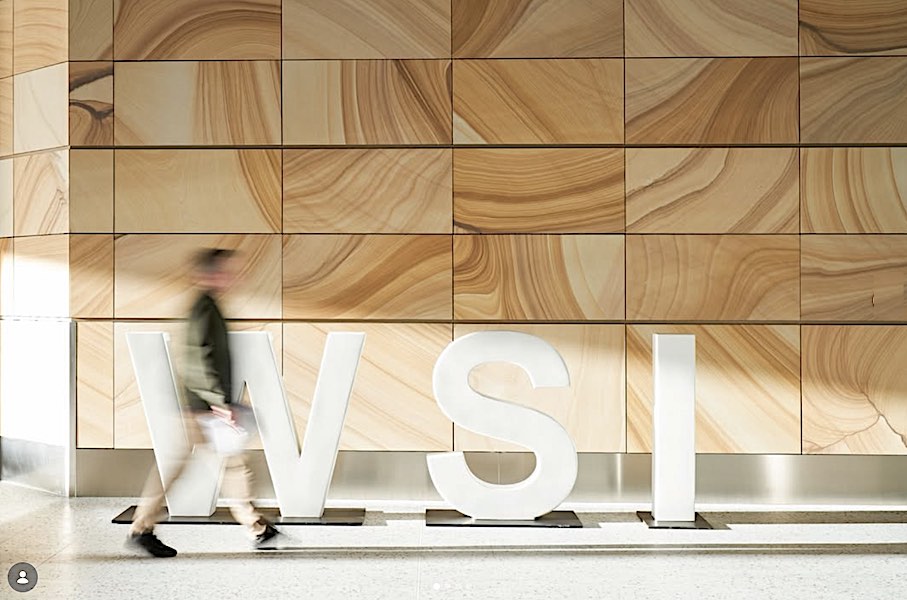
This yellowish sandstone with its distinctive brown veining is the defining material of the arrivals hall at Sydney’s new airport. The stone clads the walls as well as the partitions between seating areas within the hall. According to the airport operator’s press materials, the design aims to give arriving visitors a first impression of the country while offering returning residents a sense of coming home.
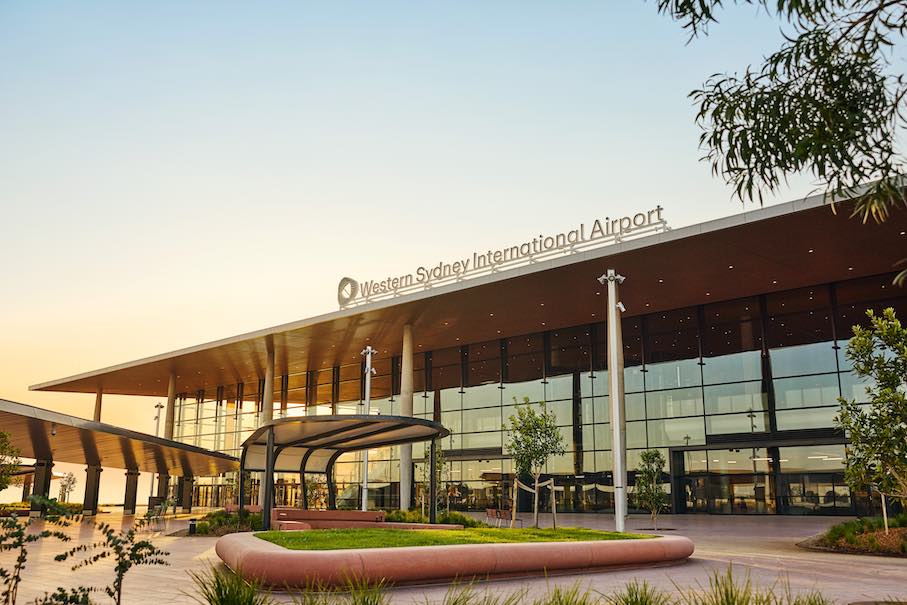
The architecture was created by the local firm Woods Bagot, based on a design by COX Architecture and Zaha Hadid Architects – a collaboration that won the project in a competition against more than 40 international entrants.
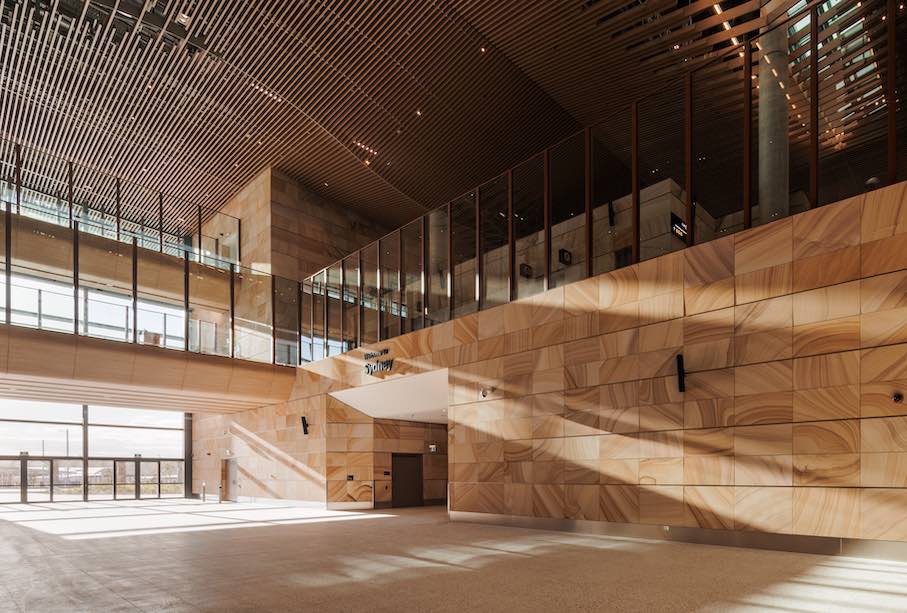
Operations at the new airport are to begin on October 25, 2026. It is known as Western Sydney International or Nancy Bird Walton Airport. The name honors an Australian aviation pioneer who obtained her pilot’s license at just 19 and became famous for her flying medical service in the Outback.
While the existing airport – Sydney Kingsford Smith, or Mascot – is closer to the city center, it had recently reached its capacity limits due to a night-time flight ban. At Nancy Bird Walton, aircraft can take off and land around the clock. The new 3.7-kilometer runway is also designed to accommodate the next generation of long-haul aircraft. Overall, the terminal is intended to streamline processing for both domestic and international flights under one roof.
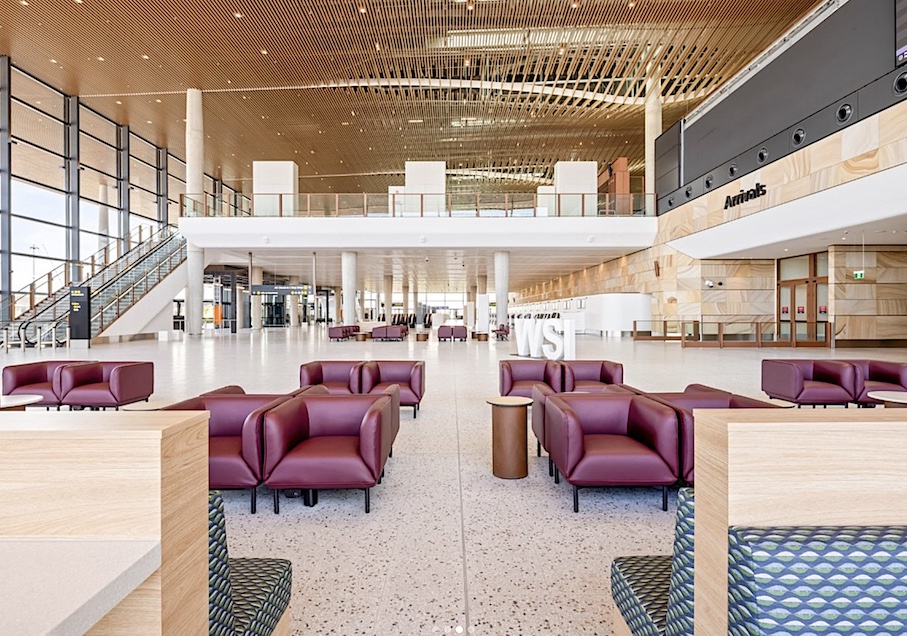
The airport is currently designed to handle 10 million passengers annually. Following two further expansion phases, this capacity is set to rise to 82 million.
The sandstone comes from a quarry on the Central Coast; it was supplied by Gosford Quarries and installed by Deemah Stone.
Numerous other aspects of the structure are designed to ensure a low carbon footprint, including during ongoing operations.
“The terminal has a climate-responsive facade, and more than 6,000 solar panels affixed to its roof to provide energy efficiency and renewable electricity, reducing the airport’s carbon footprint. In addition, it will collect and recycle rainfall for use in airport operations such as bathrooms, irrigation, and cooling towers,” according to the press release.
“Visitors will be welcomed by the stories of Dharug country that will connect the world with more than 60,000 years of Aboriginal culture while also highlighting the vibrant communities of Western Sydney.”
Wikipedia states “The Dharug or Darug people, are a nation of Aboriginal Australian clans, who share ties of kinship, country and culture. In pre-colonial times, they lived as hunters in the region of current day Sydney.”
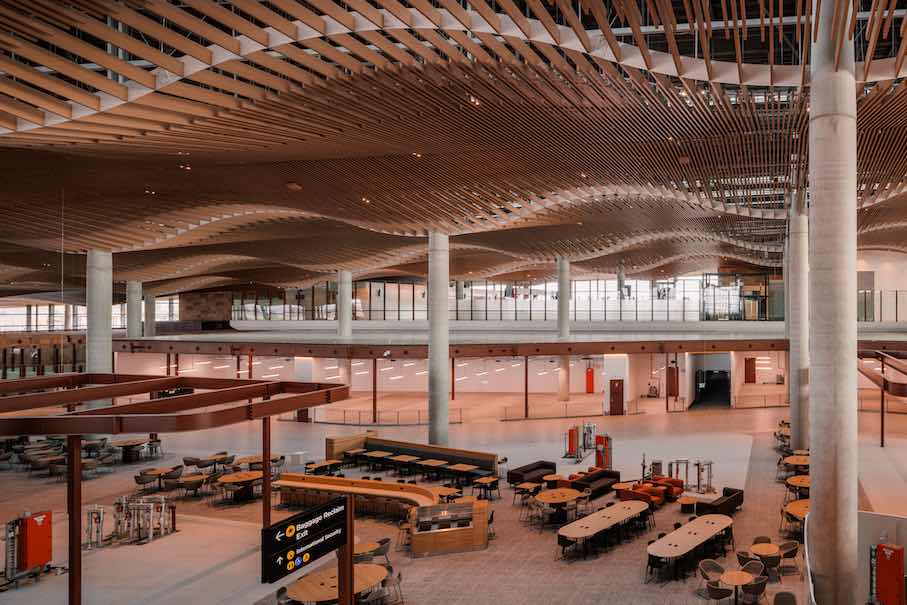
The cost of the new airport is reported to be 500 million dollars.
The project is shortlisted for the 2026 World Architecture Festival in the “Best Use of Stone” category. The Turkish natural stone association IMIB sponsors this category.
Incidentally, around 4.5 million tonnes of sandstone were used as aggregate for the runways and other roads (totaling 40 km) within the airport complex. The material came from the new tunnel excavations for the expansion of the Sydney metro system. The stone is exceptionally hard.
Western Sydney International Airport
World Architecture Festival 2026
Photos: Western Sydney International