Stone-Ideas.com


“Stonebricks” – natural stones shaped like classic clay bricks – are products with a promising future. Their key strengths include a minimal carbon footprint (since they do not require processing in a sintering kiln) and a level of hardness and durability comparable to traditional brick. We therefore attended the International Congress on Brick Architecture. Held for the 21st time in the Hanseatic city of Wismar, Germany, this year’s event bore the subtitle “Brick has shaped cultural history.” It was organized under the auspices of the European Centre for Brick Architecture.
Indeed, brick – in various forms such as clinker or fired terracotta – is found everywhere across Northern Europe and on many other continents, serving as both a building material and a paving material.
Our goal in attending the congress was to learn more about the material that gives stonebricks their name, as well as to see how the brick community works with this material.
The highlight of the congress from our perspective was the presentation by two students, each of whom showcased their favorite brick-based object.
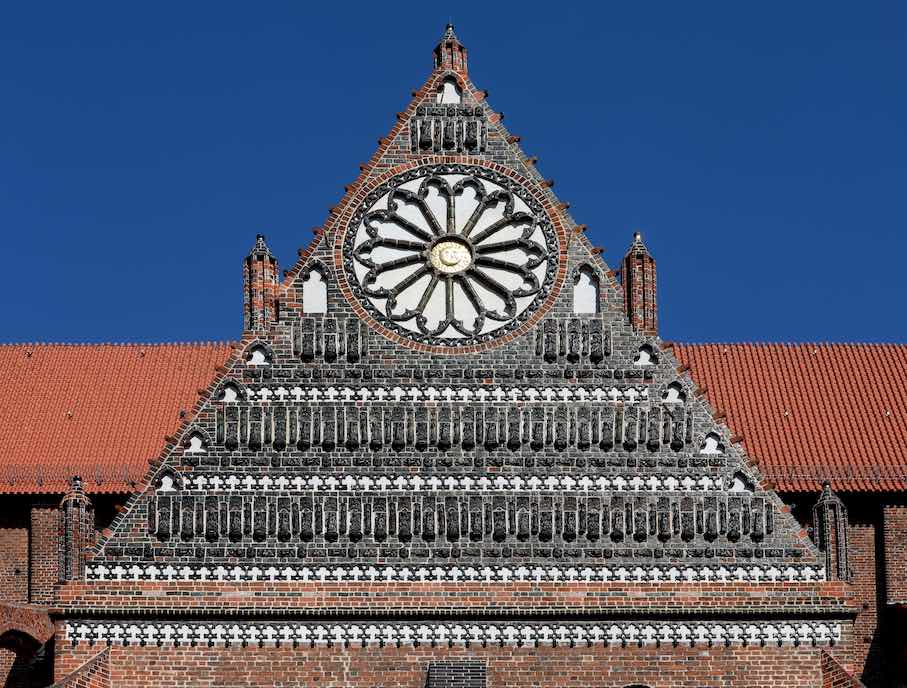
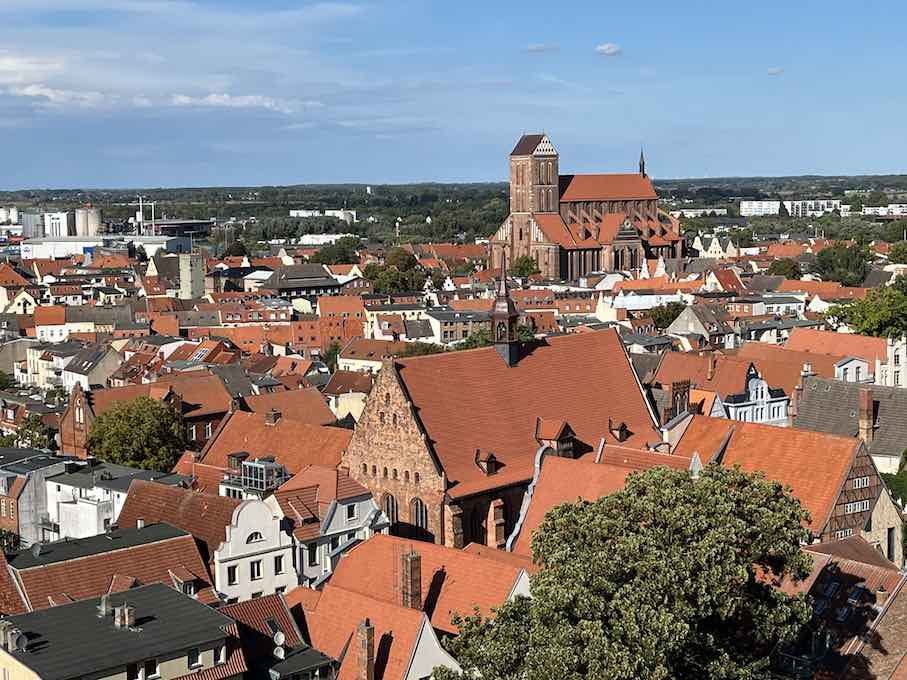
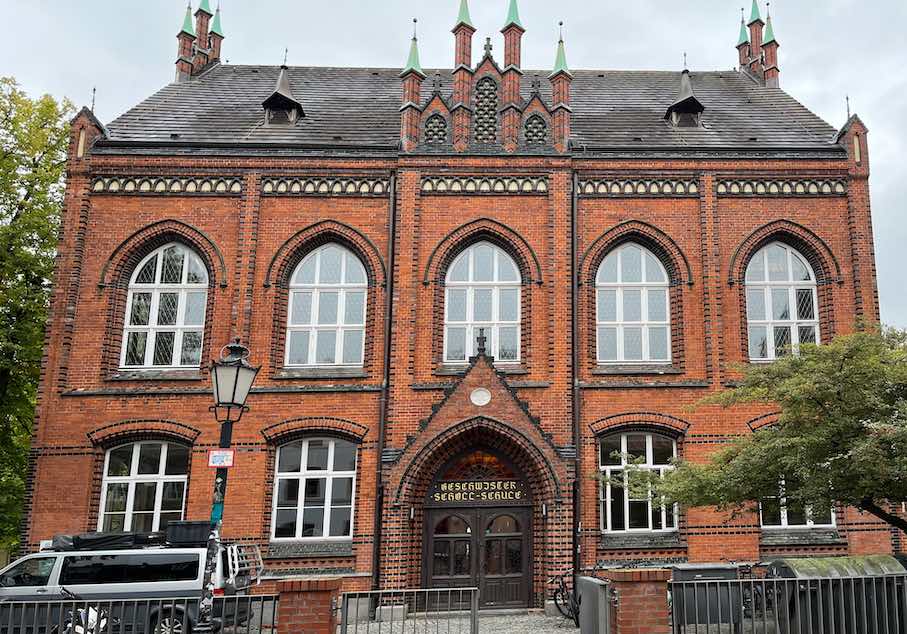
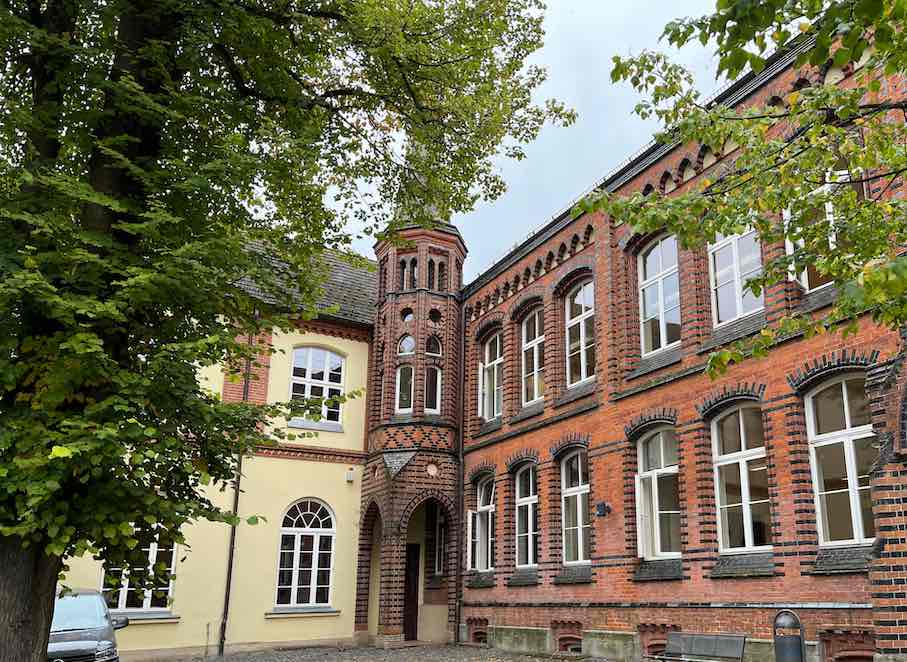
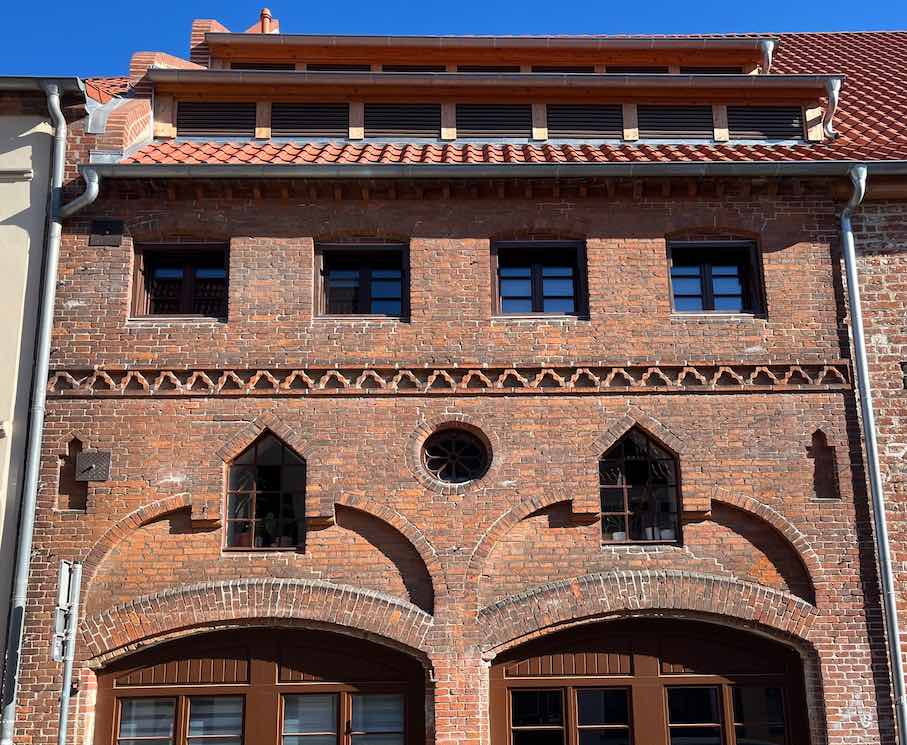
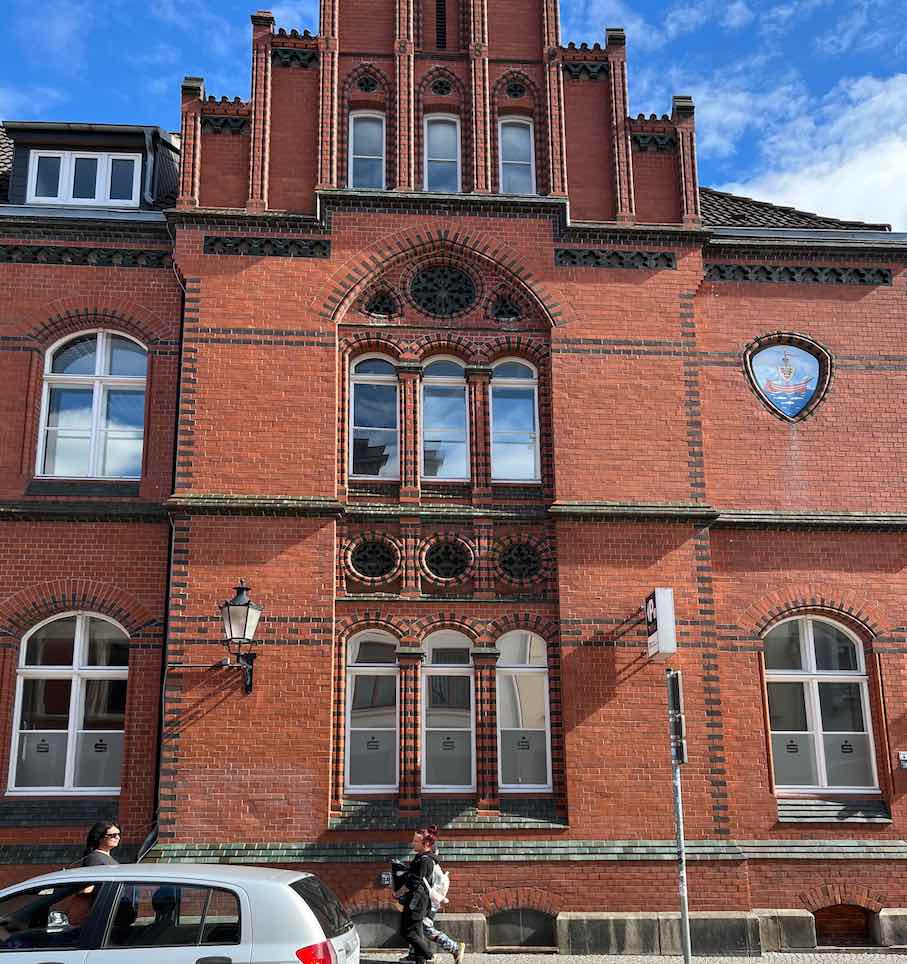
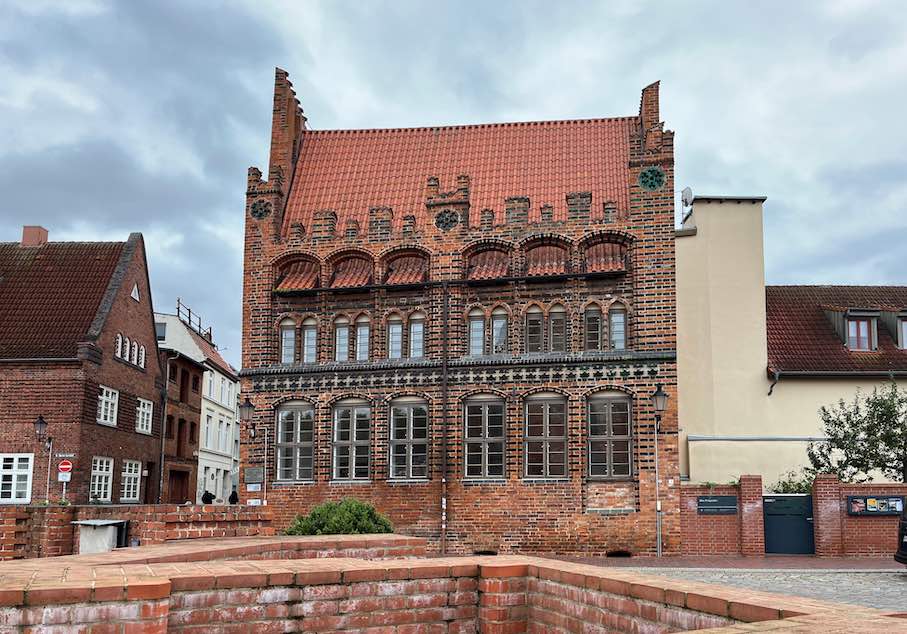
High school student Tora Barfels stayed close to home in Wismar, presenting St. Nicholas Church and its history. She focused her presentation on the richly decorated gables (see photos). High up on these gables, glazed brickwork depicts – among other things – dragons, lions, human heads, and a sun. These ornamental details are not visible from the ground; however, Tora Barfels noted that she occasionally found time at school to study the church gables – which were within view – whenever lessons became boring or too complicated. Incidentally, her school building, the Geschwister-Scholl-Schule, also features elaborate brick ornamentation (see photos on top).
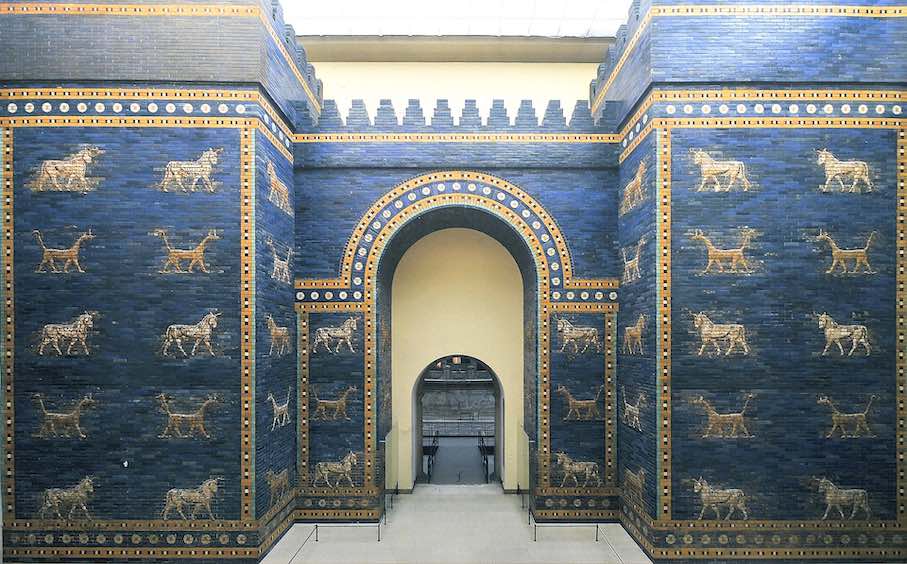
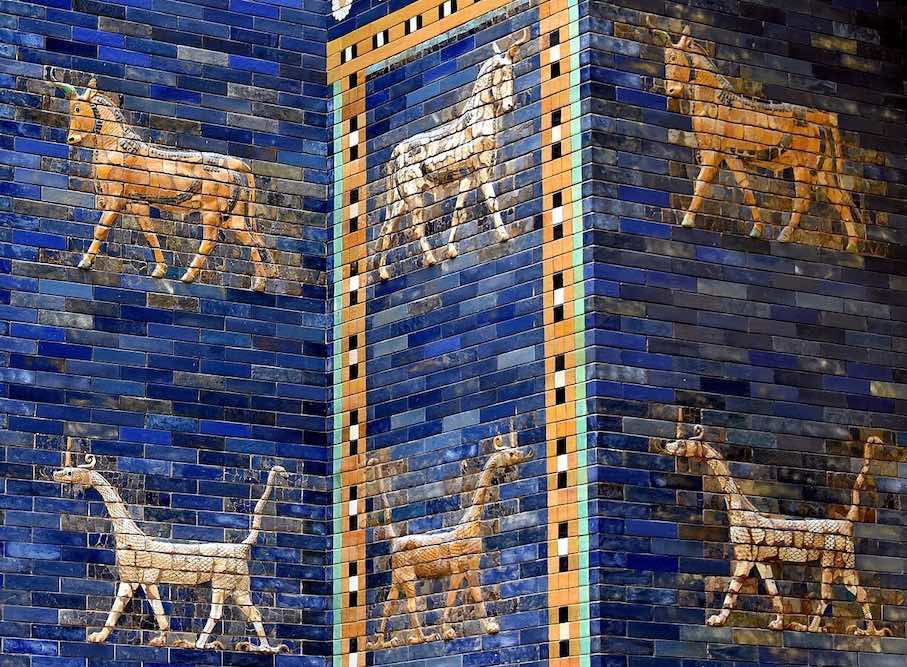
Twelve-year-old Juri Arera, meanwhile, embarked on a long journey – spanning both space and time – by focusing his presentation on the Ishtar Gate of Babylon. King Nebuchadnezzar II had commissioned the creation of fantastic animal figures in blue-glazed brick for this gate around 600 BC. Juri gave a short talk on the ancient Babylonian empire and its culture and also described the journey the archaeological artifacts took to reach the Pergamon Museum in present-day Berlin.
Below are brief summaries of the presentations, which ranged from materials research to the use of brick in architecture – both past and present.
A notable feature of the congress was that it did not simply offer company representatives or industry associations a platform to showcase their products; instead, it featured scientists and researchers who explored their topics in great depth. The presentations will be published in a conference volume.
Professor Dr. h.c. Wilfried Wang of Tongji University in Shanghai drew a truly sweeping historical arc. He noted that, during certain eras, comparable structures – such as stepped pyramids or agricultural terraces – were erected across the globe without any exchange having taken place between the respective peoples.
He identified sun-dried mud bricks, dating back some 10,000 years, as the starting point for humanity’s permanent structures.
With the advent of fired bricks around 2000 BC, the Sumerians gained a material of unprecedented durability. Furthermore, the use of standardized sizes and shapes enabled them to execute large-scale construction projects efficiently – in terms of planning, construction time, and cost estimation alike. As Wang put it: “That was an outstanding achievement.”
The Romans subsequently mastered the development of vaults using fired bricks. “Fired brick is a fundamental element of architectural culture,” Wang observed.
Dr. Ronald Stenvert of Utrecht University described an early form of globalization, using the example of Dutch brick exports during the 17th and 18th centuries. Sailors undertaking these global voyages faced a constant challenge: while the sailing ships returned fully laden – carrying furs from the Baltic or sugar and spices from Indonesia – making the outward journey unladen would have left them struggling to withstand the wind and waves at sea.
The issue, therefore, was ballast.
The Dutch loaded bricks for the outbound voyages, thereby generating additional revenue at their destinations. These were usually yellow bricks, as the Dutch clay used to make them had a high lime content. During this period, Amsterdam became the country’s leading port for the brick trade.
An interesting side note: in 1663, twenty brick counters were employed in Amsterdam to ensure the state collected the appropriate taxes on the bricks.
Dr. Tobias Arera-Rütenik from the University of Bamberg gave a lecture focusing on the cultural transfer associated with brick. Using specific buildings as examples, he illustrated how materials, builders, and architectural ideas sometimes traveled from the Iberian Peninsula to places such as Tunisia or Mexico.
Political decisions occasionally served as the catalyst for this: King Philip II, for instance, expelled the Moriscos – who practiced Islam – from the country; they took their skills as brickmakers or builders with them to North Africa, where they subsequently erected structures that displayed unmistakable Spanish influence.
Amidst the “major” themes of the lectures, the people of that era and their worldviews also suddenly came to light: distinct abrasions were discovered on the bricks of churches – likely caused by worshippers who wanted to take home a bit of the holy building’s dust to nurse their sick relatives back to health.
Other lectures examined brick architecture in countries such as Romania, Latvia, and Germany, or focused on famous architects like Erich Mendelsohn. The annual award for brick architecture is named after him.
European Centre for Brick Architecture (German)
City of the Hanseatic League Wismar
Photos: Peter Becker / Eiko Wenzel / Wikimedia Commons